
Most packing lists to Svalbard assume you’re spending plenty of time outdoors, in extreme temperatures. If you follow our advice and go in spring, sticking to regular outdoor and ski gear should be sufficient.
Scroll down to find out what we think should be in every Svalbard-ready suitcase.
What’s Included:
- What clothing do I need?
- Are hiking shoes warm enough?
- What kind of hat/head gear do I need?
- What sort of gloves should I wear?
- Will I need any specialty gear?
- What kind of suitcase should I bring?
- Spring packing list
What Clothing Do I Need for Svalbard?
It’s cliche but true: layers are your friend on outdoor excursions. This is even more true in the Arctic. Even though it’s either daytime 24/7 or nighttime 24/7, the temperature does fluctuate. It can change drastically when going from the sunlit frozen fjords into an ice cave. When snowmobiling, wind can cause the temperature to plummet – you don’t want numb hands to distract you whilst whizzing over a glacier. It’s crucial to cover up any exposed skin to avoid wind burn and frostbite.
Layers also mean less to pack. This is essential because snowmobiles don’t have any storage space. You will be throwing all your gear into one backpack per person, looping it around your seat back, and hoping it doesn’t fall off.
Bring along a few sets of solid base layers (long sleeves and leggings) to rotate and avoid smelling like sweaty laundry. We found that the base layer kept us warm (and soaked up our sweat), so we could afford to pack just a single mid and top layer. Remember to get a top and bottom!
We love Uniqlo’s HeatTech thermal layers, which come in a variety of weights (cloth thicknesses) depending on the level of protection you need. They are soft, sweat-wicking, and look appropriate for sitting around the cabin at the end of a long day.
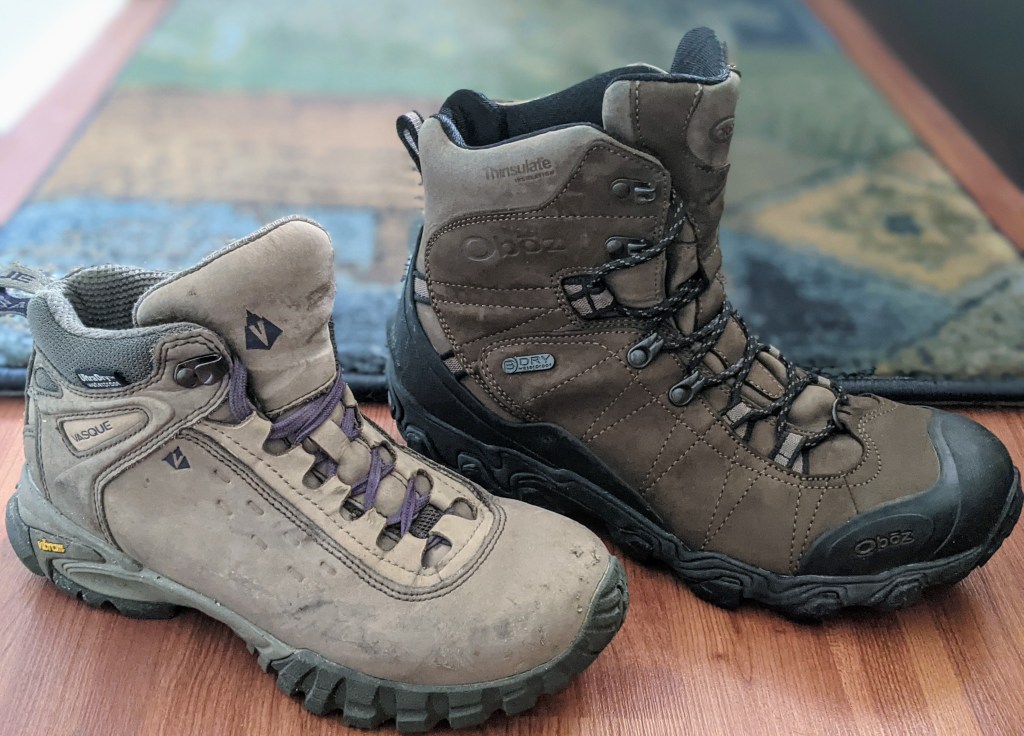
Are Hiking Shoes Warm Enough for Svalbard?
Layers aren’t only reserved for your torso and legs. You’ll be standing, walking, and sitting on snow and ice all day long . Your feet need layers too! Liner socks, which go under a thicker pair of wool socks, provide additional warmth and blister protection.
But don’t just rely on liners, especially if your feet tend to get chilly like Emilia’s tend to. Look for specialty thermal socks that have extra padding under the foot. This will keep you warmer by adding distance between your foot and the snow under your boot. We’ve tried multiple brands, but we keep returning to Thorlos Extreme Cold Maximum Cushion socks, which are ultra plush and last forever. However, they don’t come cheap. If you’re not willing to spend $25 on a single pair of socks, pick up some pairs of Smartwool Mountaineering Extra Heavy socks which are a little cheaper and suitable for shorter days on the snow.
Liner socks can be rotated daily, wearing one pair while letting the other dry and then switching the following day. Wool socks can also be rotated, but always bring an extra pair in case they get wet and don’t have time to dry between wears. We think the perfect amount is one pair of wool socks per day, plus one extra pair. But if you are space or weight constrained you can get away with just two pairs (to rotate) plus an extra pair.
And since we’re talking about the Arctic, we have to talk about snow boots. There’s a tremendous difference between hiking boots designed for snow and those designed for all-season treks. The latter usually have mesh exterior panels for breathability, while snow hiking boots have solid leather or rubber exteriors. Snow hiking boots also have additional padding to keep your foot warm and away from the snow. The amount of padding is measured in grams, with the lightest books starting around 100 grams, and the heaviest duty winter boots going as high as 2000g. For trekking around Svalbard in spring, look for boots with at least 300 mils of padding.
What Kind of Hat/Head Gear Do I Need for Svalbard?
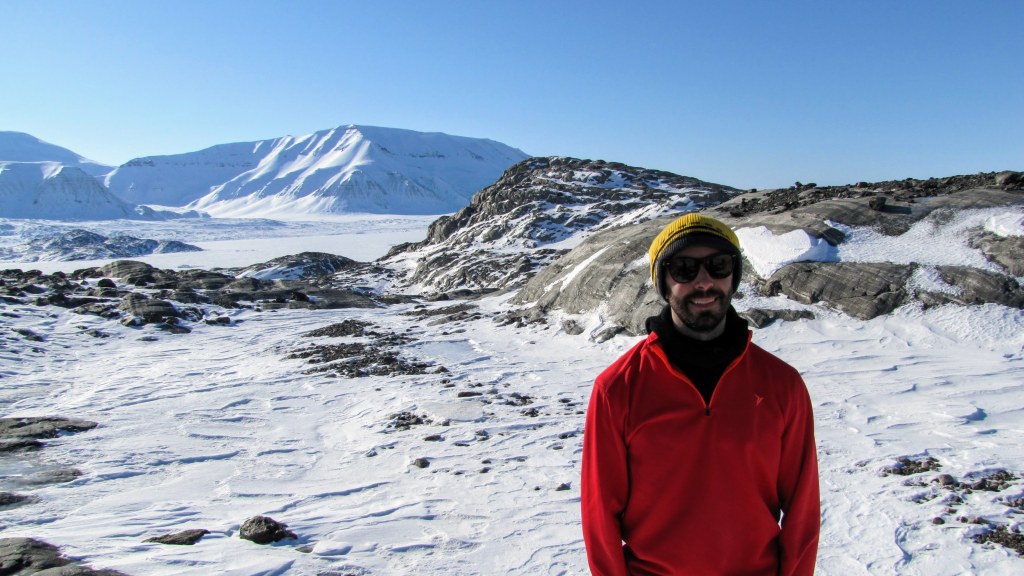
When it comes to head gear, it’s a must to bring both a warm hat and protective sunglasses. While you’ll be given a helmet for snowmobiling, you’ll want an insulated hat to wear underneath, as well as during the times you’re not snowmobiling.
Alex loves fleece-lined construction beanies, which you can get at the Home Depot for about $5. They come in neon hues for easy-spotting amidst the snow. Emilia prefers her Patagonia beanie, which sits super close to head and slips in easily under a helmet. Whatever you choose, make sure it’s warm.
For sunglasses, make sure that they’re comfortable to wear under your helmet and your hat. You don’t want anything pressing or digging into your temples while you’re on a snowmobile. We both wore Ray-Bans for the trip, which provided sufficient protection from the blinding snow. If you’re looking for an affordable pair of sunglasses with good UV protection, Emilia also likes Goodr sunglasses, which fit snugly but don’t pinch.
You’ll also want a good scarf that won’t slip around while you’re on the snowmobile. We recommend a gaiter/buff for this, preferably lined with fleece and not thin. A regular scarf can work, but can feel uncomfortably bulky between your snowsuit and helmet.

What Sort of Gloves Should I Wear in Svalbard?
Whatever gloves you have, you’re going to want thicker gloves. The puffy ones that keep your hands warm skiing? Not sufficient.
While your tour group should provide you with thick leather mittens, don’t rely on these. During our trip, they only had extra large gloves left for Emilia. She didn’t take these and instead used her own gloves along with oodles of hand warmers. Safe to say, in retrospect even oversized leather gloves would have been a better option. Don’t be foolish. Get big gloves.
Leather gloves will provide the best protection because they provide a natural barrier against the wind. Whether you’re driving the snowmobile or sitting on the back, you’ll have freezing wind washing over your hands and you’ll want every ounce of warmth you can get.
Bring a pair of liners as well. These are essential for ensuring your hands stay warm when you remove your outer gloves for tasks requiring more dexterity. Liners can also work as day-to-day sightseeing gloves if it’s warmer during your trip.
We also recommend packing some hand warmers, just in case you get chilly. They’re great for sticking in gloves, but also putting in your pants pockets or shoes – wherever you tend to feel the cold first.

Will I Need Any Specialty Gear for Svalbard?
Apart from a good camera, battery pack and water bottle, there’s not much more you’ll need on your trip! That being said, there are a few things to take into account when choosing these items that are a little different than what you need for other trips.
Cameras can get finicky in the cold and their batteries can drain quickly. It’s always suggested to carry any electronics close to your body to keep them warm and prevent them from draining. We actually had a minor mishap with Alex’s camera, which got a bit chilly and corrupted all of the photos he took on our first day! Play it safe, cuddle your camera like a kitten and bring extra battery packs.
Do not skip the water bottle. Although it is chilly and you may not feel thirsty, you do still sweat in the cold and you can get dehydrated without realizing it. Stop and regularly take sips.
We also highly recommend bringing a handkerchief. Alex has a bandana perpetually tied to his backpack, and it’s been a godsend in countless situations – from wiping freezing runny noses to drying wet hands, to dabbing sweaty brows (though maybe not the latter in Svalbard).
What Kind of Suitcase is Best for Svalbard?
As we mention above, you’ll be putting everything into a backpack and strapping it to your snowmobile. Forget about a suitcase or even a larger trekking style backpack. Remember the Jansport you took to school? It should be around that size.
Since there’s not a lot you’ll need beyond your clothing, camera and water bottle, this shouldn’t be a problem. Keep in mind that you will also have large pockets in your snowmobile suit. We both fit large cameras and a 1 liter water bottle in our suits without a problem.
Spring Packing List for Five Days in Svalbard
Clothing
- 2 pair long johns (top and bottom)
- 1 mid-weight synthetic sweater – light winter running pullovers work great
- 1 shell jacket with at least a 10,000 wind and water protection rating
- 1 pair leggings (for ladies) or 1 pair technical pants (for guys) (note, Alex likes 5.11 Stryke Pants, which are water resistant and mostly Polyester, with plenty of pockets)
- 2 pair liner socks (these can be rotated daily if dried properly during the off day)
- 3 pair heavy wool hiking socks
- 1 gaiter/buff or similar neck and lower face protection
- 1 insulated (double layered) winter hat
- 1 pair snow hiking boots
Gear
- 1 day backpack (no larger than 30 liters)
- Sunscreen
- Chapstick
- Sunglasses
- Handkerchief
- Water bottle
- Extra battery packs
- Camera
Does this list look short? Well, it should! You’re only on a snowmobile for three days. And Longyearbyen’s dress code leans casual, meaning you can get away with a lean pack.
 Roam The Reaches