
Prague’s charming stone streets. Budapest’s sumptuous cafes. Kiev’s imposing statues. It’s safe to say that Central and Eastern Europe holds a special place in our travel memories.
We think every serious traveler needs to spend time exploring these regions. But the beer-fueled Prague party weekend? Barely scratches the surface.
If you’re looking for a more unique – and we’d argue fulfilling – alternative, our self-guided train tour through Central and Eastern Europe will enmesh you in the details that make this region so magical.
What’s Included:
- How long do I need to visit the region?
- What are the best cities to visit?
- Where are the borders of Central and Eastern Europe?
- What attractions will I see during this trip?
- What kind of accommodation is available?
- If I travel by train, will I need to book tickets in advance?
- Do I need to speak the local languages?
- Will I need to arrange any visas?
- What currencies are used in the region?
- Two-week train tour itinerary
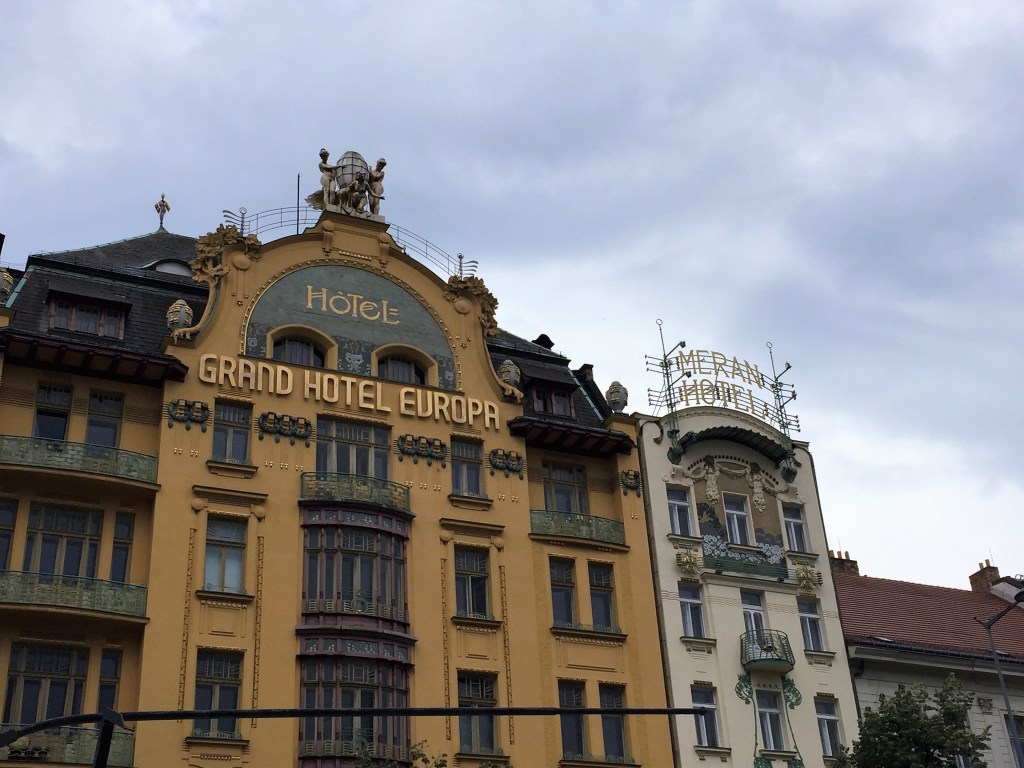
How long do I need to visit Central and Eastern Europe?
We took two weeks to explore Prague, Bratislava, Vienna, Budapest and Kiev. This is an absolute minimum. If you have more time, you could easily expand the itinerary below into a longer trip, and we have plenty of suggestions on where to add on. When we planned this trip, we had limited time and money so two weeks worked perfectly for us. It likely will for you too.
What are the Best Cities to Visit in Central Europe?
After much back-and-forth, we chose to limit our trip to the cities we mentioned above. Consider this the highlights reel. We also debated stops in Cluj-Napoca (Romania) and Lviv (Ukraine), but due to time constraints stuck to capital cities.
These cities are well connected by train, which was a critical part of our trip. That being said, we did cheat a bit! Rather than do a day-plus overland journey between Budapest and Kiev, we flew. The journey was only a few hours, saving time for sightseeing.

What are the Borders of Central Europe and Eastern Europe?
This is a hotly debated question. While we’re not going to claim to be experts in the politics of European borders, we will say that conventionally Central Europe starts around the Czech Republic and Austria, extending through to Hungary and Croatia, but stopping at Romania. A good rule of thumb is if it was part of the Austro-Hungarian Empire, it’s part of Central Europe.
Eastern Europe, meanwhile, includes Ukraine and Belarus – places with a strong Russian influence. Does it include Romania and Moldova? That’s up for debate. Some people describe them as Southeastern Europe.
The fluidness of these borders is clear during your trip. You’ll notice how Czech-style goulash gives way to the Slovakian rendition, then to a Hungarian one, before emerging as something closer to borscht in Ukraine. The same happens with beer, bread and even pastries. These transitions are part of what makes this itinerary so fascinating and fun.

What is There to Do in Central and Eastern Europe?
There is so much to do in these areas, no matter where your interests lie. While we love an active adventure (like our favorite 5-day Svalbard trip), this trip is all about cultural immersion.
Here are some of the stand-out activities you can expect to enjoy:
- Drink beer in a traditional Czech beer hall in Prague. Beer is sacred in the Czech Republic, and Prague is filled with unique places to sample the country’s famed pilsners. Slide into a table at Lokál Dlouhááá, a classic beer hall that offers a beer “slice” – three-quarters foam, one-quarter beer.
- Admire the Danube from the UFO in Bratislava. Nestled amongst the banks of the Danube River, Slovakia’s capital is a compact and unassuming city, overlooked by a bridge known as the UFO thanks to the UFO-like structure perched atop it. An elevator ride to the top provides stunning views over the Danube.
- Revel in heated baths in Budapest. An afternoon spent lounging in the opulent Gellert Baths or party-happy Széchenyi Baths will be one of the most memorable days of your trip. Strap on your bathing suit and get ready for hours spent sampling different temperature baths, popping into saunas and splashing in wave pools.
- Indulge in coffee and pastries in an opulent cafe in Vienna. Whether you stop in the wood-clad Cafe Sperl or the modern Cafe Pruckel, a meal at a Viennese cafe will make you feel like part of the city’s famed intelligentsia. Get Freudian with your travel companion over a slice of apple strudel or sacher torte.
- Go underground to see sacred crypts in Kiev. Hire a guide and delve deep into the caves that run underneath the Pechersk-Lavra monastery on the outskirts of Kiev. Expect to carry a candle by hand to find your way underground.
- Understand the magnitude of the Chernobyl disaster in Pripyat. Join a tour to wander through what remains of the town of Pripyat, where the Chernobyl nuclear disaster took place. Reflect on the repercussions of the mismanagement while seeing how nature has consumed the evacuated town.
What Kind of Accommodation is There in Central and Eastern Europe?
Despite the fact that this is a train-driven trip, we recommend avoiding the areas around train stations for your hotels. Most neighborhoods around the train stations are very commercial and have little to see or do at night.
For our trip we stayed at:
- Prague – Ma Maison Hotel. Despite being located across the river from Prague’s must-visit destinations, this well-appointed hotel is perfectly central for walking to all of the best sights. In fact, crossing the river to and from your hotel provides a beautiful view every morning and night.
- Bratislava – Skaritz Hotel & Residence. Right in the middle of Bratislava’s main street, you’ll struggle to find a better located property. Despite the fact that this thoroughfare bustles well into the night, the rooms remain whisper-quiet, though ask for a rear-facing one if you prefer more privacy.
- Budapest – Gerloczy Hotel. This hotel looks like something out of an Art Deco dream. Book an attic room, if they are available, for a cozy atmosphere with wonderful morning light.
- Kiev – Ibis Kiev Central. It’s tough to call any hotel in Kiev central because the city is so large. Don’t be fooled by what look to be small distances on a map! The Ibis is close to a subway station and provides a price-comfort ratio that’s hard to beat.
Here are some other hotels we’ve heard good things about and would recommend checking out for your trip. Airbnbs are another option to consider, especially if you’re planning to stretch your itinerary beyond two weeks.
- Prague – House at the Big Boot or Mosaic House Design Hotel. Whether you want to immerse yourself in Prague’s historic charm or embrace it’s quirky present, these two hotels uniquely capture the different sides of the city that have made it so irresistible to visitors.
History nerds should book a room at the House at the Big Boot, located in the Mala Strana district at the foot of the legendary Prague Castle. The wood beds offer an old world charm, while the flower-drenched front is a dreamy photo op.
Budding modernists should opt for Mosaic House, which is located in the museum-saturated neighborhood just south of Old Town. From the eclectic throw pillow arrangements to the fun lobby cafe, this property speaks to the city’s contemporary cachet.
- Budapest – Callas House and Casati Budapest Hotel. Budapest is a large city and we think the best place to stay to maximise your time there is right in the heart of the bustling District V. From here, you’re within easy reach of the city’s most interesting ruin bars and many noteworthy sights.
If you want to lose yourself in the city’s rich history, do yourself a favor and book into Callas House. The hotel is elite and old school without feeling the least bit stuffy. We particularly love the vaulted breakfast room, which rivals the decor of the city’s storied cafes.
Opt for Casati Budapest Hotel if you prefer bright colors and modern design. You might have a funky owl mural adorning your bedroom, or a pair of bright red chairs from which to gaze out the window. We also love the plant-drenched breakfast room and the shocking subterranean gym.
- Kiev – Cityhotel and Khreschatyk Hotel. Location is the biggest struggle for any hotel in Kiev. The distances between key sights are so vast that it’s impossible to find a hotel that’s central to everything. Hotels around Maidan Square are a good bet as the square is a common meeting place for city walking tours and Chernobyl tours.
Cityhotel offers clean rooms with minimal fuss. While it’s not quite the impersonal international ambiance you’ll find at the Ibis we stayed at, it’s as close as you’re going to get from a home-bred property. We particularly appreciate the views over the city from the upper floors.
If you’re looking for a big, glam-seeking hotel, then the Khreschatyk Hotel is for you. This local property oozes modern Ukrainian glamour from the plush red bedspreads and forest-esque indoor pool to the sprawling communal spaces. We also love the fact that it’s located right on a main thoroughfare.
If you’re looking for Vienna hotels, see our post detailing an ideal four-day tour for Vienna.

Will I Need to Book Train Tickets in Advance for Central and Eastern Europe?
For the majority of the routes we suggest, yes, you will need to book in advance. This is because you will be taking long-distance trains. Most trains we took used cabin-style seating, which assign you a cabin and seat. Keep in mind that if you use a wheeled suitcase you will have to navigate it through cramped train aisles, where people may be trying to go in the opposite direction.
For shorter routes, tickets can be purchased day-of at the train station and seating tends to be at will. That being said, we appreciate the peace of mind that seat reservations provide.
Booking train tickets in advance can easily be done on the Czech rail website, which is available in English. We had no problem accessing these tickets, though do keep in mind that they need to be printed, either at home or at the train station. Showing them on your phone will likely result in you having to re-pay the fare at a higher price.

Do I Need to Speak the Local Languages?
For the most part, we got around fine with English. The only place we ran into trouble was in Kiev, where most people don’t speak more than a few words of English (Ukrainian, followed by Russian, are unsurprisingly the most popular languages). Most restaurants in Kiev have English-language menus, which makes dining out easy.
Will I Need Any Visas to Travel Through Central and Eastern Europe?
For US passport holders, you should be able to enter all the countries in this tour without organizing visas in advance. That being said, we advise you to check changing arrival restrictions. You’re travelling mostly through non-schengen countries and therefore you’ll need your passport handy for border checks. This is especially true if you follow our programmed day trip to Vienna from Bratislava. We forgot our passports and managed to enter with a Schengen visa and a driver’s license, but it was dicey. Be on the safe side and keep your passport on you at all times.
What Currencies are Used in Central and Eastern Europe?
Each country on this trip has a different currency. While many places will take credit cards, it is always better to be on the safe side and have some cash. Many smaller businesses still prefer cash. Don’t want to miss out on an amazing experience (or souvenir) because you skipped the ATM.
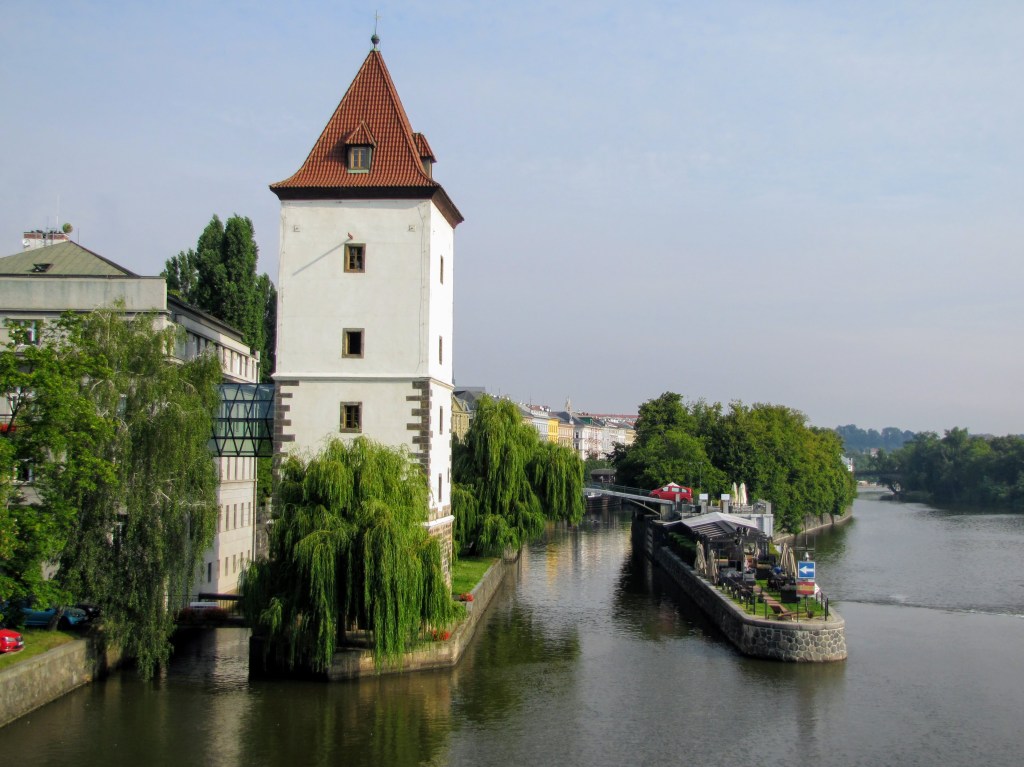
Two-Week Train Tour Itinerary in Central & Eastern Europe
Prague – 3 Days
Day One – Orientation Tour & Jewish Museum
Kick off your tour in Prague with Sandeman’s free walking tour, which introduces the city’s culture and key sights. In the afternoon, head to the Jewish Museum. It’s actually a collection of six buildings that were historically important to the city’s Jewish community. Finish your day by watching the Astronomical Clock chime away in the main square.
Day Two – Prague Castle & Kafka Museum
Cross over the Charles Bridge on your way to the imposing Prague Castle. Built in 880 AD, this sprawling complex is actually the largest ancient castle in the world. Visiting will take the bulk of your day, but save time for a quick tour of the Kafka Museum, where you’ll learn all about the mind who wrote The Metamorphosis. Afterwards, sample Czech beer culture with a visit to a traditional beer hall, where you can order the region’s distinctive beer slice.
Day Three – National Library, The Slav Epic, Evening Concert
Join a tour to see the stunning Klementinum, also known as the National Library (no photos allowed, unfortunately). Finish your visit with a climb up the Astronomical Tower for lovely views of the city. A quick walk across the main square will bring you to The Slav Epic, a series of 20 paintings recounting Czech history by Alphonse Mucha (known for his iconic Art Nouveau posters). Unwind in the evening with a music performance in one of the city’s churches, where the atmosphere is just as absorbing as the tunes.
Bratislava – 3 Days
Day Four – Train to Bratislava & Slovak National Gallery
Hop onto the train to Bratislava and watch the gorgeous Moravian countryside rush past the window. Once you arrive, make a beeline for the Slovak National Gallery. It’s a small collection, but gives you a good grasp on the country’s unique social and cultural identity. In the evening, stroll along Michalska (the main street in the Old Town) where there are plenty of bars perfect for quick bites.
Day Five – Vienna Day Trip
Wake up early to catch the boat to Vienna. The boat ride takes just about an hour and thirty minutes (much of which is waiting for the boat to get raised in a lock). Start a visit to St. Stephen’s Cathedral in the main square, mere steps away from the boat drop-off. Also known as Stephansdom, this church is a sight to behold from the glorious mosaics that cover its slanted roof to the cool gothic interior and intriguing catacombs (tickets required to visit).
Pop into Cafe Sperl for a quick lunch and to experience Vienna’s one-of-a-kind coffee culture. Then head to Heldenplatz and Maria-Theresien-Platz where you can choose between seeing the Neue Burg palace, the Museum of Natural History, or (our favorite) the Kunsthistorische Museum. Take the train (1 hour) back to Bratislava to maximise your time in Vienna.
If you have time to spare in your schedule Vienna is absolutely worth turning into at least a three day stop over. For ideas on how to plan this lengthened itinerary, see our Vienna itinerary.
Day Six – UFO Bridge, Bratislava & Devin Castles
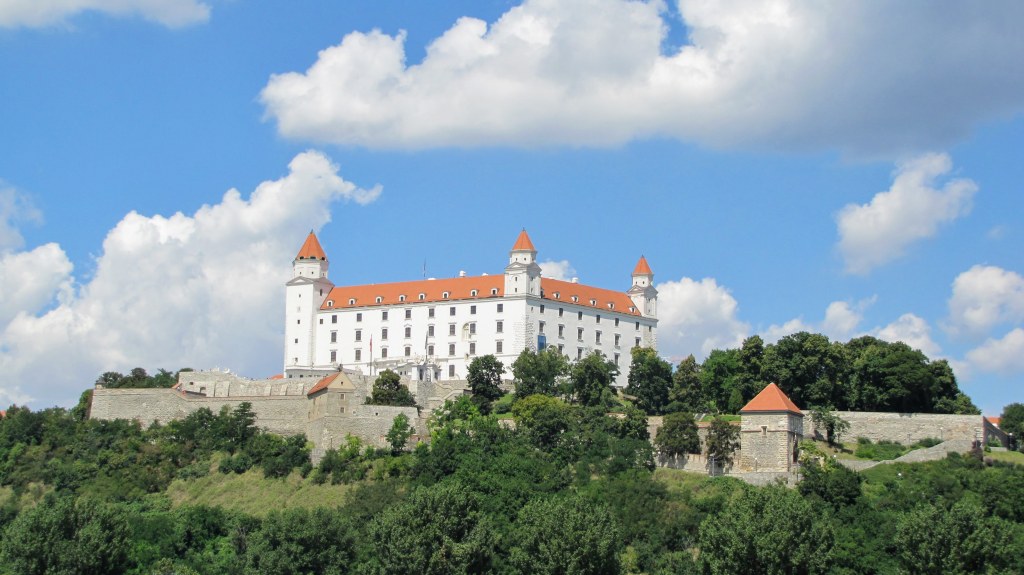
After speeding through Vienna, take it a little slower and explore historic castles in and around Bratislava. Right off the main drag, you’ll find Bratislava Castle. The original castle dates back to the ninth century, but what you’ll see is a rendition of the later castle, which was reconstructed in the 1950s after a fire destroyed most of the complex in the 19th century. While you can go inside, we recommend sticking to a walk along the exterior for a nice view of the city.
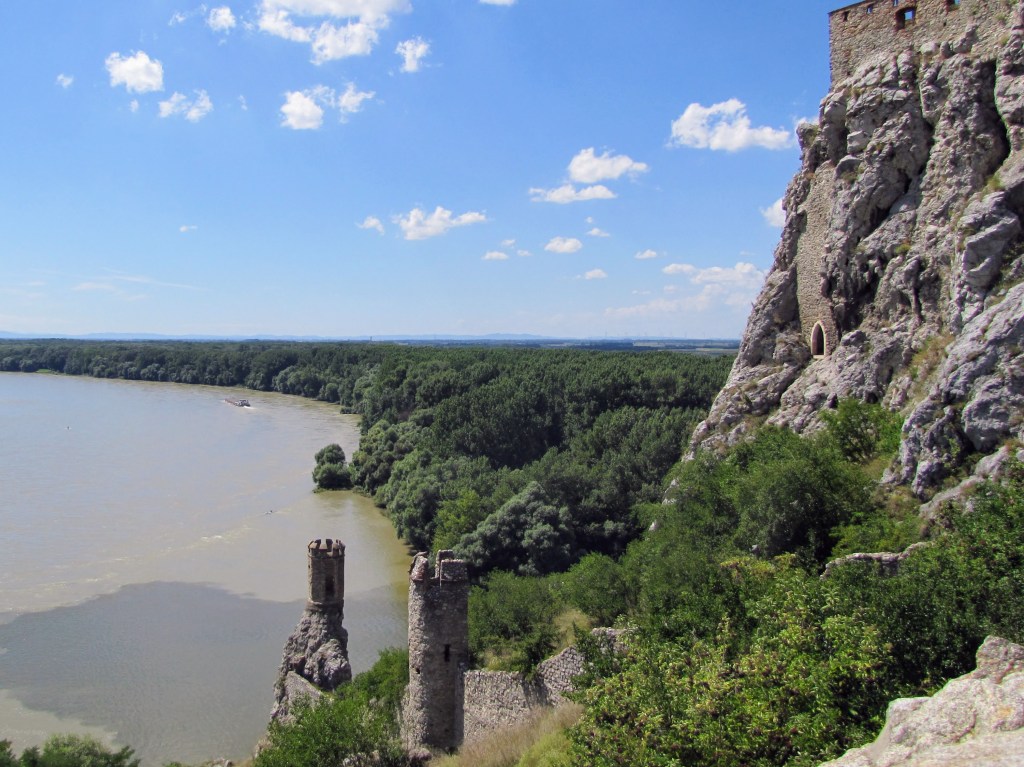
Next, hop on the 29 bus, which takes you to Devin Castle. Parts of the complex date back as early as 865, but the castle was destroyed during the Napoleonic Wars. Still, the ruins are fascinating to explore and we spent an entire afternoon hiding in the nooks and crannies for photos.
Once you get back into town, visit the UFO Bridge, where an elevator drops you off 270 ft above the city. The views of the city are fine, but you’re really here for the impossibly tranquil Danube unfurling below.

Budapest – 3 days
Day Seven – Train to Budapest & Gellert Baths
After an action packed few days, the three hour train journey to Budapest offers time to unwind. Upon arrival, keep the spa ambiance going with a trip to the Gellert Baths. These opulent indoor baths leverage water from nearby hot springs. While some pools are heated, others are more temperate and it’s fun to hop from pool to pool with the occasional sauna break between.
Day Eight – Parliament, Fisherman’s Bastion & Hospital in the Rock
Supercharge your day with breakfast in one of the city’s over-the-top cafes, which give Vienna’s a run for their money. Properly fueled (with coffee and pastries), head to the Parliament building – be aware that they run a lengthy security check to enter the building and you’ll need to bring your passport. The building was built to resemble London’s Houses of Parliament from the outside, but inside it’s all Hungarian glamour.
Head to Fisherman’s Bastion atop Castle Rock, which houses a gorgeous church and great overlook from which to have lunch. Then it’s time to tour the Hospital in the Rock, a WW2-era health care complex carved into Castle Rock. In the evening, let off steam with a tour of the city’s ruin bars, which balance a club atmosphere with a lively pub vibe in a junkyard setting.
Day Nine – House of Terror, National Gallery & Szechenyi Baths
This day jolts you back and forth between high-brow pursuits and simple entertainment. Start on the highbrow note at Budapest’s National Gallery, which features a curious collection of regional art as well as some of the best grounds for a museum that we’ve seen. Don’t miss the gardens!
Switch to a low-brow note with a tour of the House of Terror. Although it’s one of the better museums in the region examining the cold war, it does occasionally succumb to Hollywood vibes – no less than in the gift shop, where Alex purchased wax candles of Lenin and Stalin.
Finally, kick back in the Szechenyi Baths. Largely outdoors and located in the middle of the park, these have a lively youthful atmosphere.

Kiev – 4 days
Day Ten – Arrive in Kiev, walking tour
The flight between Budapest and Kiev takes about three hours, plus the time getting to and from the airports so keep this day lean in terms of activities. Pick up cash at the airport for the bus into town – Kiev remains a cash-first city. After settling in, go to Maidan Square to join a tour with Kiev Free Walking Tours. This group operates different tours exploring the ancient and modern parts of the city. Distances in the city are vast, and having a knowledgeable guide weave you around the downtown area vastly improves your first day.
Day Eleven – Walking tour & Churches
In the morning, join another Kiev Free Walking Tour covering different highlights of the city. In the afternoon, head to St. Sophia’s Cathedral and St. Michael’s Monastery. Despite being located directly opposite each other, they project vastly differing attitudes with St. Sophia’s being layered in Byzantine mosaics (if a bit run-down) and St Michael’s being coated in gold-tinged murals.
Day Twelve – Pecherska Lavra & Patriotic War Museum
Head out early to Pecherska Lavra, a monastery complex with sprawling catacombs located to the Southeast of the city center. Note, this is a holy place and you are expected to wear corresponding attire, which means long pants for men and women and hair coverings for women; a scarf is fine. Join a tour to gain access to the catacombs, where you carry a personal candle to light the way as you venture through. Many people are there for their own religious observance, so be smart and be respectful (no photos, anywhere).
From there, it’s a 20 minute walk to the Patriotic War Museum. While the museum itself offers a fascinating Ukrainian perspective on World War Two, the real draw is the massive statue outside. Officially called the Motherland Monument, it towers 335 ft above its surroundings (that’s 30 ft taller than the Statue of Liberty).
Head back early to your hotel, because you have a big day tomorrow.

Day Thirteen – Chernobyl
No matter which tour you decide to join to visit the exclusion zone of Chernobyl, you’ll be meeting bright and early in Kiev’s main Maidan Square. From there a bus takes you to the exclusion zone, where there are security checks before entering. We visited long before the HBO show Chernobyl, which we have heard has added some unwelcome commerce to the area, especially this step. From there your guide takes you to all the key sights, including lunch at a restaurant in Pripyat (which lies outside the innermost exclusion zone). The entire experience is thought-provoking and, we hope, provides a more reflective alternative to the disaster tourism phenomenon.
Day Fourteen – Departure
Although it may feel fast, you have just spent 14 days roaming eastern and central Europe and it’s time to go. Head to the airport and use your remaining cash for any last-minute souvenirs. For vodka connoisseurs you can pick up decent Ukrainian vodka for $5-$10 at duty free shopping. Kiev’s Airport is quite well connected, with direct international flights to many major cities on the East Coast of the US.
 Roam The Reaches