
Camp cooking in Namibia is delicious, if you do it right. We didn’t at first. Our first few dinners featured charred-but-raw peppers and lamb skewers as tough as gummy worms.
If we had some simple information about what to expect when camp cooking, these less-than-gourmet meals could have been avoided. While self-drive tours around Namibia are one of the most popular ways to see the country, information about cooking while camping is scarce.
This guide will prepare you. Camp cooking is easy if you know what to buy and what to expect. In this post you’ll find grocery lists, equipment lists and sample recipe ideas, as well as our tips for breakfast, lunch, snacks and drinks.
Note: This advice is based on our own eat-anything diets. If you follow a special diet, you’ll still benefit from our overview on what you’ll find at the grocery stores in Namibia and what cooking equipment you’ll have at your disposal.
What’s Included:
- What kind of cooking equipment will I have?
- What tools will I need to make a campfire?
- Should I make a grocery list?
- Where should I shop for food?
- What kind of produce will I find?
- What kind of meat is available?
- What types of snacks will I find?
- What drinks are available in the supermarket?
- What should I buy for breakfast?
- What should foods should I buy for lunch?
- What should I cook for dinner?

What Equipment Will I Have to Cook With?
If you rent a car with a tent attached to the roof, the rental company should give you the option to rent a mini-fridge and cooking kit. These are essential add-ons if you want to camp and cook for yourself.
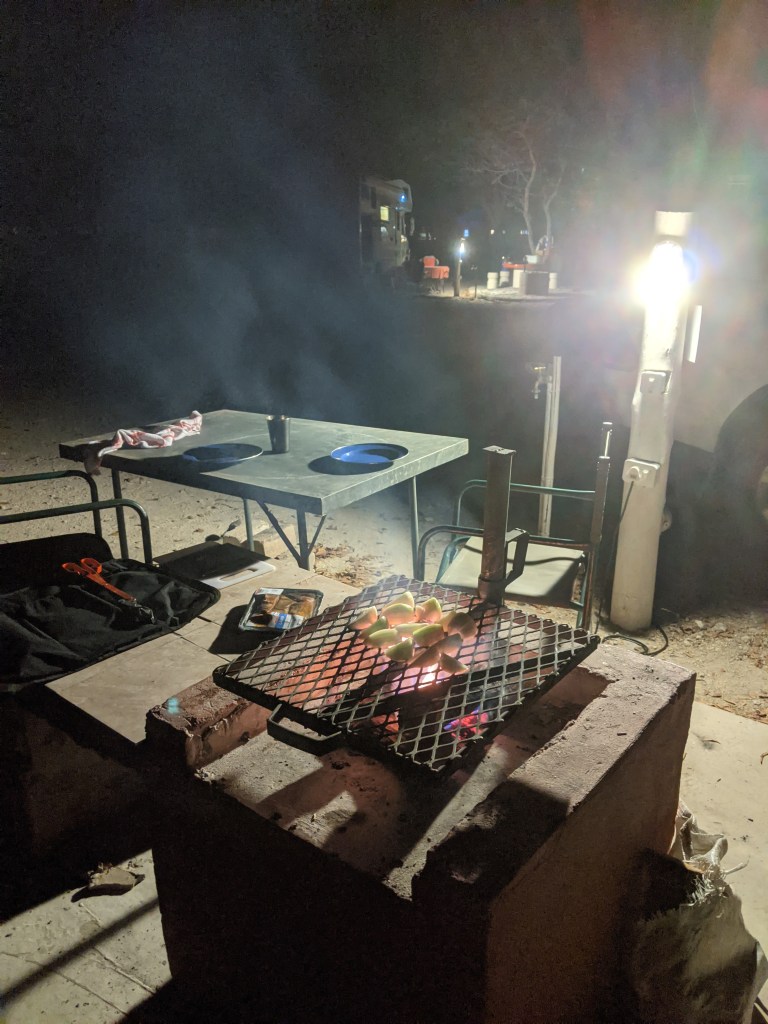
While specific supplies will vary by rental company, our kit from Advanced Car Hire contained: four plates (two large, two small), two bowls, two mugs, two cups, a set of cutlery for two, a chopping board, multiple knives (serrated, paring, chef’s), a wine key, a can opener, a cutting board, a cast-iron skillet, a cast-iron pot, a pair of tongs for grilling, and a kettle. You’ll also get a braai (grill), a gas canister with camping stove attachment, and a plastic tub for washing up. There should also be a table and chairs.
We found it useful to also buy a sponge, a kitchen towel, and some dish soap (we brought biodegradable Campsuds). You can pack these items in your suitcase or purchase them quite cheaply at the grocery store in Namibia.
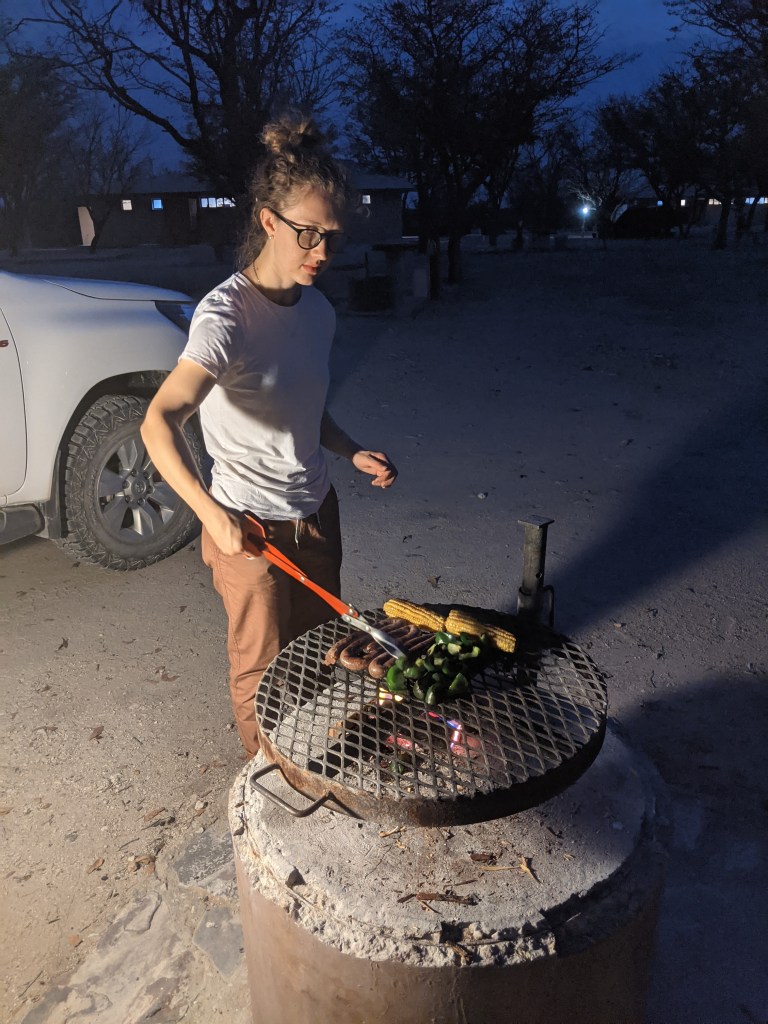
Namibia’s NWR-managed campsites have a well-kept fire pit and grill at each pitch. Your campsite will also have a water spigot and power box, where you can plug in your refrigerator at night. Some campsites also have permanent tables and chairs, a nice option so you don’t have to drag yours out of the trunk every night.


What Tools Will I Need to Make a Campfire?
Apart from a braai, your car rental company isn’t likely to provide you with any of the gear needed to make a campfire. You’ll need to purchase wood, matches and, optionally, firestarter.
We highly recommend purchasing these additional supplies at a supermarket, not at a campsite. We found the wood sold at campsites was very resinous and difficult to light. Unless you are a confident campfire cook, do not forget firestarter bricks or lighter fluid. These materials will speed up your fire setup so you can get to after-dinner activities such as animal spotting at Etosha’s waterholes or star-gazing in the desert.
Keep your campfires small to conserve wood. A smaller campfire is also easier to put out. You’ll only need a few logs to cook an excellent meal.
Should I Make a Grocery List for Camp Cooking in Namibia?
We recommend coming up with a loose grocery list before your trip. If you are staying at a mix of campsites and hotels, plan out the days when you’ll need to cook dinners and come up with some rough ideas for how much food you’ll need to feed yourself during that time.
The next step is to identify when you’ll have access to supermarkets where you can stock up on groceries. This is usually in big cities like Windhoek, Swakopmund and Lüderitz. Keep in mind that most grocery stores in these areas are open only between 9am and 6pm, so you’ll need to make sure that you have time to shop during opening hours. Sketch out how many breakfasts, lunches and dinners you’ll need to shop for at each stop.
This doesn’t need to be precise. For our first grocery shop in Windhoek, we knew we’d need supplies for two dinners plus a backup, and about as many lunches and breakfasts. After deciding we’d stick to pasta for one dinner, we decided to get two proteins and two veg for our meals. Create a loose structure to use as you shop, making sure that you identify what kind of meals you’ll have and how much of which foods you’ll need to satisfy you for each. You can see what our list looked like below.

Another consideration, albeit a minor one, is that you’re not allowed to take raw meat out of the Anderson Gate at Etosha National Park. In practice, this law is more of a technicality and rarely enforced for tourists. There is a veterinary fence dividing northern and southern Namibia – a product of colonization – and raw meat is not allowed to travel from north to south. While we didn’t have any guards check for raw meat, it is possible that they could confiscate any raw meat you have. If you want to be on the safe side, plan a vegetarian meal if you’re cooking the night after leaving Etosha and won’t have time to swing by a supermarket.
Also, keep in mind that plastic bags are forbidden in Namibia’s national parks. Like Etosha’s raw meat rule, we never saw this enforced. Still, it’s easy to err on the safe side and skip plastic bags altogether by keeping your groceries packed away in your mini fridge.
What Supermarket Should I Shop at in Namibia?
We shopped at Spar supermarkets and loved them. Across the country, the Spar stores were much fancier and bigger than the grocery stores we shop at in the US. Even the locations in city centers were huge! If you’re looking for a large selection of products, as well as some back-up cooking gear, head to Spar.
Spar also tends to have longer opening hours than other supermarkets and it does open on Sundays. Still, the hours may be reduced compared to what you’re used to back home, so double check if you get access to WIFI. Otherwise, plan to shop between 9am and 6pm.
Other supermarkets you’ll encounter are Ok Foods and Shoprite.
What Kind of Produce Will I Find in Namibia?
The vast majority of items you expect to find at your supermarket back home will be available at grocery stores in Namibia. The only exceptions are fruits and vegetables. They’re there, but the selection may be more limited and more expensive than you’re used to.
For vegetables you can expect to find onions, peppers, corn, tomatoes, cucumbers, lettuce, potatoes and squash. There may also be a few more items available, depending on the season and supermarket. The fruit selection is a bit more limited. We only bought bananas, but they quickly spoiled in our refrigerator.
What Kind of Meat is Available in Namibia?
Namibian supermarkets have an ample meat selection. Alongside beef, pork and chicken, there’s a selection of game meats – a great option for the confident campfire cook. If you’re looking for minimal prep with maximal taste, sausages are the best choice. Not only do they cook up quickly, you can also try regional varieties with spices like coriander. Grocery stores also have a wide selection of pre-marinated meats for grilling.
What Types of Snacks Will I Find in Namibia?
Biltong is one of the most popular Namibian snacks. Most grocery stores have a fresh counter dedicated to biltong. You can find varieties flavored with mango chutney, made from zebra, or formed like a sausage (Droëwors). In Windhoek, we also found pre-packaged bags, many of which had interesting seasonings.
You’ll also find plenty of nuts and dried fruit, as well as crackers and chips. Haribo is very popular, as is British candy brand Rowntrees. You’ll find Cadbury chocolate, Manner wafers, Lindt and some local varieties of international favorites like Kit Kats and Oreos.


What Drinks are Available at Namibian Supermarkets?
Juices, water and sodas are the most common soft drinks. Juices come in a wide range of flavors, with options like guava and apricot-peach, alongside the more predictable orange and apple juices. In terms of soda, there’s plenty of coke and sprite, but also look out for local brands. Emilia tried a passion fruit-apricot soda from the brand Coolo, a fun alternative to typical flavors.
If you like to drink milk, know that Namibia follows Germany’s preference for whole milk. It’s the only kind stocked at most supermarkets.
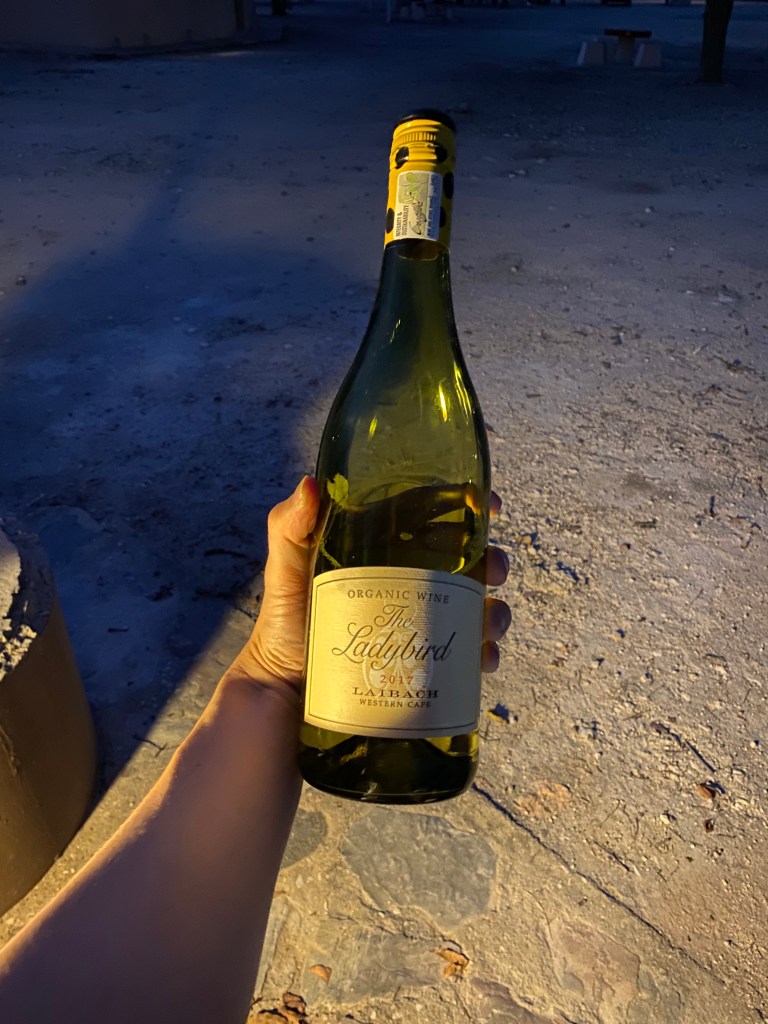
For alcoholic drinks, supermarkets will have a basic selection of beers and wines. If you’re interested in beer, try the locally-brewed Windhoek Draught or Hansa. Most of the wine available in supermarkets is South African. It’s all affordable, so don’t hesitate to grab the fanciest bottle you can find, which is unlikely to cost more than $10 USD. If you’re looking for something special, you can head to Tops by Spar, the local liquor store chain, which has a much larger selection. Be aware that alcohol sales (outside of restaurants) are not permitted on Sundays across the country.
We also recommend picking up a large 1.5 liter (or larger) bottle of water on your first day. You can drink through that, then use the empty bottle to purify water when you’re camping. Generally water in Namibia is potable, but we purified ours with Katadyn Micropur tablets just to be safe.

What Should I Eat for Breakfast in Namibia?
Breakfast is one of the easiest meals to plan for in Namibia. It should be quick, simple and easy to eat in a moving car. Think cereal (without milk), granola bars, and crackers with jam or peanut butter. We chose the last option and it worked well.
If you’re a coffee person, plan to either boil water in the evening and save it in a well-insulated vacuum flask, or to drink cold coffee. Emilia is the coffee-lover and she purchased instant coffee from Alpine Start specifically to brew cold in the morning. Both the black and coconut flavors were winners, and even topped the brewed coffee in some hotels.

What Should I Eat for Lunch in Namibia?
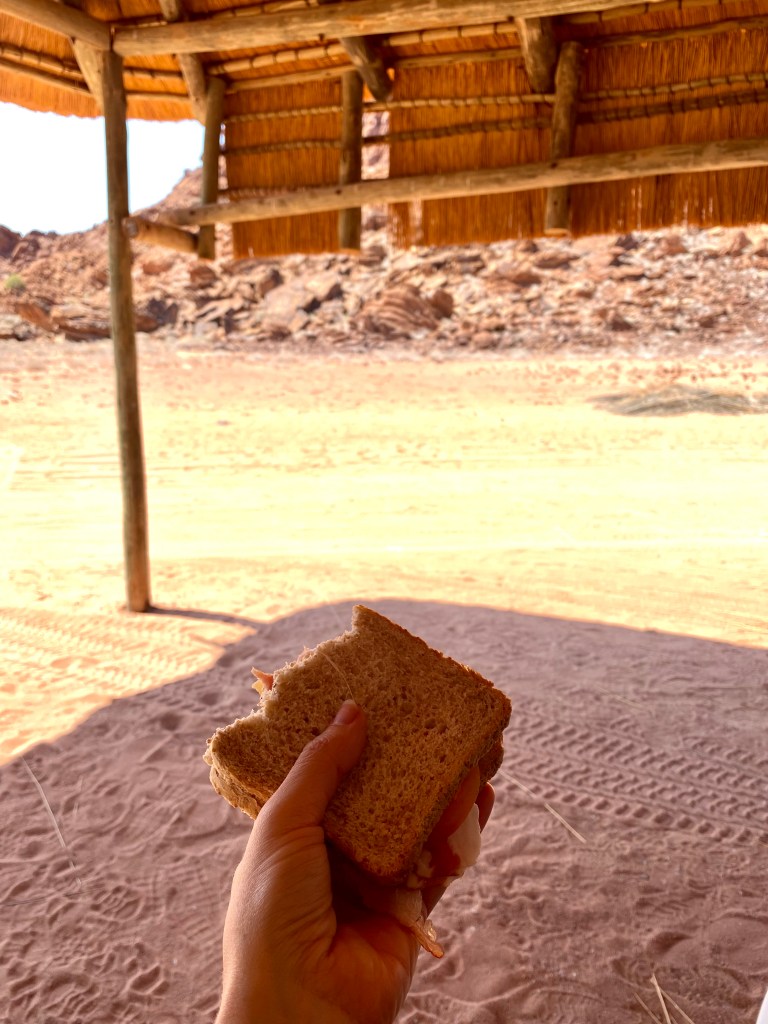
If you plan on covering long distances during the day, lunch will be a trickier meal to plan. You’ll want something that’s easy to prepare and eat on the road. We opted for sandwiches most days, though we sometimes simply had snacks for lunch if we knew we wouldn’t have time to stop.
We purchased bread rolls from Spar’s fresh bakery, which stayed reasonably springy after being refrigerated for three days. For fillings, we chose pre-sliced salami (there are plenty of varieties at the supermarket), emmental cheese, mustard, tomatoes and lettuce. The lettuce was a mistake. It quickly grew wet, wilted and unpalatable. Everything else worked well and was quick to prepare on the tailgate of the rental vehicle (including a roadside lunch on the D707).
What Should I Cook for Dinner in Namibia?
Your choice for dinner will depend on how ambitious you’re feeling and how much time you want to save for other evening activities.
For the nights where you want to keep it quick and simple, pasta is an excellent option. The water will take a bit more time to boil on your small gas canister than it would on your stove at home, but that’s unattended time you can use to set up your tent and organize your car.
For the nights when you have more time to linger over your campfire, we highly recommend grilling boerewors sausage and onions. The sausage cooks up relatively quickly and has a unique flavor thanks to the coriander, nutmeg and cloves used as seasoning. As for the vegetables, you can grill whatever your favorite option is that you can find at the supermarket. We found onions were the cheapest vegetable and ended up tasting the best from the grill.
 Roam The Reaches
Hi! Your tips for Namibia are great, and detailed. Just one question, the fridge that’s in the car has a dedicated battery that allows it to work 24 hours a day or has to be unpluggerd and plugged every evening?
Thank you!
Eduard
LikeLiked by 1 person
Hi Eduard,
Great question. The fridge in the car is wired into the car battery and powered by the car when you are driving. But at night, when you park, you plug the fridge in so it doesn’t drain the car battery. Campsites throughout Namibia will have plugs available at each site so you can plug in your fridge.
Thanks for reading!
Alex & Emilia
LikeLike