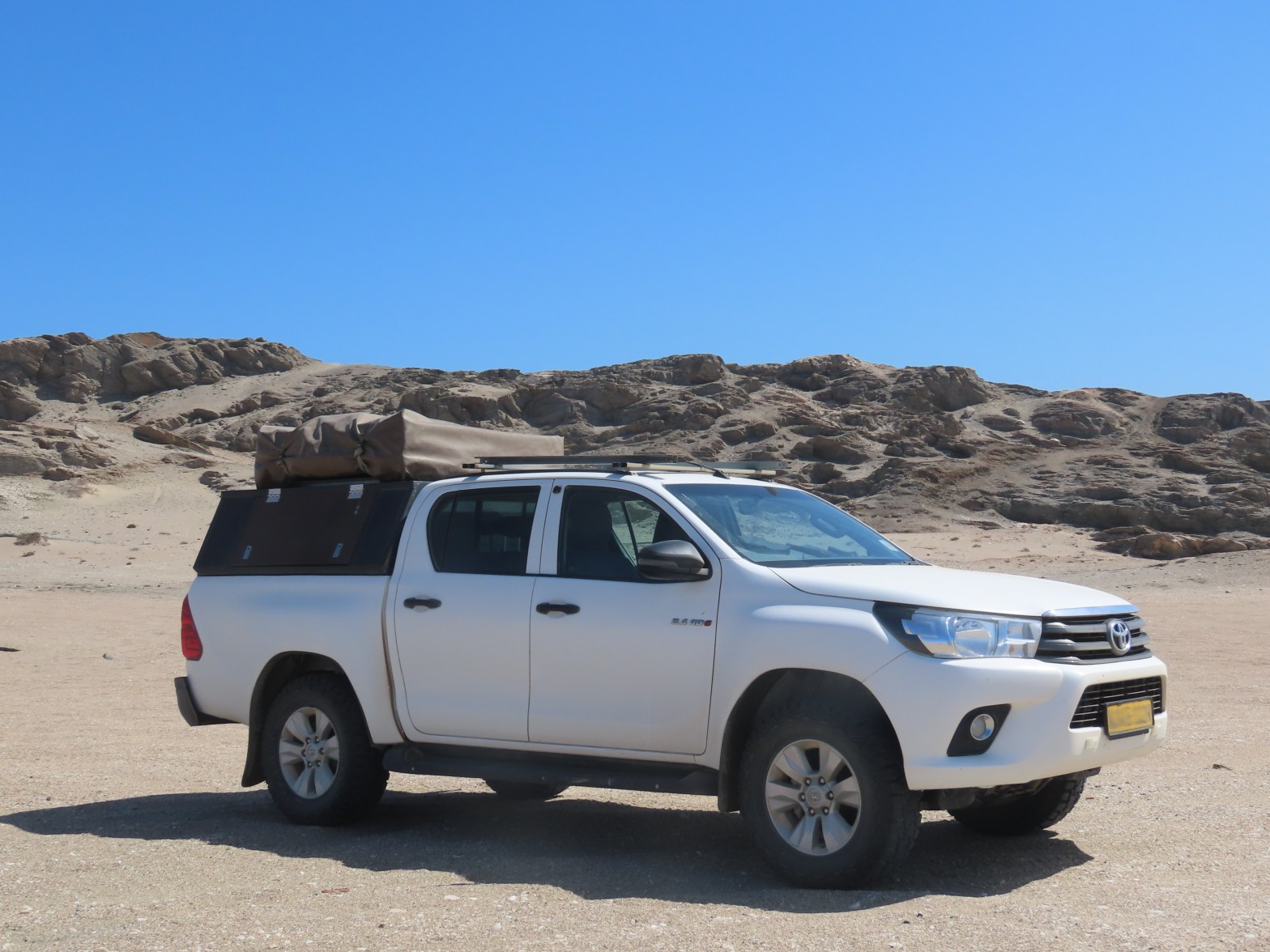
If you want to roam the reaches, you’re going to encounter situations that require off-road driving. There are some places that only the traction and ground clearance of a 4×4 can reach.
To be honest, we’re not hugely experienced off-road drivers. That doesn’t mean we haven’t gotten into situations where we’ve needed off-road driving skills. In fact, looking up road conditions and driving techniques is an essential step we take when preparing for a trip.
Over the years, we’ve collected a range of tips and tricks that have enabled us to traverse rocky roads and sandy stretches. If you want the confidence to visit places that require a bit of technical maneuvering, this guide will teach you the must-know skills to effortlessly tackle whatever the road puts in front of you.
Before proceeding, some words of warning:
- Following the advice below has worked for us, but that does not mean it will always work for you. Driving off-road can be dangerous to you and your vehicle, especially if you don’t know what you are doing. Don’t drive off-road without understanding the risks.
- Do not drive off-road where prohibited by signs or by the rules of the area/park in which you are driving.
What’s Included:
- How to Drive on Sand Tracks
- How to Drive Over Rocks
- How to Drive Through Water
- How to Plan for Breakdowns When Driving Off-Road

How to Drive on Sand Tracks
Sand is by far the most common off-road terrain that we have encountered. We drove a sand track to reach Deadvlei and Sossousvlei in Namibia. Whether you’re driving on hard beach sands or deep and soft dune sands, the same general rules apply:
- Engage 4×4 low gear (4LO) for driving in soft sand. 4×4 mode provides you with more traction, which is essential in deep sand. Low gear keeps your wheels spinning slowly. For harder sand (like beach sand), 4×4 high gear (4HI) may be sufficient and causes less wear and tear on your vehicle.
- Avoid deep sand. Paradoxically, the best way to drive through sand is to avoid it as much as possible. As you drive, look for areas with hard ground or low, firm sand. Driving over these surfaces will be easier than clawing through deep sand. You can also use hard patches of ground to build momentum so that you can plow forward through deeper sand.
- Drive consistently. Sudden starts and stops from braking can cause your tires to dig into the sand. You want your tires to roll continuously and for your vehicle to have consistent forward momentum. When driving over sand, apply constant throttle, increase your speed gently, and let your car roll to a stop instead of braking.
- Reduce your tire pressure. If you are worried about driving in sand, you can reduce your tire pressure to ensure more of the tire surface has contact with the ground. This provides additional traction and prevents your tires from sinking as far into the sand. You can also reduce your tire pressure after you get stuck to make it a bit easier to get out.
Advice varies as to how much to reduce your tire pressure. We recommend removing between 0.5 and 1 bar of pressure from each tire. Do not reduce your tire pressure below the higher of either 1.6 bars or the minimum recommended tire pressure by your car and/or rental company. Re-inflate your tires to their recommended pressure before driving on roads.
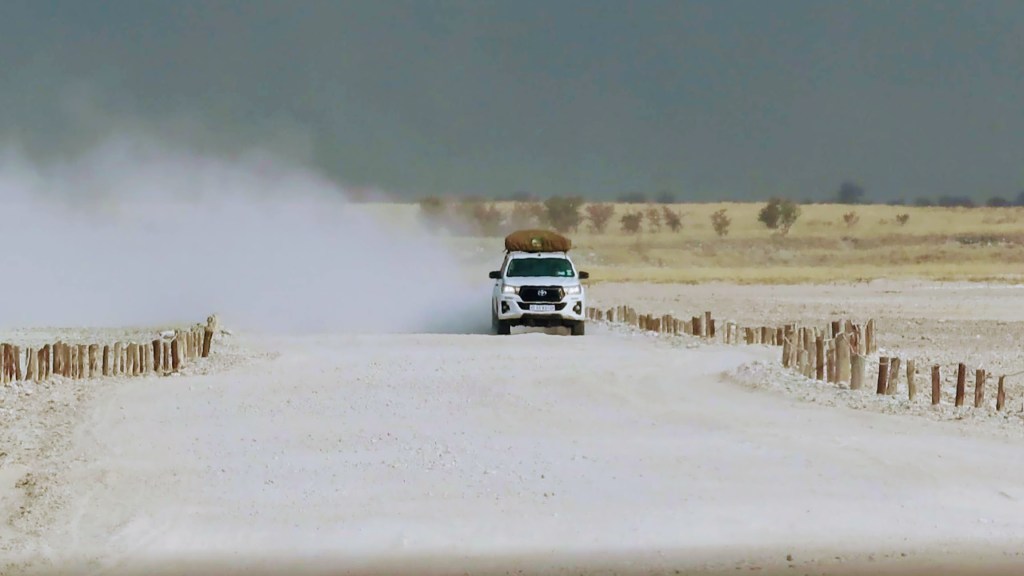
- Park downhill. If you need to park on soft sand, park facing downhill so that you can get a rolling start when you resume driving. Starting from a standstill or facing uphill means you may get stuck if the sand is deep.
- Drive in the morning. Overnight, cool air causes the sand to compact. Compact sand is easier than soft sand to driver over because the harder surface provides more traction. As the sun heats the sand during the day, and as other vehicles tear up the tracks, the sand becomes softer and more difficult to traverse. If you are driving out and back along a sand track, be aware that however hard the drive there is, the drive back will be harder.
- Drive with tires that have a deep tread. Deep tire tread will improve traction when driving in sand. Bald tires are more likely to get stuck because the wheels can easily spin on top of sand. New off-road tires will have tread up to 0.5 inches (13mm) deep, while standard road tires will have tread about 0.3 inches (8mm) deep. Tires are considered bald when they reach 0.06 inches (1.5mm) deep. Road tires may cope with low or compact sand, but only attempt deep sand with proper off-road tires.
- Avoid sharp turns. When all of your tires are facing the same direction, they are more effective at propelling you forward. Sharp turns require your vehicle to push you in two directions at once and reduce the amount of traction that you have in either direction.
If you get stuck while driving in sand:
- Reverse the way you came in. If you get stuck you may be able to reverse along your own tracks, which have already compacted the sand. Once you have reversed to a firmer area, you can proceed in a different direction.
- Lower your tire pressure. See the notes on tire pressure above.
- Use a shovel and tow ropes. With a shovel you can dig gentle ramps in front of each tire and try to drive out. With tow ropes you can ask a friendly driver for some help pulling you out.

How to Drive Over Rocks
Rock is the second most common terrain that we have encountered. In Costa Rica, you’ll encounter steep, rocky water runoff tracks that descend into the jungle. In Namibia, you’ll need to traverse rocky surfaces to reach stunning views of Fish River Canyon and beautiful coves on Lüderitz peninsula.
Best practice for driving over rocks depends on the sizes if the rocks. The following advice is centered around driving on big stones and rocky tracks, not for boulder crawling or more extreme sport driving.
- Drive slowly. Puncturing a tire is the main concern when driving on rocky roads. Keep your tires safe by driving slowly and carefully. If there are obvious large rocks in the road or on the track, drive around or over them, car clearance permitting. If the rock cannot be avoided, drive over it very slowly.
- Use a spotter. If you cannot adequately see the road in front of you, ask your travel companion to get out of the car and spot for you. A spotter can tell you if the car is about to hit anything you can’t see; guide you as you are about to mount or dismount a rock; and peek over hills and drop offs to ensure that it is safe to proceed. If you’re traveling alone, hop out of the car and take a look, but only if you can stop the car in a firm and safe spot. So far, we’ve been lucky and haven’t encountered rocky tracks where we’ve needed a spotter. But no matter where you are, if you’re unsure: stop, get out of the car, and look.
- Keep your thumbs on the outer edge of the steering wheel. When you are driving over rocks, your steering wheel may turn abruptly as the car wheels hit rocks. A sudden turn can cause a steering wheel spoke to hit your thumb.

How to Drive Through Water
Water is not always traversable. It is important to determine if it is safe to cross water in a vehicle before attempting to do so. Off-road driving through water can be far more dangerous than off-road driving over sand or rock. Taking a vehicle through water can also seriously damage it. If you are renting a car, driving through water may be prohibited by your rental company.
Determining whether water is traversable is difficult to advise on remotely. Always use common sense. Check how deep the water is and, as a general rule, do not ford water that’s deeper than one foot. If you are trying to cross moving water, observe how strong the current is. When in doubt, ask the locals. They are probably familiar with whether or not the water is passable, and if it is , when it is safe to cross. In areas with heavy rains, sudden river swells can be common. When traveling during a rainy season in areas with unimproved roads, you may need to wait a day (or more) for the water level in a river to decrease before proceeding.
If you believe you can cross the water in front of your car, follow these tips:
- Plan where you will enter and exit the water. To enter and exit, you want a smooth incline. A sudden drop into the water, or a ledge where you need to exit, can cause you to get stranded.
- Engage 4LO before entering the water. Similar to driving through sand, you want slow steady power with as much traction as possible. Once you enter the water, drive in a straight line toward your exit at a steady pace.
- Keep your foot on the gas. It is important to avoid water traveling up the exhaust. To avoid this, maintain steady pressure on the gas throughout the entire traverse. If you need to brake for any reason, keep the gas pressed and brake with your left foot.
- Create a water bow. If the water you are driving through is high enough to reach the front and sides of your vehicle, ensure you’re driving fast enough to create a bow of water in front of your car. This will reduce the water drag and keep water out of your vehicle and engine. To accomplish this, drive at a steady pace. Driving into the water too fast, or driving through the water too slowly, will not allow a bow to form.
- Drive upstream. If you are crossing moving water, like a river, angle your vehicle upstream so that you are driving across and against the current. The water may push you downstream, so point your vehicle upstream of your intended exit point. As little as 4 inches of moving water can wash a car away so proceed with caution!

How to Plan for Breakdowns When Driving Off-Road
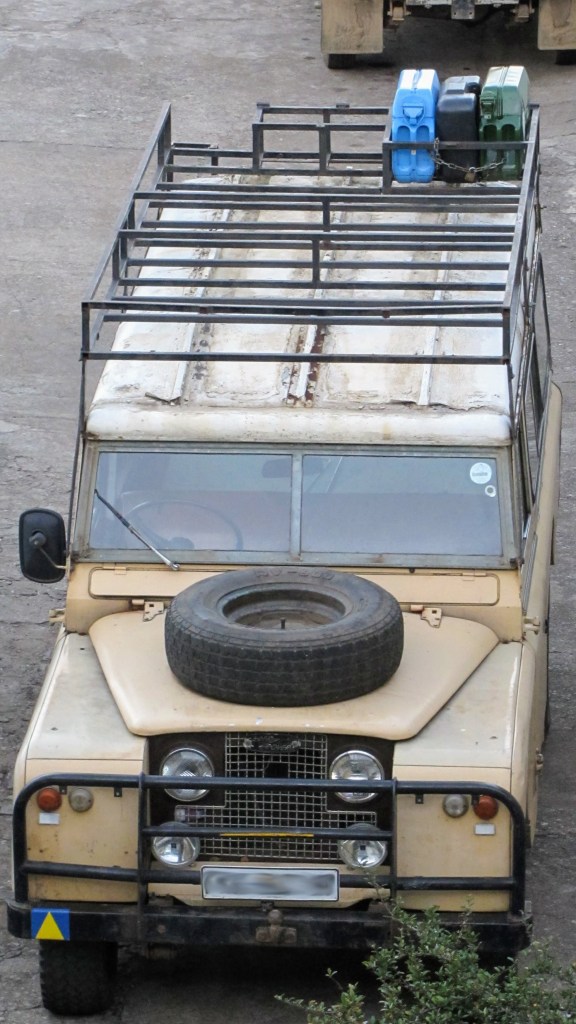
In the worst case, you may have a breakdown or punctured tire that puts your trip on pause. On any average road trip, this is not a huge deal, although it may put a damper on your day. If you are taking on a trip to a remote region, whether or not it is a 4×4 trip, this could hold you up for a few days.
You can usually enlist help from your travel insurance, car assistance (like AAA), rental company, or even from local emergency services. No matter how nice the road seems know that, in remote areas you may need to wait days for assistance. For these types of scenarios it is good to plan ahead and follow two basic pieces of advice:
- Have at least two liters of water per person stored for each day that you could be out of commission. For two travelers planning for two days, that means storing eight liters of water in your vehicle for emergencies. This may sound like a lot, and seem like an unnecessary expense, but it could save your life.
- Have at least one (easy) extra meal stored in your vehicle for each day that you could be stuck. The meal should be simple to prepare with the tools at your disposal. If you are packing a camping stove, we recommend grabbing a bag of dried pasta, which is cheap, easy to make, and feeds two to four people. Remember that making pasta does take water, so bring extra water to cook with.
 Roam The Reaches
That’s a lot of good ideas, it’s fun to go offroading. Thanks!
LikeLike