
Train travel is the best way to see Puglia. With its calendar-worthy beaches, fresh cuisine and can’t-stop-photographing landscapes, the southern Italian region has become a tourist hotbed. This reputation ushered in skyrocketing prices, crowds of visitors and international luxury hotels.
Fortunately, it’s still possible to get off-the-beaten track during a trip to Puglia. Taking the train keeps you away from the tourism frenzy, while immersing you in the region’s countryside, culture and language.
With immersion comes the need for know-how. There are few English announcements on the trains in Puglia. They’ll run slowly and you’re nearly guaranteed to be delayed . Most of the time, you won’t even be traveling on Italy’s national rail service.
This guide will explain everything you need to know to explore the region by train with the confidence of a local. We’ll provide a two-week itinerary that will take you from Bari, the region’s capital; down along to Lecce in Italy’s tacco (heel); and conclude in Taranto, located on the peninsula’s instep. Our itinerary also jumps into Basilicata, another region where visiting via train yields rewards.
What’s Included:
- Where is Puglia?
- An Introduction to Trains in Puglia
- When is the Best Time of Year to Visit Puglia?
- What are the Highlights of a Trip to Puglia?
- Essential Italian Words for Navigating Trains
- The Perfect Two-Week Train Itinerary
Where is Puglia?
Puglia is a region in southern Italy. It’s the area commonly referred to as Italy’s heel. The region is a peninsula that faces the Adriatic sea on its eastern side side and juts into the Ionian sea on the western side, where it faces Calabria (Italy’s toe). Puglia abuts three other regions: Molise on the northern edge, Campania in the north-eastern corner, and Basilicata along the southeastern edge.
Puglia (pooh-lyee-ah) is commonly referred to as Apulia in English, but the Anglicized name is becoming less common as tourism increases.
The region’s capital is Bari, which has the best rail and air connections. Foggia, in the north, also gets a lot of rail traffic. During the summer, seasonal routes on budget airlines, fly into Brindisi, another major city a bit further to the south. Lecce, despite being in the region’s far south, is also a transit hub.
Puglia can largely be divided into three different regions: the Gargano (in the north), the Murgia (in the middle), and the Salento (in the south). The Salento peninsula is located in the extreme south of the region and remains the most relevant geographical area for tourists. The area is famous for its pristine beaches and grottoes.
If you’re interested in reading more about the area, the book Old Puglia by Desmond Seward and Susan Mountgarret is a great introduction to how the region’s geography has influenced its culture and history.
An Introduction to Trains in Puglia
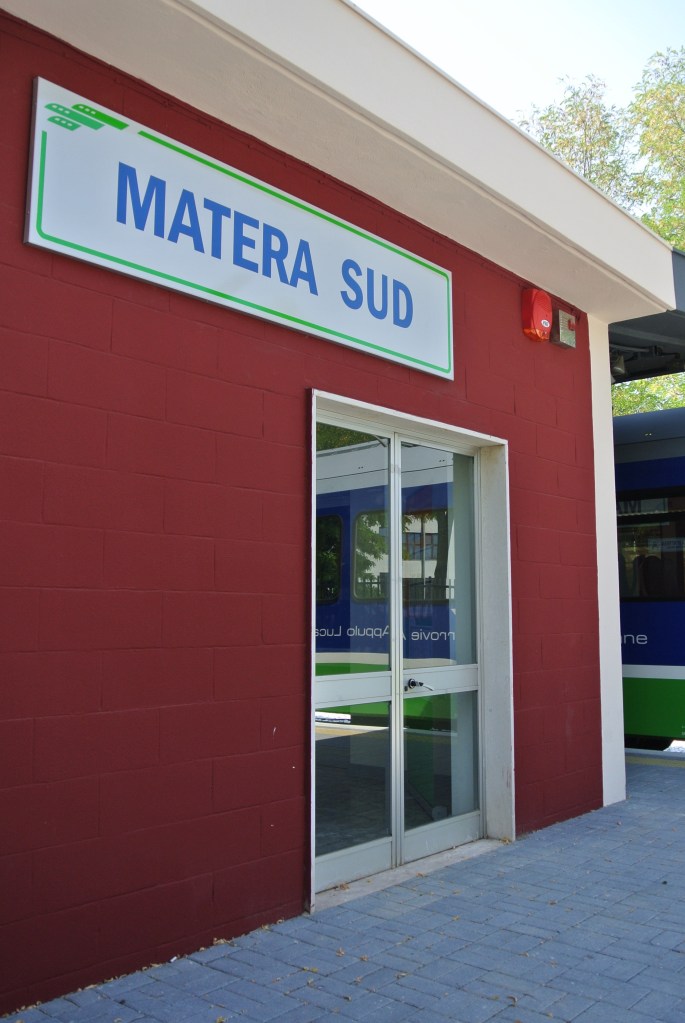
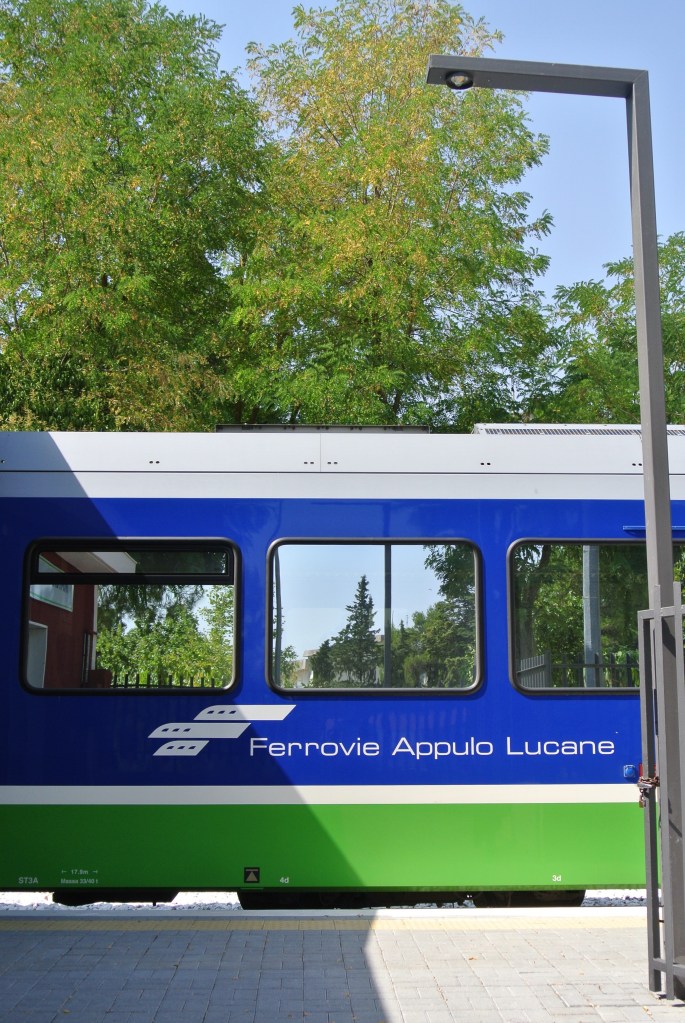
Puglia is served by five train companies. State-run Trenitalia services, including the high-speed Frecce lines, run into Bari from neighboring regions and between major cities. Ferrovie del Sud-Est (now owned by Trenitalia) connects the region’s smaller towns and inland areas. And Ferrovie Appulo-Lucane joins Puglia with Basilicata.
There’s also hyper-local operators. Ferrotramviaria traverses the coast between Bari, Barletta and Trani, while Ferrovie del Gargano serves the province of Foggia.
While you can purchase many Trenitalia tickets in advance, you’ll buy tickets for intra-region, commuter train services day-of. Don’t worry about tickets running out as these services don’t have assigned seats.
This itinerary uses the Ferrovie Sud-Est, Ferrovie Appulo-Lucane, and Trenitalia services to reach its destinations.
IMPORTANT TIP: Always validate your ticket before getting on the train! For Trenitalia services, look for the yellow boxes (less common, as they are older and getting phased out) or green and white boxes in the train station. You must validate all tickets purchased from ticket machines before getting on your train. You do not need to validate tickets bought online, but you should print them.
When is the Best Time of Year to Visit Puglia?
While most people think of Italy as a go-to summer destination, our favorite time to visit is actually in spring and fall. The temperatures are still warm and beach-friendly, but don’t quite reach the scorching levels of high summer. Visiting outside of the summer high season will also save you money on housing and help you avoid the crowds.
We don’t recommend visiting in winter. Gray days and chilly water will prevent you from enjoying all the beaches have to offer. Sure, you can still enjoy their beauty from afar. But even the most beach-skeptical person will want to jump into Puglia’s azure waters when they see them!
What are the Highlights of a Trip to Puglia?
It’s hard to distill the magical landscapes, fresh cuisine, and vivacious personalities you’ll encounter in Puglia into a list of highlights. The diversity of the region is part of the reason it’s become such a magnet for visitors. But there are still some experiences that you absolutely cannot leave Puglia without having:
- Wander through the shaded alleys of Bari’s citta vecchia. In the early 1990s, Bari’s old town (citta vecchia) was a no-go zone where dark corners hid shady secrets. Today, it’s a visitors paradise allowing a glimpse into the city’s history. In recent years, Via dell’Arco Basso has become a popular stop for visitors to snag bags of fresh orecchiette, which local women roll out by hand each day.
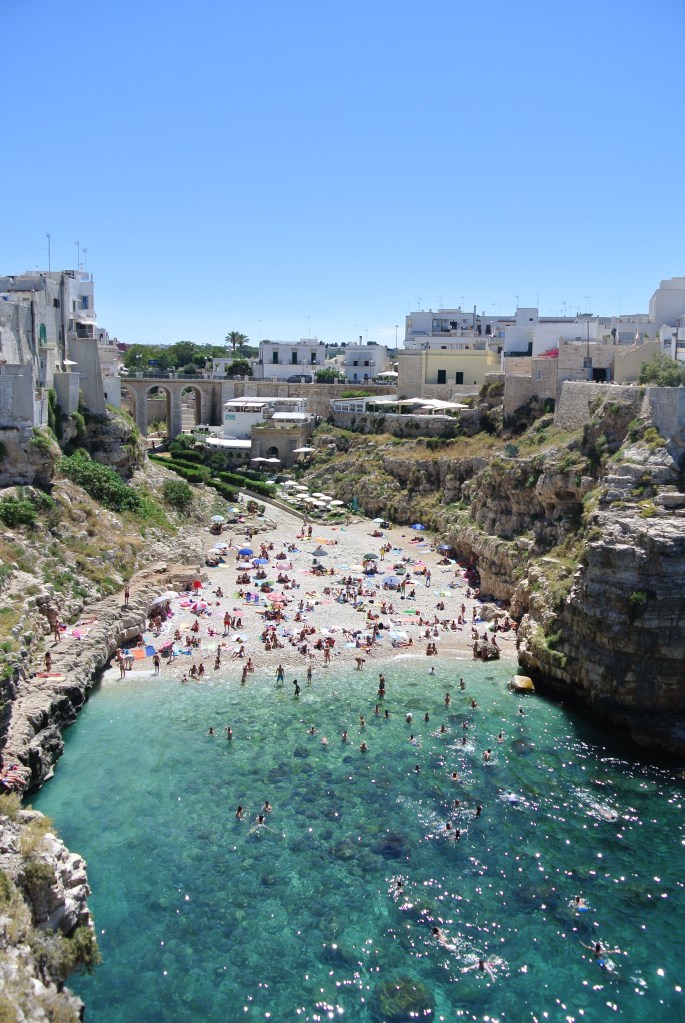
- Splash in the azure waters of Polignano. While Polignano a Mare inspired the song Volare (Nel blu dipinto di blu) – literally translating as “in the blue-painted blue sky” – it’s the blue water that lures most tourists. The town’s standout beach is nestled amidst cliffs that act as a backdrop for the Red Bull cliff diving competition each August. No matter when you go, pack bathing shoes; the beach is as rocky as it is beautiful.
- Feast on bread in Altamura. Tucked in the mountains that divide Puglia and Basilicata, Altamura is famous for its naturally-leavened bread. Shaped like a hat, the bread is tightly controlled according to DOP standards. The best place to sample it is Forno Antico Santa Chiara, which has been in operation since 1423.
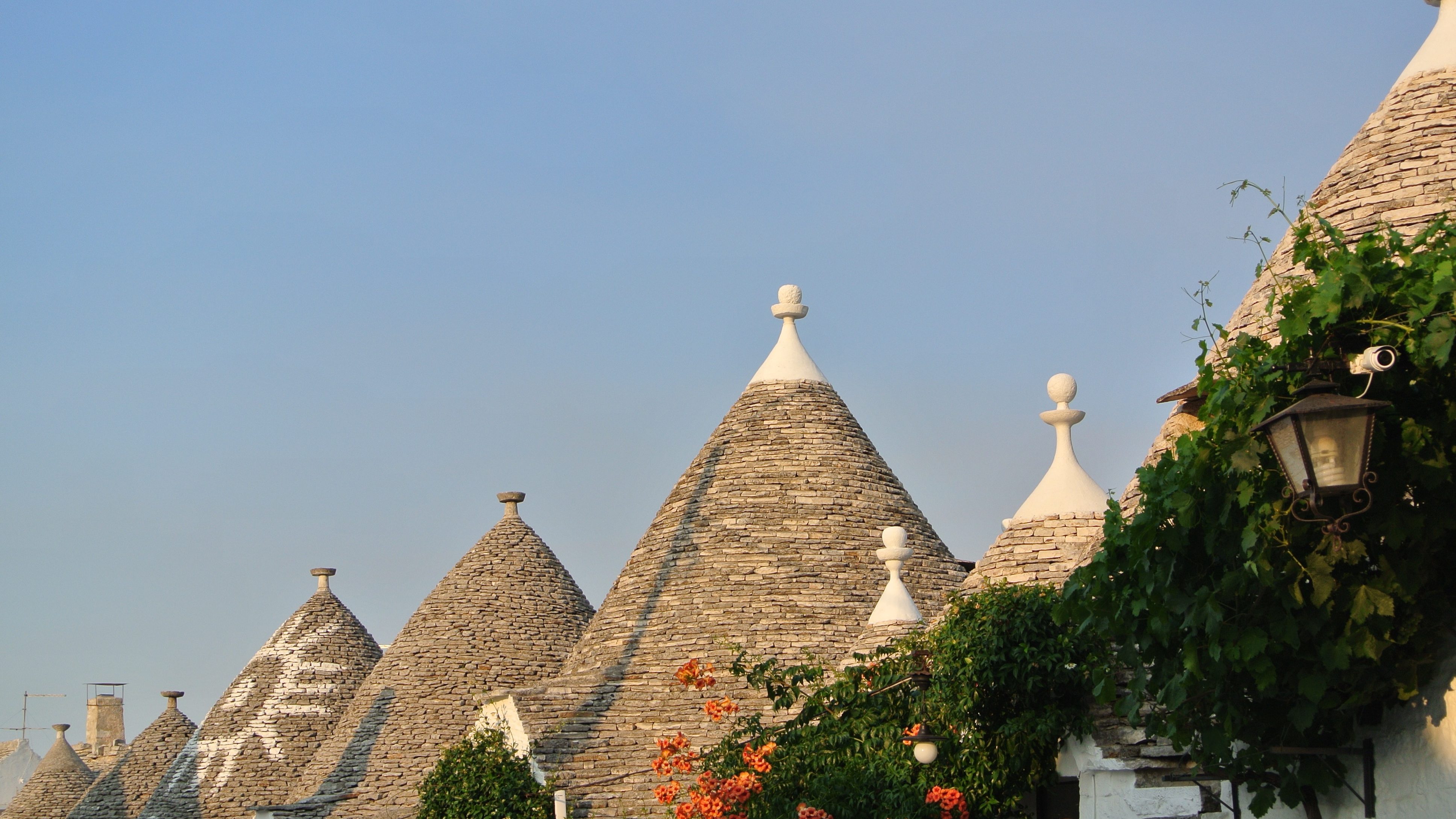
- Sleep in a traditional trullo in Alberobello. Trulli, conical white-washed houses with stone roofs, dot the Valle d’Itria, with Alberobello offering one of the largest centralized districts of the historical dwellings. Many structures are now part of hotels. Spending the night in one is an experience.
- Explore Baroque architecture in Lecce. Some may call the dramatic flourishes that adorn Lecce’s aristocratic buildings gaudy, but we think they’re elaborateness makes them especially enchanting. Baroque architecture in the city during the 18th century as a way for the church to assert its regional power and wealth. Head to the churches for the biggest dose of ornamentation.
Essential Italian Words for Navigating Trains
Having some Italian in your back pocket will make navigating train trips so much easier. Here are a few words and terms that you’ll likely encounter during your trip.
Italian – English
Biglietto
Ticket
Da Convalidare
To Be Validated
Binario
Track
Carrozza
Train Car
In Partenza
Departing From
In Arrivo
Arriving On
Posto
Seat
Prossima Fermata
Next Stop
Andata e Ritorno
Round Trip
Solo Andata
One Way
The Perfect Two-Week Train Trip in Puglia
Day One: Bari
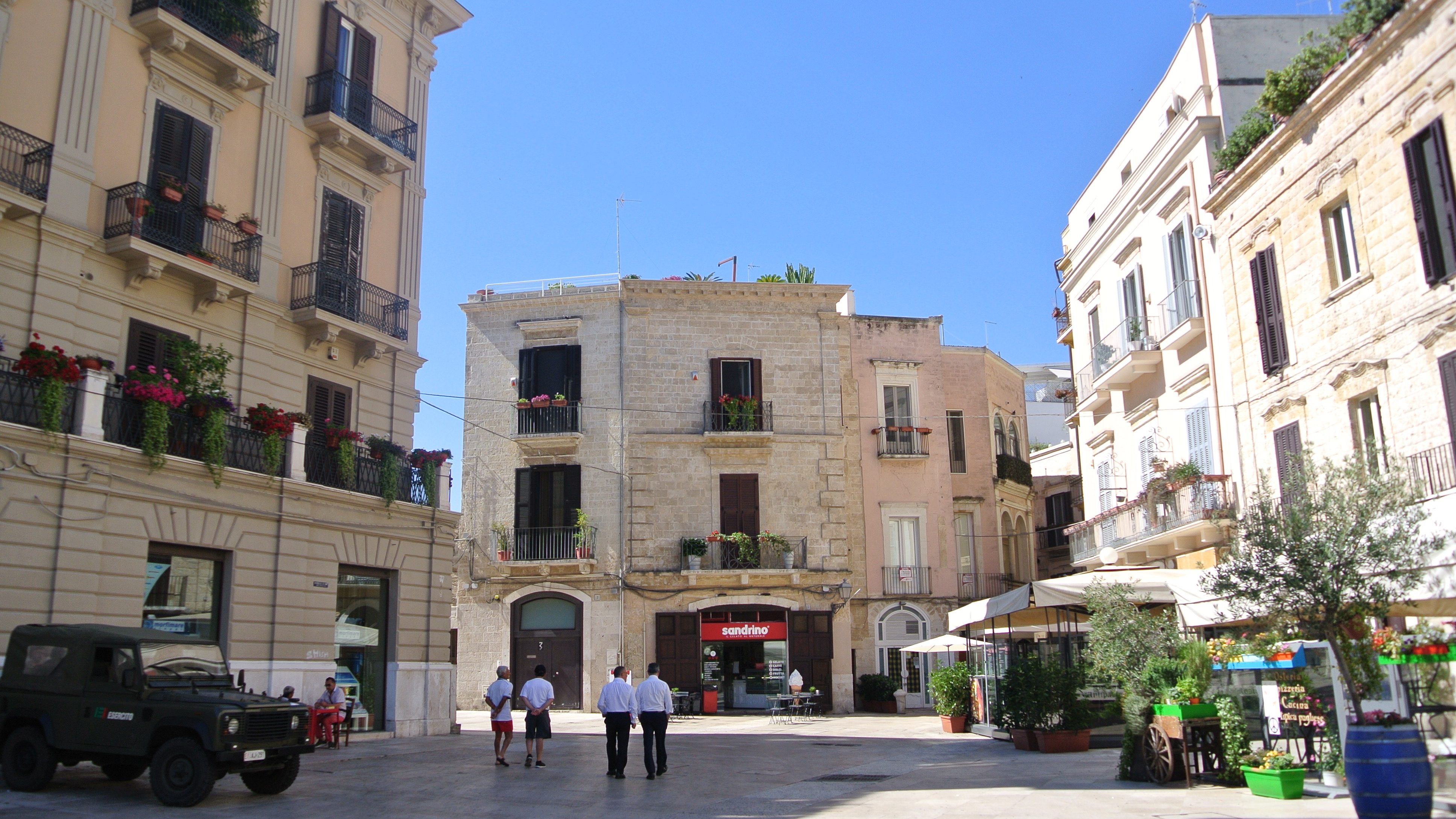
Bari is Puglia’s cosmopolitan heart. On one side of the city you’ll find the pulsating commercial district, where well-dressed Italians pop in and out of fast fashion stores. On the other end is the more intimate old town, where we recommend starting your immersion into Bari.
Head to the Piazza Mercantile for breakfast, where you can choose from a number of cafes lining the piazza. From there, head to the Basilica San Nicola. While the interior doesn’t exude the flamboyant vigor of many southern churches, it’s worth a stop to see a spot with local importance.
Visit the Cattedrale di San Sabino. The main attraction is the underground archeological museum, where ruins from a 9th-century Byzantine church sit next to an ancient Roman road and other artifacts. Cap off your trip to the old town by walking down the Via dell’Arco Basso, where fresh orecchiette are hand-rolled al fresco, and picking up a slice of focaccia Barese – bread rich with jammy tomatoes and olive oil – at local legend Antico Panificio Fiore.
Spend the afternoon exploring Bari’s new town. Check out what’s showing at the contemporary art center Spazio Murat, which offers a window into modern Italy. Otherwise, stroll along the lungomare until you reach Bari’s art museum, the Pinacoteca Corrado Giaquinto, which houses a robust collection of Baroque art.
Cap off your day in Bari with an aperitivo at a seaside cafe near the bustling Piazza Farnese.
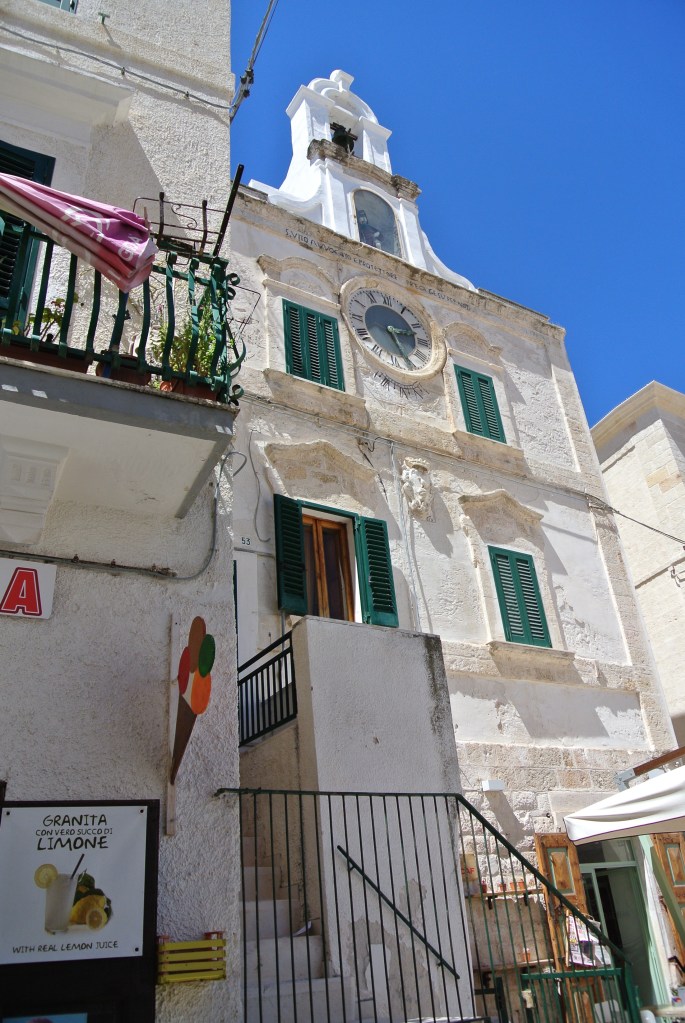
Day Two: Polignano a Mare
In less than forty-five minutes, a train will whisk you from Bari Centrale to Polignano a Mare. This train is a treno regionale, regional train, on the national rail service Trenitalia. Trains leave roughly every hour from Bari’s main train station and cost less than three euros one way. These trains are regional commuter-style train service, so you can’t buy tickets more than a week in advance. Instead, pick them up at the train station just before you head out. These trains don’t have reserved seating, so you’ll just need to look for an empty seat in the appropriate class car.
At Polignano, head straight for the beach, which is about a ten minute walk from the train station. It is a free beach with no changing facilities or umbrellas to rent. Grab a spot, spread out your towel as best you can over the rocks and jump into the water. The water may look inviting and clear, but it’s strewn with large rocks. We highly recommend wearing water shoes.
Before your return trip to Bari, save time to visit the Belvedere Terrazzo Santo Stefano. This scenic overlook offers the perfect vantage point for photographing the beach.
Day Three: Matera
Taking the train between Bari and Matera is one of the more complicated journeys you’ll make, despite being a straight shot between the cities.
You’ll take the Ferrovie Appulo Lucane, which leaves from a separate station attached to the side of Bari Centrale. If you’re standing in Piazza Aldo Moro outside the train station, the departure tracks for the Ferrovie Appulo Lucane are located to your left when facing away from the main station. You’ll head up a short staircase to reach the departure area.
Once you’re on the train, make sure you’re riding in the correct section to reach Matera. The train typically splits in two after Altamura, though some trains require a complete switch. Pay attention to the announcements, which are (frustratingly) repeated only once. If you’re confused, ask: “questo e’ la carrozza giusta per andare a Matera?”, which means “Is this the right train car to go to Matera?”, which should solicit a “sì” (yes) or “no”.
The train journey takes approximately two hours and has sixteen daily departures. We recommend booking these tickets in advance, though be advised that they do not come with seat bookings.
Since the Matera train station is located in the new section of the town, it may be a considerable journey to your hotel in the old town. That being said, it’s an easy walk, all downhill.
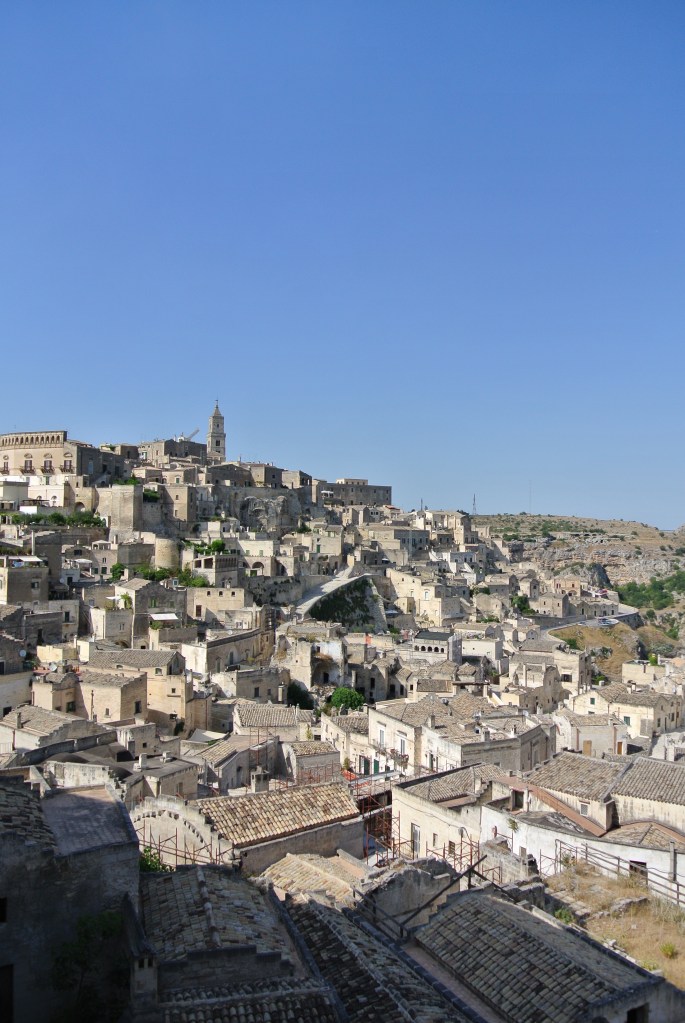
On your first afternoon in Matera, we recommend booking a walking tour (Discovery Matera is an excellent option). This tour should immerse you in the history of i Sassi di Matera, which literally translates as the stones of Matera. The dwellings earned this name because they were carved into the city’s hillside. They were inhabited until the 1950s, when the residents were forcibly removed. The poor living conditions, lack of modern amenities and uncleanliness earned the area the unfortunate moniker “the shame of Italy”.
If you’re interested in learning more, we highly recommend reading Christ Stopped at Eboli by Carlo Levi, which many attribute to alerting the Italian government to the living conditions in Basilicata’s hill towns.
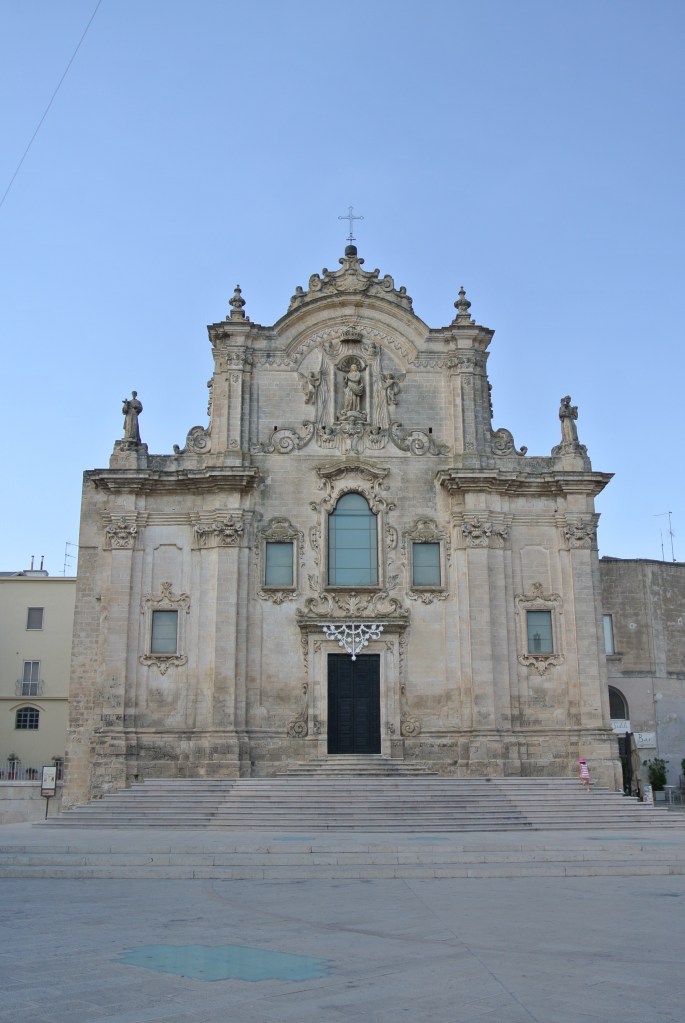
Day Four: Matera
Spend the entirety of your next day exploring Matera. Start bright and early with a coffee in Piazza Vittorio Veneto. From there, it’s a quick walk over to the Palombaro Lungo, also known as Matera Sotterranea, or Underground Matera. This hour-long tour takes you through a tour of the city’s ancient underground aqueduct, plus offers a chance to cool off away from the scorching southern sun.
Shift gears from infrastructure to culture with a trip to Casa Noha. This small museum shares stories of people who lived in the Sassi. If this museum interests you and you want to learn more about Matera’s history, follow with a trip to Palazzo Lanfranchi. The museum houses local art, including a mural by Carlo Levi.
Stop for lunch – a quick focaccia from one of the cafes along Via Domenico Ridola is perfect following Palazzo Lanfranchi – before returning down to the Sassi. Visit any place that may have been left off your tour from the following day. Make sure you don’t miss a visit to one of the Chiese Rupestri, a church carved into the side of the hill, and the Casa Grotta di Vico Solitario, which allows you to explore inside a Sassi home.
Day Five: Altamura
Altamura sits on the Murgia plateau, straddling the border between Basilicata and Puglia. It’s served by the Ferrovia Appulo Lucane. You’ll get the train from Matera. It takes about an hour to reach Altamura.
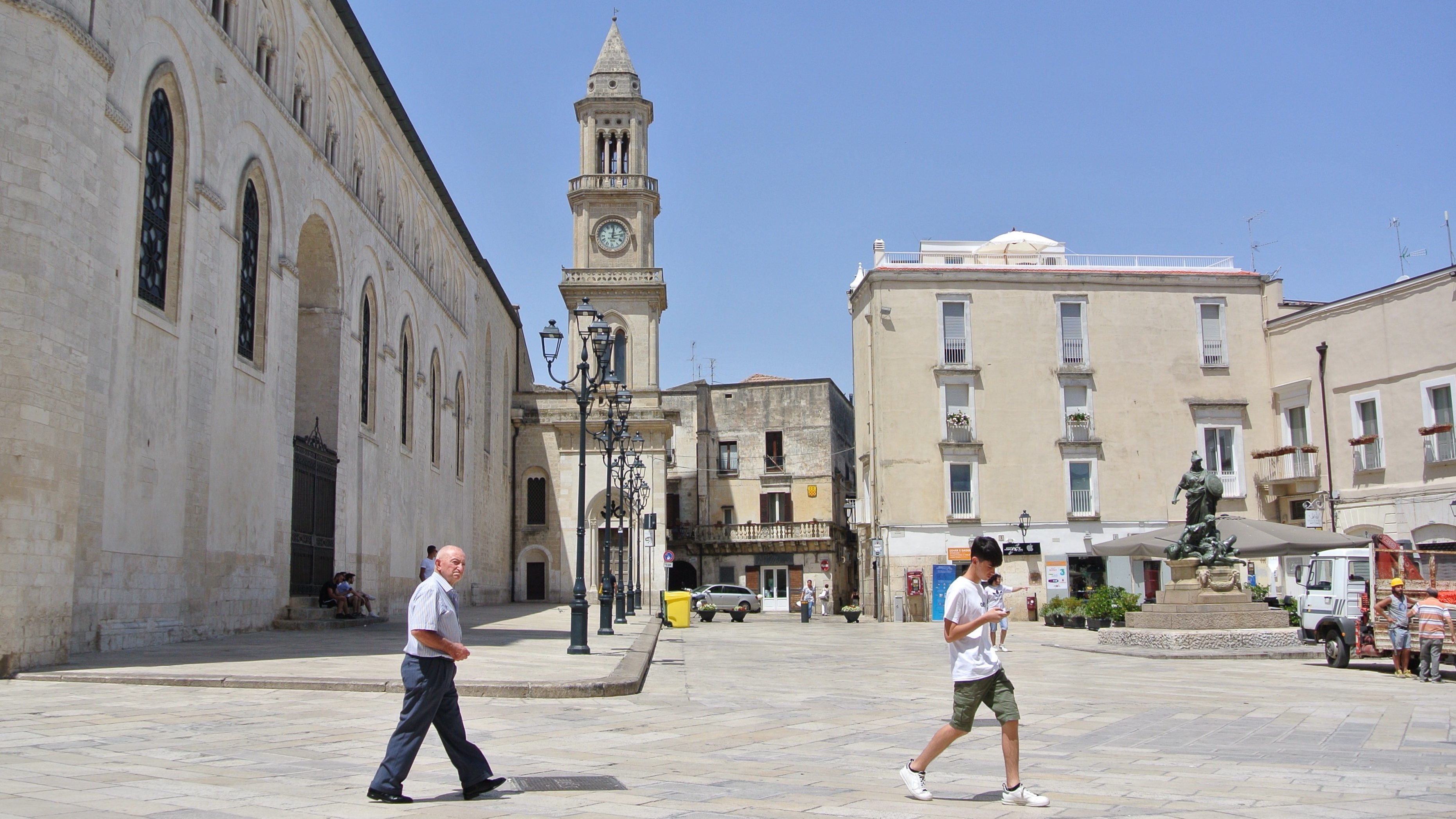
Wander around the historic center, which feels remarkably patrician and well-preserved following Matera. Pop into the Cattedrale di Santa Maria Assunta, whose gothic exterior dating back to the thirteenth century belies the lavish 18th century interior.
For lunch, stop by the Antico Forno Santa Caterina, whose ovens and pasta madre (sourdough starter) are rumored to date back to 1423. Regardless of the truth, the meal is one to remember between panzanella di stagione and thick slices of focaccia. The outdoor seating tucked into a small alley is at once intimate and bustling.
In the afternoon, visit the city’s archeological museum, which houses the Altamura Man (l’uomo di Altamura), a remarkably preserved Neanderthal skeleton. The museum explores how the man would have lived, how he was discovered and how he is being preserved.
Day Six: Alberobello
To reach Alberobello from Altamura requires a detour through Bari. Hop on the Ferrovie Appulo Lucane to Bari, which takes about an hour. When you arrive, leave the FAL station and walk into the main train station. In the back of the station there are two short tracks (binario tronco) for Ferrovie del Sud-Est. Don’t try to buy your tickets in the main train station. It’s a different train service and they won’t have them for sale. There’s a dedicated ticket window for Ferrovie del Sud-Est, as well as separate validator machines. When buying your ticket ask for: “un biglietto di solo andata a Alberobello”, a one-way train ticket to Alberobello.
The train between Bari and Alberobello runs direct, but runs slowly. You’re likely to be on an old train without air conditioning. Our best advice is to relax and enjoy the pace. Watch the prickly pear cactuses outside the window and soak in the southern Italian sun. The journey should take about two hours, but between starts and stops, we found that it took closer to three.
Like Bari, Alberobello is divided between modern and historic areas. We recommend staying in a trullo, the city’s distinctive conical houses, which are collected in a few streets of the historic center. This area is about a ten minute walk from the train station. You’ll likely be staying in an albergo diffuso, diffuse hotel, where the rooms are in different buildings throughout the city. You’ll check in at a central hub, then they’ll direct you to your room a few blocks away.
The rest of the day should be spent at leisure, exploring the winding historic streets of Alberobello. Be warned that for as charming as the houses are, tourism is the dominant mode of the area and it will feel like the majority of houses are given over to tourist shops. If it gets the best of you, we recommend retreating to your own trullo and relaxing, or heading to a cafe in the new part of town for an Aperol Spritz.
Day Seven: Lecce
Getting between Alberobello and Lecce once again requires a trip on Ferrovie Sud-Est. The train should be direct, though we ended up having to change trains in Martina Franca due to a staff shortage. If you’re prepared and anticipate delays, the slow pace should be a welcome time to read and admire the scenery.
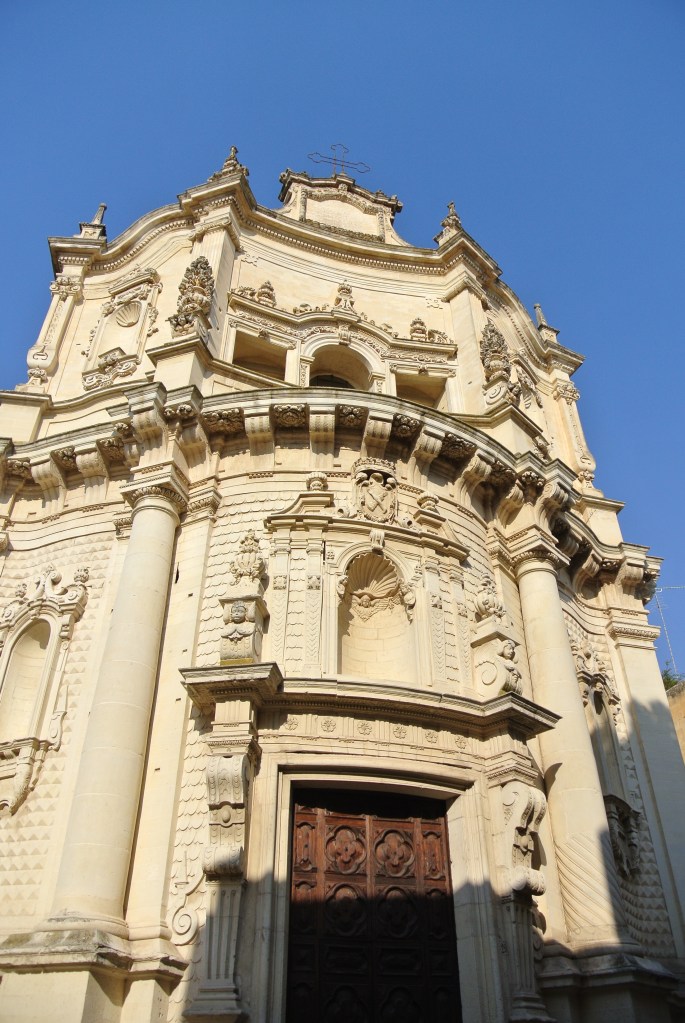
If you leave in the morning, you should arrive in Lecce by mid-afternoon. After checking into your hotel, head straight for the historic center to get your bearings. Lecce is famous for its Baroque architecture, which earns it the moniker the Florence of the South. While the main church, the Cattedrale Maria Santissima Assunta, is the clearest example of this opulence, keep your eyes peeled for elaborate decorations that decorate doors and windows in the palazzi around town.
Make your way to the main Piazza Sant’Oronzo for an aperitivo. The remains of a Roman amphitheater sit submerged in the center of this massive buzzing square. The amphitheater looks in near perfect condition, since it was buried for much of its recent history. It wasn’t until 1901 when the structure was discovered while some builders were digging foundations for a bank. While the amphitheater occasionally hosts performances, the visitor hours are sporadic. Count on admiring it from above when you visit.
For dinner, find a spot off the main street. If you’re interested in sampling high-end cuisine, restaurant Bros has become well-known in the region for its avant garde approach and Michelin star.
If you can’t snag a reservation at Bros, or can’t stomach the price tag, you can still get a taste for modern southern Italian gastronomy at countless other restaurants around town. The city has a surprisingly robust cocktail scene. Look out for Quanto Basta, Laurus, and Prohibition, which are all located just south of the main thoroughfare.
Day Eight: Lecce
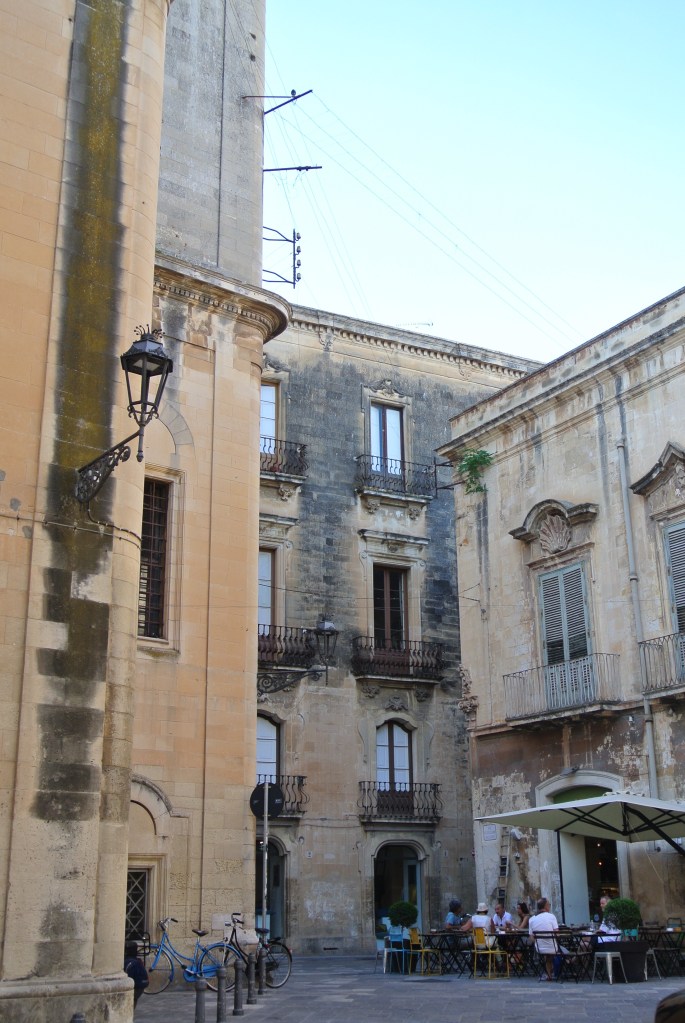
Spend your next day exploring Lecce. Start your morning at DoppioZero, a hip cafe and bakery nestled in a small square on the edge of the city center.
After a pastry and people watching, head to the Museo Faggiano. This museum, which is really a house, caused a fuss when it first opened and even received a write-up in the New York Times. A local man was trying to renovate the building, but during the renovations discovered a false floor that housed an ancient Greek tomb. Today you can explore a remarkable amount of the underground tomb.
Devote your afternoon to the city’s churches. Explore the Basilica di Santa Croce and the town’s Duomo, which face each other on the edge of Piazza Sant’Oronzo.
In the evening, check off another one of Lecce’s unique cocktail bars, before trawling the main street for dinner.
Day Nine: Taranto
To get between Lecce and Taranto, you’ll once again be taking Trenitalia. While it only takes about two hours to get between the cities, many train routes run indirectly with an intermediate stop at Brindisi. If you can, take a direct train, which will shave at least a half hour from your trip.
Located in the “arch” of Italy’s boot, Taranto is Puglia’s forlorn gem. Its ancient Greek legacy left to crumble with age. As a visitor, you’ll see the differences between Taranto and Bari most evident in the preservation (or lack thereof) of the old town. Taranto’s is run down with visible marks of decay. But what it lacks in preservation, it makes up for in raw authenticity and character. You’ll spend most of your time in the city in the glistening new town, whose impressive scale gives it the aspiration of a global metropolis.
When you arrive, head to your lodging. We recommend staying in the new section of town. While you can walk from the train station, it’s over a mile to reach the new town. Take a taxi instead.
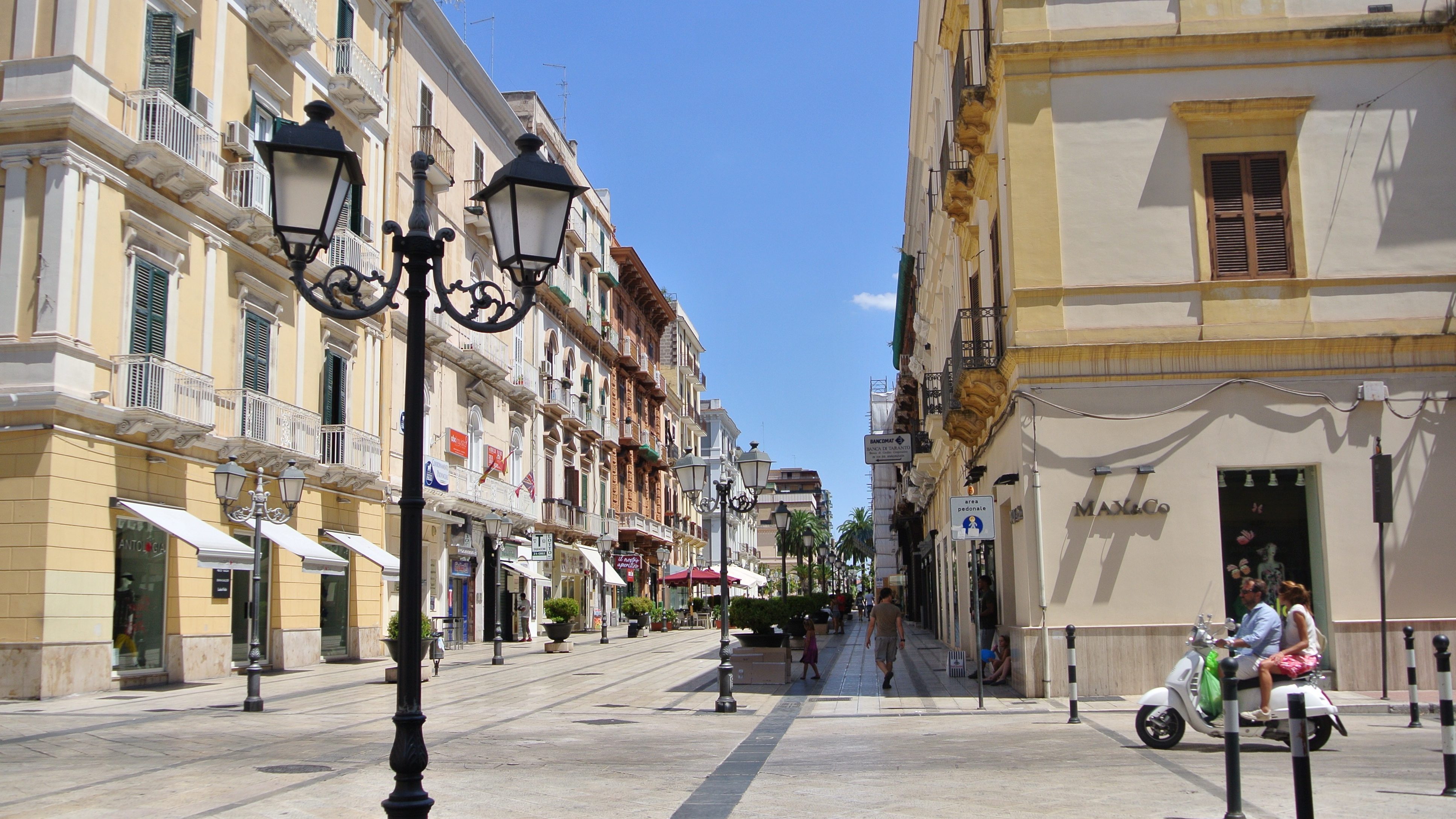
Devote the time you have left in the day to wandering through the new town. Via Federico di Palma is closed to traffic and is the main artery of the town’s passeggiata. There are also plenty of shops, bars and restaurants. Choose a bar, order a Spritz and enjoy the action.
Day Ten: Taranto
After getting breakfast along the main street, head to the National Archeological Museum of Taranto. While the museum looks glossy both inside and outside, staffing issues frequently mean that access is restricted to one floor at a time for one hour each. When we visited, we jumped between the three floors according to staff availability. An hour might sound like a lot of time for admiring ancient Greek amphora, but the collection is so vast that you will need to move quickly to admire all of the artifacts.
Afterwards, find some lunch. Be aware that most bars close midday in Taranto, but there are a couple of sandwich shops that remain open on the main street, Via Federico di Palma.
Head out again when the heat begins to break in the early evening to walk around the old town. The most interesting buildings are on the harbor. Here you’ll see the Castello Aragonese, which was built in the late 15th century to defend the city. The building sits on the site of an ancient Greek fortification. If you have time, you can join a free guided tour to learn more. Also worth a visit is the nearby Tempio Dorico (sometimes called the Temple of Poseidon), which is the only link to the city’s Greek history still standing.
Optional Add-On Days
While the tour above will immerse you in the essence of Puglia, if you’d like to extend your trip, we recommend adding on one or more of the tours below.
- Otranto – Whether you know it as the setting of the first Gothic novel, as Italy’s easternmost town, or as the location of a horrific fifteenth massacre by the Turkish, Otranto has plenty to explore. Perhaps most attractive is its seafront promenade, which abuts the town’s historic fortifications. Also worth a stop is the opulent Cathedral, which was built by the Normans, covered in 12th century mosaics and home to an ossuary housing the remains of soldiers killed in the fifteenth century Turkish raid.
The logistics: Add Otranto as a day trip from Lecce, or as an overnight stay on your way to Taranto. Trenitalia offers multiple services between Lecce and Otranto. The journey lasts between ninety minutes to two hours with an intermediate stop. It’s a regional train, so you’ll need to buy tickets day-of.
- Locorotondo – Located near Alberobello in the Valle d’Itria, Locorotondo attracts tourists looking to explore one of the borghi piu’ belli d’Italia (beautiful towns of Italy). The city routinely earns this award, which is part of a tourism-promotion guide Italy publishes annually. It will only take a few moments wandering through the idyllic old town to appreciate its charms: narrow streets, well-kept white-washed houses and intricate architecture. The town is also famous for its decorations: the city center is awash in Christmas lights in December, then replete with potted flowers in the spring when residents compete to grow the most impressive display.
The logistics: Add Locorotondo as a stop after Alberobello, or as a day trip from the city. You can choose between the train (11 minutes) and bus (20 minutes), both of which have multiple departures per day. Budget up to one day for exploring. - Brindisi – This port city just south of Bari is, for most travelers, simply an arrival port. But to see it as just this is a mistake. The city was badly bombed during world war two, giving it a modern edge compared to many of its neighbors. Spend your time strolling Corso Garibaldi with the locals, admire the water and visit the imposing Tempio di San Giovanni Sepolcro, a church dating back to the twelfth century. Also worth a visit is the Museo Archeologico, whose sprawling collection of Greek and Roman artifacts will give you a taste of what you’re in store for later in the trip.
The logistics: If you don’t fly into the local airport, we recommend adding the city as a stop between Lecce and Taranto. You’ll be able to get the train direct from Lecce, which takes about a half hour. Continuing to Taranto takes about an hour. Direct trains run on both routes.
- Santa Maria di Leuca – Located at the southernmost tip of Puglia, getting to Santa Maria di Leuca isn’t easy. But if you’re after brilliant swimming grottoes with crystal clear water, then you’ll find the journey worth it. The beaches are the main attraction here, so it’s really only worth a visit in the summer.
The logistics: You’ll need to take a bus to reach Santa Maria di Leuca. It takes about an hour and a half from Lecce. We recommend adding this on as a stop between Lecce and Taranto, though you’ll want to book the bus as a round trip from Lecce, then follow on with the itinerary as directed to Taranto (see day 9).
 Roam The Reaches
Brilliant information for the independent traveller, been inspired to try the Puglia train holiday ,looking forward to checking out more of your suggestions.
LikeLiked by 1 person
Fantastic information. Really helped us plan our trip to Puglia. Many thanks.
LikeLiked by 1 person
Thank you so much for your information. We are wandering around Puglia for 18 days on 25th June and I have made notes from your info. Thank you
LikeLiked by 1 person
We are also planning a trip in end November to Puglia and surrounding areas. Hence your write up is very informative. Two things I would like to have more clarity on:
1. Is November the right time
2. In your description I didn’t understand where we need to stay at night. If you can explain this a bit more clearly.
Thanks again and hoping to hear from you.
LikeLiked by 1 person
Hi Thanks for reading and glad you found the post helpful.
1. November can be a great time to visit. Fewer crowds in the areas that get more tourists (like Lecce or Alberobello) and cooler temperatures both make for a pleasant travel experience. That being said, if you’re really eager to go to the beaches, November is a bit cold and out of season for that.
2. In our schedule, the assumption is that you would be staying the night in the main city being described during the day. In each city in our itinerary, there should be a good mix of hotels, bed and breakfasts and Airbnbs for you to stay in, depending on preference.
LikeLike
Thank you! This is one of the first posts I’ve seen that doesn’t insist that a car is necessary or that Puglia is all about the beaches. I’m looking at flights now…!
LikeLike
I had a brief 6 day tour of main cities in Puglia in 2023, based in Ostuni. Hoping to return in 2025 and just starting to plan. Im travelling alone and will not drive in Italy, so this info is a great starting point for my rail based solo trip.
I would like to visit Gallipoli, Monopoli and Trani, can you provide info on rail travel to/between these locations?
Thanks !
LikeLike
You’ll be able to get between Trani and Monopoli via Trenitalia services (either regional or intercity trains). From Monopoli, you’ll want to continue down to Lecce via Trenitalia, where you can change for a train on Ferrovie del Sud Est (Linea 5/Gallipoli Line FSE) to Gallipoli.
Have a great trip!
LikeLike