
Picture yourself on the beach in Italy, sunning on a recliner, umbrella positioned just so, Aperol spritz at hand. It sounds luxurious (meaning, expensive), but renting a beach chair in Italy can be simple and affordable. This guide explains the straightforward process to renting beach chairs, as well as some Italian beach etiquette and helpful phrases.
What’s Included:
- An Introduction to Italian Beaches
- How to Use an Italian Beach Club
- How Much Does it Cost to Rent a Beach Chair?
- Tips for Italian Beach Etiquette
- How Can I Ask About a Rental in Italian?
- The Best Under-the-Radar Italian Beaches

An Introduction to Italian Beaches
There are nearly 5,000 miles of coastline in Italy, and that means plenty of beaches. But not all these seaside areas are equally welcoming to sunbathers.
In Italy, beaches are either free or maintained by beach clubs. These clubs are called stabilimenti balneari or simply bagni. To sunbathe on a free beach, called quite literally a spiaggia libera, you bring your towel or chair, find a spot and enjoy. It’s easy, if you can find space and a beach, that is. Although most of Italy’s seashores do have publicly accessible sections, they tend to be smaller, get crowded quickly and have less-than-impressive views.
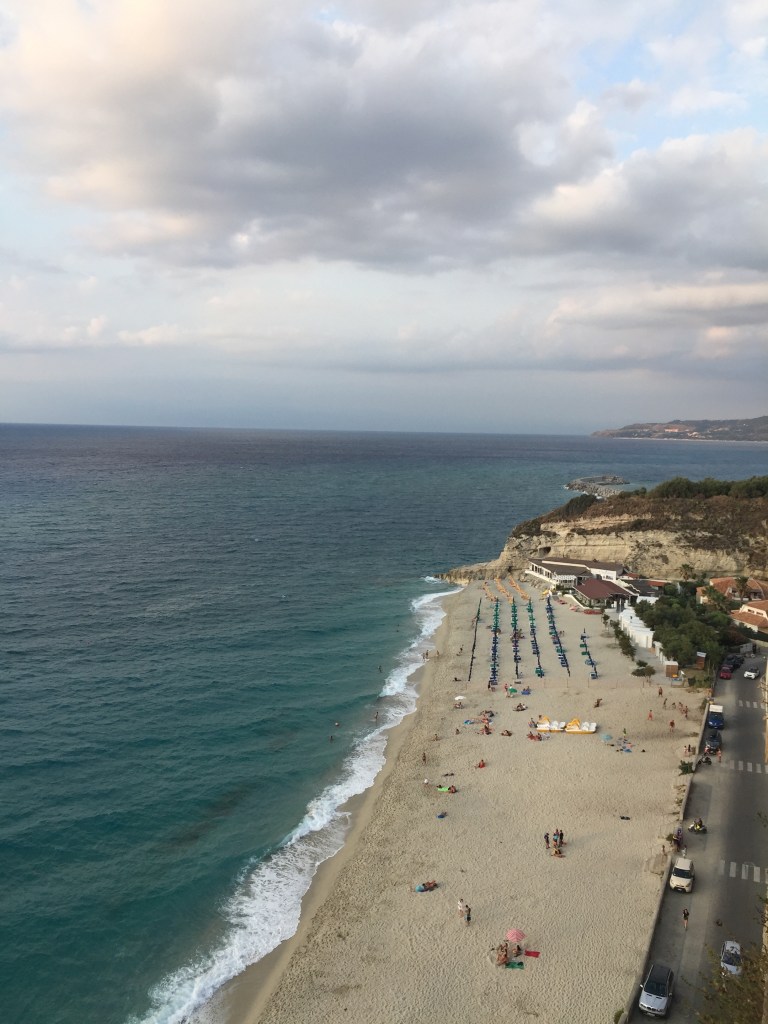
Enter the beach club. Beach clubs are a common sight along the lungomare (akin to a boardwalk). These private establishments let beachgoers rent chairs and umbrellas for a day, week or season, and usually have a restaurant and/or café attached. The beach club is responsible for maintaining the stretch of shore that it sits on, so you can expect the sand to be clean and neat. You can easily identify beach clubs because of their neat rows of chairs and umbrellas in matching colors. All you need to do is bring a towel, bathing suit and cover-up, plus money to pay for your spot.
How to Use an Italian Beach Club
Italian beach clubs follow the same formula: they offer sun loungers, umbrellas and food for a price. These loungers are pre-arranged in rows along the beach and every two loungers share an umbrella. The food is not included in the price. While there will be differences between the color of your sun lounger and the food available (some offer just sandwiches, others full meals), the differences between the clubs are largely negligible.
Some Italian families will book chairs for the season, or for a week of vacation, at the same club, year after year. Others rent chairs on a day-to-day basis, perfect if you’re making a quick weekend trip to the ocean. While these people may have developed a favorite beach club over the years, if you’re a first-time visitor, there’s no way of knowing which one is the best or perfect for you!
- If you’re going to a popular seaside destination, especially one that’s popular with international tourists, it’s wise to research the different clubs online first to find one that fits your needs and budget. While the amenities are unlikely to differ greatly, some beach clubs are trying to make themselves seem more upscale (usually via food) and their prices are likely to reflect that. In this situation, you may also find that the beach club operates an online booking portal, which you can use to pre-select your beach chairs and ensure they’re ready when you arrive. Be prepared to pay more for chairs right along the water.
- If you’ll be staying for a week at a single beach, you should also try and book in advance, but depending on location, may find that there is no online booking system available. In this case, after doing your research to select your beach club (whether through Tripadvisor, travel blogs or savvy Google map usage), you should try and book in advance. For some places, this will be via email. Others may only have a phone number, while some may do direct bookings via Facebook messenger. Inquire, and prepare to wait for a response, especially if it’s out of season. If you have a strong preference about where you sit on the beach, now is the time to ask about a specific spot.
- If you’ll be doing a day trip to the beach, the easiest way to get your beach chair will simply be to walk along the lungomare, choose a restaurant/café that appeals to you, and ask to rent some chairs for the day. As a day-renter, you’ll be unlikely to get those coveted shore-side chairs, but you’ll still have access to all the amenities the beach club offers. If you arrive in the afternoon, you may also be given a discounted rate, or can ask for one otherwise.

How Much Does it Cost to Rent a Beach Chair?
As a very rough guide, you can expect prices to be around 20 euro per person. That being said, these numbers vary widely based on location, time of day, the beach club’s amenities and when in the season you’re visiting. And as was widely reported in Italian newspapers in 2022, the prices have risen dramatically post-pandemic.
Tips for Italian Beach Etiquette
In the land of la bella figura, even a carefree beach day has unspoken etiquette rules associated with it. In some cases, this is more a habit of behaviors you’re likely to see on the beach, as opposed to strict rules to follow.
- Don’t walk up to a beach chair and sit down. Instead, ask someone working at the beach club’s restaurant or café if you can rent. They will then show you to the available seats. Even if a chair looks available, it may be taken by a family who only comes at a certain time of day.
- Do bring a cover-up to wear when having lunch at the café/bar. It’s considered polite to not go in your dripping wet bathing suit and instead throw on a light shirt or sarong.
- Don’t purchase items from the merchants parading along the beach. People will walk along the beach selling everything from sunglasses to massages. While many beach clubs will disapprove if you buy something from them, it’s also technically illegal under Italian law, as is any purchase where you don’t get a receipt in return (for tax reasons).
- Do look out for jellyfish. Not all Italian beaches have them, but many do. While the beach club you’re staying at should have an appropriate first aid kit if it’s a risk where you’re swimming, you don’t want a sting to distract from your day. If you do see one, it’s wise to call out “medusa” (jellyfish) to let swimmers nearby know that there’s one in the area.
- Don’t expect to play frisbee or listen to loud music at a beach club. Tightly packed rows of chairs mean games are tricky (though many beaches have separate areas for volleyball), and loud music is generally frowned on by your fellow beachgoers.
- Do wear whatever you want. Bikinis are common for women of all ages, as are smaller swim trunks for men. That being said, if you feel more comfortable with a one-piece or longer trunks, you’ll most likely be in good company too.
- Don’t forget to bring sunscreen or expect to find anything over SPF 50 in Italy. Sunscreen is still somewhat niche in Italy, and even SPF 50 can be tricky to track down. Play it safe and plan to bring sunscreen from home.


How Can I Ask About a Rental in Italian?
Here are some ways you can ask to rent a beach chair.
Italian – English
Ciao, buongiorno. Quanto costa affittare due ombrelloni per il giorno?
Hi, good morning. How much does it cost to rent two beach chairs for a day?
Ciao, quanto costa due ombrelloni?
Hello, how much are two umbrellas?
Salve. Vorrei affittare due ombrelloni.
Hello. I’d like to rent two umbrellas.
Ciao. Ci sono dei ombrelloni rimasti per affittare oggi?
Hi. Are there any umbrellas left to rent for today?
Quel prezzo mi sembra troppo caro. Vado altrove.
That price seems too expensive to me. I’ll go elsewhere.
Va bene, li prendo. Pago adesso?
Sounds good, I’ll take them. Do I pay now?
The Best Under-the-Radar Italian Beaches
Italians love their beaches, but each coastal area has its own style. You’ve heard about the glamorous spots along the Amalfi Coast and in Taormina, Sicily. And maybe you’ve heard about the hidden cove-style beaches that dot Puglia. But there’s so much more to Italian beaches than these two extremes.
- Emilia Romagna – Located in north-eastern Italy, Rimini tends to dominate discussions about Emilia Romagna’s beach scene for its historically party-happy atmosphere. Rimini is the unofficial capital of the Riviera Romagnola, which also includes upscale Riccione, trendy Milano Marittima and historic Cesenatico. These beaches tend to be quite well-developed. Head here if you want to spend your days on the beach and your evenings shopping.
- Le Marche – Just down the coast from Emilia Romagna, Le Marche’s beaches range from wild and natural to calm and family-friendly. For built-up beaches that offer a tranquil alternative to the Riviera Romagnola, head to Senigallia in the region’s northern edge, or San Benedetto del Tronto and Grottamare on the far southern edge. Nestled in the Conero nature reserve, you’ll find the secluded beaches of Portonovo and Sirolo, as well as countless other inlets, like the remote (and beach club-free) Spiaggia delle due Sorelle.
- Abruzzo – Abruzzo’s Trabocchi Coast (trabocchi, singular trabocco, are old fishing net structures that dot the coastline) might not have the name recognition of Campania’s Amalfi Coast, but what it lacks in brand it makes up for in wild beauty. Free from overwhelming crowds, you’ll be able to enjoy crystal clear water at the rock beach in Fossacesia or the secluded beaches along the Punta Aderci promontory (so remote they don’t have beach clubs). For a more crowded, family-friendly destination, head to Marina di Vasto, where you’ll have your pick of beach clubs.
- Puglia – As we detail in our post on the best two-week train itinerary for Puglia, Italy’s tacco (heel) is well known for its beaches. From the rock-strewn, beach club-free inlet of Polignano a Mare to the cliff-side beaches in the Tremiti Islands and the sun-drenched ones in the far-southern Salento, Puglia’s beaches are popular with Italians and increasingly gaining attention among international tourists.
- Calabria – Calabria’s beaches might be one of Italy’s best kept secrets. Not from Italians, they flock here in droves. Apart from Germans, you’ll find few international tourists wandering the streets of Tropea, Scilla, Pizzo and Capo Vaticano. Since the train runs along the coast, they’re relatively easy to reach. The only downside is that because of the currents, the beaches are more vulnerable to jellyfish – remember to shout “medusa” if you see one!
 Roam The Reaches
Hi, we are traveling to Italy in October 2024 (Lazio region). Most of the beach Clubs seem to be closed. We definitely want to swim in the sea – it’s not too cold. As the clubs are closed is it ok to swim anywhere? Or is swimming only allowed on free public beaches?
LikeLike
Yes, if the club is closed it is ok to use the beach and swim in the water. In fact, by law all beaches in Italy are public land owned by the government. But when the beach clubs are open they are allowed to privatize the beach because they pay a concession to the government. However, even when the beaches clubs are open, technically the club cannot bar you from passing through; some portion of the beach right against the water must be made available for anyone to use.
LikeLiked by 1 person