
You don’t go to Calabria on your first trip to Italy.
For the serious Italophile, Calabria’s distance from the tourist track is what lures you south. Whether you want to sunbathe, hike, sample local cuisines, or visit museums, Calabria has a destination for you. There are so many enticing activities that, if it was easy to visit, everyone would.
But navigating Calabria isn’t straightforward. The train runs along the sea and, while it offers excellent connections along Calabria’s coast, it doesn’t provide access to the region’s mountainous interior. For hiking in the Aspromonte mountains, or traipsing through abandoned hill towns, you’ll need a car.
Consider this guide your introduction to Calabria’s highlights. We’ll share the destinations that stand out amongst the region’s wealth of beaches, hillside towns and historic cities. Since we don’t know if you’ll be up for renting a car (it’s a hassle and not worth it for everyone or every itinerary), we don’t provide a single itinerary. Instead, you’ll find advice on which destinations, hotels, activities and restaurants will make your Calabria vacation unforgettable.
What’s Included:
- Where is Calabria?
- How do I get to Calabria?
- What is there to do in Calabria?
- The Essential Places to See in Calabria
Where is Calabria?
If Puglia is Italy’s heel, then Calabria is its toe. The region abuts Campania to the north and Basilicata to the east. From its southern tip, and regional capital, Reggio Calabria, you can see Sicily across the strait of Messina.
While Calabria is easy to identify on a map, that familiarity hasn’t created a substantial international tourist economy. The beaches and mountains buzz with locals during the summer, but foreign visitors are few. This all-Italian atmosphere rewards the traveler who’s willing and able to navigate the region, where English speakers can be few and far between.
How do I get to Calabria?
Several regional airports serve Calabria with connections from other Italian cities. Reggio Calabria, in the region’s far south, has one of the area’s largest airports with regular flights to Milan and Rome, among other key cities. Further north, Lamezia Terme also provides regional connections.
Trains run primarily from the north, and there are a variety of services within the region. Depending on your port of arrival, you’ll likely find the high-speed services – the Frecciabianca, Frecciarossa and Frecciargento – the most useful. Although each of these lines operate in Calabria – terminating in Reggio Calabria – they all service different cities and have different origination points. Frecciarossa operates the most comprehensive service that goes from Turin to Reggio Calabria, while both Frecciabianca and Frecciargento offer direct services from Rome. Private train company Italo also provides high-speed services that extend from Turin to Reggio Calabria.
If you’re arriving from abroad, you’ll want to fly into a major airport like Rome’s Fiumicino or Milan’s Malpensa/Linate, then take a plane or train further south, depending on your schedule.


What is there to do in Calabria?
This southern Italian region teems with activities, thanks to the fact that it straddles both sea and mountains. Beach lovers will relish splashing in the waves at Tropea, a city in northern Calabria that’s frequently named one of ‘i borghi piu’ belli d’Italia’ (Italy’s most beautiful villages).
Avid hikers should head to Aspromonte National Park, a protected mountainous area in the southern interior. The area once sheltered on-the-run brigands, but now plays host to cyclists, hikers and over 1,500 plant species.
At the edge of Aspromonte, there are several abandoned hill towns, among them Pentedattilo and Roghudi Vecchio (both a quick drive from Reggio Calabria).
Ancient history also abounds in Calabria. Like nearby Puglia and Basilicata, the region has a venerable Greek legacy. Delve into it at the Museo Nazionale della Magna Grecia (National Museum of Ancient Grecian Italy) in Reggio Calabria.
Italy’s southernmost point, just outside the small town of Melito di Porto Salvo, is also a symbolic spot for the unification of Italy (Risorgimento) in the 1860s. It’s where Giuseppe Garibaldi and i mille (his troops) landed in Calabria on their military quest to unite the south and the north under one ruler.
The Essential Places to See in Calabria
Cities

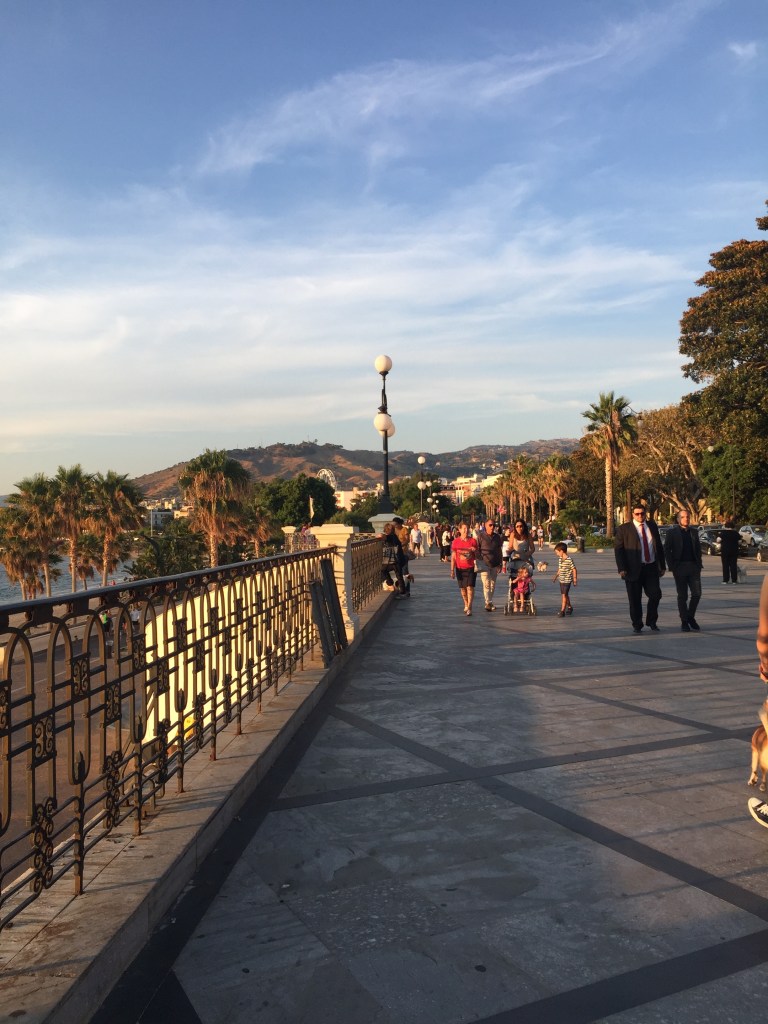
Reggio Calabria
What to do: Reggio Calabria lives up to its name; reggio means regal in Italian and the city’s wide boulevards and ornate architecture have a kingly air to them. Consider it a knock-on effect of the city having largely been rebuilt in the early 20th century following a devastating earthquake. Walking is the best way to see Reggio Calabria, especially during the early evening passeggiata, when you can stroll the lungomare and Corso Garibaldi with the locals. The city has a grid structure, so you’re unlikely to get too lost.
There are also a few museums worth a visit. Devote an afternoon, at least, to the Museo Nazionale della Magna Grecia (National Museum of Ancient Grecian Italy). This well-funded museum has an astonishing array of local Greek artifacts and is most famous for i bronzi di Riace (Riace bronzes), two bronze sculptures depicting Greek warriors (naked, of course).
Food lovers should pop into the Museo del Bergamotto (Bergamot Museum), which recounts the raucous history of southern Italy’s distinctive citrus fruit. And, of course, there’s a shop attached to the museum where you can pick up all sorts of bergamot souvenirs, from hard candies to rosolio, a traditional bergamot-flavored liqueur.
How long to spend: Given its museums and its good connections to neighboring areas, we’d suggest spending two to three days in Reggio Calabria – err on the side of more time if you want to visit an abandoned hill town.
Where to stay: It may be Calabria’s capital, but Reggio Calabria has more modest accommodations than neighboring beach towns. We recommend choosing somewhere relatively close to Corso Garibaldi, where you’ll likely be spending most of your time.
- B&B Il Pellicano. If you’re looking for a full-service bed and breakfast, look no further than B&B Il Pellicano. This simple but charming option is located about a five minute walk away from Corso Garibaldi with easy access to the train station as well. The owners and staff are also on hand to help answer any travel questions, such as dinner reservations and car service to the airport – a perk you won’t find at an Airbnb.
- La Finestra sul Mare. You’ll be tempted to spend your day gazing out the window at the sea in this Airbnb, which looks directly onto the strait of Messina. Alongside breathtaking views, we’re seriously impressed by the minimal, clean lay-out. While we can’t imagine you’ll be using the kitchen much, it’s a nice option for longer stays.
- Camera Nosside. If you want high design, this luxe option is for you. Positioned as an Airbnb-meets-real bed-and-breakfast option. The location is also tough to beat, just steps off of Corso Garibaldi.
Where to eat: It’s not hard to find a good meal in Reggio Calabria. From the casual bars lining Corso Garibaldi, to the smaller restaurants tucked away on seemingly every side street, there’s plenty to enjoy. But below are three places we think belong on every eating itinerary in the city.
- Officina Del Gusto. Book ahead to enjoy the brilliantly simple dishes at Officina Del Gusto. The focus is firmly on fresh Calabrian ingredients, whether that means a pasta with fish or a tasting of local cheeses. The restaurant is tucked away on a tranquil tree lined street (but beware the mosquitos should you eat outside).
- Malavenda Cafe. Whether breakfast, lunch or aperitivo, you’ll want to stop by this hip cafe multiple times during your stay in Reggio Calabria. Fresh pastries make it a morning destination, while no-fuss sandwiches are perfectly suited for lunch and the bountiful aperitivo is unmissable come evening. It’s located on a pedestrian street a few blocks south of Corso Garibaldi, and frequently packed with young locals.
- Gelato Cesare. Located right along the lungomare, this gelato shop has been named one of Italy’s best. The flavors are proudly traditional, but we recommend its most experimental variety Italico, a moreish mixture of figs, ricotta and sweet wine.
How to arrive: There are plenty of trains that stop in Reggio Calabria. Both the high speed Frecciarossa and Frecciargento services stop in the city, as well as local trains coming from elsewhere in Calabria. If you’re arriving from Sicily, you can take a ferry from Messina, then train from the port, Villa San Giovanni to Reggio Calabria.
There’s also an airport that services all of Italy with frequent flights to major hubs like Rome and Milan.

Cosenza
What to do: From its bustling modern downtown to its hilly historic district, Cosenza epitomizes Calabrian contrasts. Acquaint yourself with the modern city by strolling along the shop-and-sculpture lined Corso Mazzini, then meander around the historic district. If you’re craving culture, visit the Galleria Nazionale di Cosenza (Cosenza’s state-operated museum with a mix of contemporary and Renaissance to Baroque paintings) and Villa Rendano (a nineteenth century mansion).
How long to spend: You’ll enjoy Cosenza spending a full day and a half in the city. You can also use the city as a jumping off point for more adventures into Calabria’s interior. In that case, consider extending your trip to at least four days.
Where to stay: Although Cosenza is a larger city, it’s less popular with tourists and has fewer accommodation options. Stay in the new town for the widest selection of modern accommodations, plus plenty of restaurants and bars at your doorstep. Pick the historic district if you want charm and are comfortable getting lost in narrow streets.
- Civico 27. Although it’s located outside of Cosenza’s main downtown, this apartment rental offers both spectacular views and a clean, modern aesthetic. It’s our pick for families or larger groups. Expect a fifteen minute walk to the center.
- Mazzini Home 2. It’s hard to beat the location of this minimal Airbnb, just off the bustling Corso Mazzini. The interior is firmly no-frills, and that’s reflected in the low price. A great option if you’re planning to use Cosenza as a hub for trips elsewhere in the region.
- B&B Via dell’Astrologo. If you’re looking for historic charm, this bed and breakfast, located in historic Cosenza, is an excellent pick. The fixtures are simple and appealing, but it’s the winding streets surrounding that make this a top choice.
Where to eat: Like other places in Calabria, Cosenza’s restaurants cater to locals. This means you’ll find good food easily, but you may want to make a reservation at popular spots.
- La Cantina Cosentina. Head here to sample unfussy regional specialties like paccheri with ‘nduja (pasta with spicy sausage), pasta e ceci (pasta with chickpeas) and trippa e patate alla calabrese (tripe and potatoes in tomato sauce). It’s a popular spot with locals, so be sure to book ahead.
- Antica Locanda dal Povero Enzo. For a more refined approach to local cuisine, book a table at this restaurant, located conveniently in the new town. The prices are remarkably reasonable for the quality. Look beyond the pasta here – the carpaccio with truffles is a favorite.
- Renzelli. This bar in Cosenza’s old town proudly states that it’s been in operation for over 200 years. Today, it’s a go-to spot for everything from morning coffee to aperitivo. The pastries are gorgeous, as is the outdoor seating tucked in an opening of the city’s otherwise winding streets.
How to arrive: Although Cosenza is a larger city, its best train links come from regional trains connecting in nearby Paola. Reaching the city directly from Rome will require up to two train changes. If you’re taking the train, we recommend tucking Cosenza into the middle of your Calabria itinerary. Since the city is in the northern part of Calabria, make it one of your first stops if you’re touring the region by car.
Beaches


Tropea
What to do: Spend time lying on the beach and splashing in the waves. There are both free and paid beaches in Tropea, and we recommend dividing your time between both. At Tropea’s free beaches, you simply lay a towel on the sand and enjoy, whether you’re planning to sunbathe or splash in the powerful waves. For a more refined experience, spend about twenty euro at one of the beach clubs, where you’ll get chairs, umbrellas and changing facilities.
While you’re there, visit Santa Maria dell’Isola, a monastery perched above the beach on a cliff that juts out into the sea. This cliff bisects the beaches and divides the free and paid stretches. Head for golden hour to enjoy gorgeous views from the peaceful gardens on the monastery’s perimeter.
How long to spend: Tropea is a small town, so you’ll be able to see all the sights in about a day. If you’re eager to spend more time on the beach, we recommend staying for two full days.
Where to stay: Tropea is a town popular with Italian tourists. There’s plenty of accommodation, but it can fill up quickly. Here are our three picks:
- B&B Island Tropea Vista Mare: It’s hard to beat the location of this hotel, which is just steps away from the lungomare and main piazza. We love the clean and modern aesthetic, but the real reason to choose this hotel is for the unbeatable views.
- A Casa di Alessandro: The rooms of this B&B may be small, but the location and breakfast spreads will stick in your mind. The owner is also happy to help you make any last-minute plans and reveal local secrets, a bonus we appreciate!
- Villa Paola: This swish hotel isn’t in the center of Tropea, but what it lacks in walkability it makes up for in luxury. Spacious, cool rooms offer inspiring views of the water and rolling hills around the hotel. There’s also an infinity pool that overlooks the beach. Consider this only if you’ll be renting a car.
Where to eat: As a beach town catering to tourists, Tropea has many restaurants. In our experience, you can’t really go wrong with food in Tropea. But the spots below merit a detour.
- Al Pinturicchio. Al Pinturicchio seems pulled from an Italian al fresco dinner fantasy. The atmosphere is boisterous and tables sit side-by-side, tucked against houses on an impossibly narrow side street. Focus your attention on the local ingredients, like the pastas with the cipolla rossa di tropea (a local variety of ultra-sweet onions) or fresh fish.
- Premiata Forneria. Sate your pizza craving with a top-notch pie at Premiata Forneria. It’s a bit off the main drag, and by that we mean you’ll need to walk more than five minutes away from Tropea’s main piazza. Stick with the pies with local-inspired toppings (including the ever-present cipolla rossa).
- Osteria della Cipolla Rossa. Owned by a born-and-bred Tropean chef, this restaurant excels in creative local cuisine. The ever rotating menu reflects both the seasons and local specialties, something that’s harder to find in Italy than most guidebooks would have you believe. Book ahead to secure a table.
How to arrive: Tropea can easily be reached by trains coming from the north or south. While the station is only served by regional trains, Lamezia Terme to the north is a hub for high speed trains like the Frecciarossa and Frecciargento. From there, you can transfer to a local train.


Scilla
What to do: There’s barely any arrival point into Scilla that won’t put you immediately in reach of the beach. Surrounded by vertiginous, verdant cliffs, this is one of Calabria’s most unique beaches.
The only downside? The jellyfish (medusa). If you see one in the water, yell medusa and wait for the grandfather with the net and the pail to scoop it up (there will be one).
How long to spend: Like Tropea, the time you devote to Scilla will depend on your appetite for languorous beach days. Most people will be sated with a long morning and lunch, but eager beachgoers will appreciate more time.
Where to stay: Given Scilla’s proximity to Reggio Calabria, we think most visitors will prefer to base themselves in the larger city ( it’s a thirty minute train ride). However, if you’d like to spend more than one day enjoying the beach, there are a couple of hotels and vacation rentals that stand out.
- Il Casato Deluxe Rooms. If you’re looking for a swish, modern feel, then look no further than this beachside bed and breakfast. While it’s about a ten minute walk from the main stretch of beach, we think it’s worth it for the unobstructed water views and well-appointed spaces.
- Apartment The Castle. While this clean, modern vacation rental doesn’t boast a water view, it does provide a fantastic vista over the city and is less than a five minute walk to the beach. A great option if you’re staying with a large group.
Where to eat: The beaches at Scilla require you to rent an umbrella and some chairs; they’ll also serve lunch and while it’s usually just sandwiches, they’re reliably good. Stick with this spot for your meal, either eaten at your umbrella or at the shaded restaurant.
If you’re staying for dinner, consider heading to Casa Vela Wine Bar. This casual restaurant focuses on local wines, as well as tastings of local specialties. While the focus is on cheese and meat tastings, as well as small bites, there are some larger mains as well. Regardless, it’s easy to make a meal out of the small bites.
How to arrive: Arrive on a local train either from Lamezia Terme or Reggio Calabria.
Other Interest Points
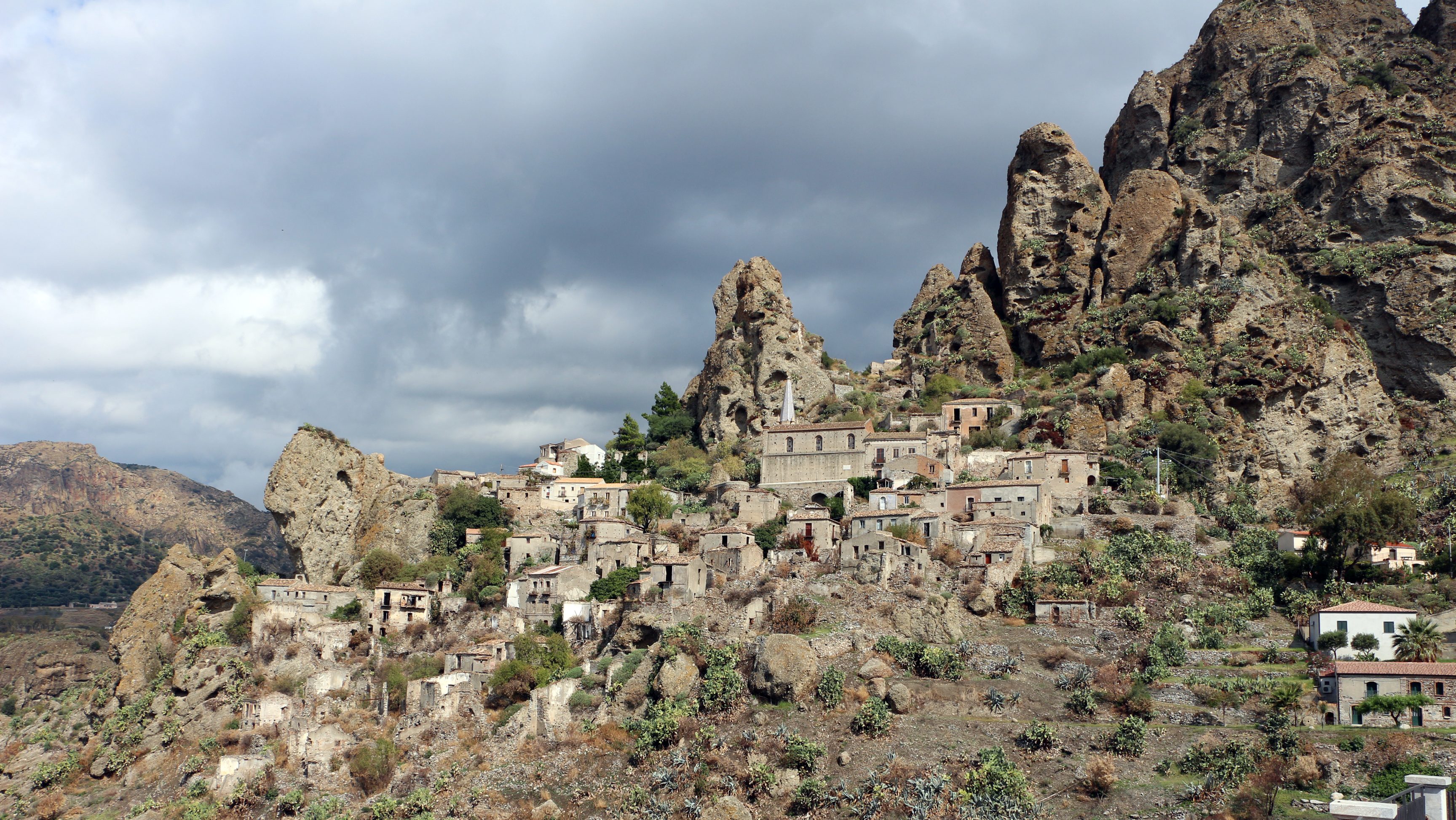
Abandoned Hill Towns
Calabria’s hilly interior is home to many abandoned towns, thinned out through natural disasters and shifting fortunes. These ghost towns (called città fantasma) are spread throughout the region. The three below will be the most compelling, and best located, for the majority of visitors.
Pentedattilo: Located just over 20 miles from Reggio Calabria, Pentedattilo has become one of Calabria’s most famous ghost towns. The town’s name means five fingers, referencing tall rocks that encircle the town, making the buildings appear to be nestled in a palm. Many residents left Pentedattilo after an earthquake damaged the town in the late eighteenth century, but it wasn’t formally abandoned until the 1960s.
That being said, since the 1980s there’s been a movement amongst local artisans to revive the town as a tourist destination. There’s now an albergo diffuso (hotel spread amongst many buildings), craft workshops and a museum exploring local history. Despite these signs of life, the town retains a beguiling atmosphere from being left alone over for an extended period.
- How to reach Pentedattilo: The best way to reach Pentedattilo is by car from Reggio Calabria. It’s about twenty miles, though the last few miles into town may be a bit rough and take more time. If you don’t have a car, you can arrange a tour in advance, leaving from Reggio Calabria.
- How much time to spend in Pentedattilo: Unless you’re keen on staying overnight, an afternoon should be sufficient for most people.
Roghudi Vecchio: Although Roghudi Vecchio is located within the province of Reggio Calabria, it’s nearly twice as far as Pentedattilo and requires a rockier drive. Consequently, it feels more desolate. Residents left Roghudi Vecchio in the 1970s, after repeated floods from the nearby river made the buildings increasingly unstable.
You’ll notice the town is abandoned as soon as you encounter the winding, rutted road. If you fear your driving skills or your rental car may not be up for the task, it’s possible to arrange to visit with a local tour guide.
- How to reach Roghudi Vecchio: Like Pentedattilo, the only way to reach the town is by your own car. You can expect the drive from Reggio Calabria to take about an hour and a half, though be generous with the time once you approach the town. You can also arrange a private tour to visit, departing from Reggio Calabria.
- How much time to spend in Roghudi Vecchio: Considering the longer drive time, expect to spend about a day visiting Roghudi Vecchio. You’ll want to plan ahead and bring your own food and water.
Papaglionti Vecchia: This small ghost town is more remote than either Pentedattilo or Roghudi – it’s a thirty minute drive (give or take) from Tropea. But if you’re driving between Tropea and Aspromonte National Park, it’s a detour that you’ll enjoy if you’re keen on abandoned places.
Unlike the other ghost towns we’ve mentioned, Papaglionti Vecchia is small and minimal. But what it lacks in size it makes up for in atmosphere. The crumbling buildings are now covered in vines and trees. There are precious few visitors, giving it a truly supernatural atmosphere.
- How to reach Papaglionti Vecchia: Treat Papaglionti Vecchia as a roadside attraction, not a day out from Tropea. It’s located about twelve miles inland from Tropea, a drive you can expect to take about half an hour.
- How long to spend in Papaglionti Vecchia: Walk around, take photos, then head south for Reggio Calabria and Aspromonte, or north for Cosenza.

National Park of Aspromonte
If you’re an avid hiker, you’ll adore the landscapes and routes within Aspromonte National Park. This isolated area is home to rugged hills, rolling valleys and the splendid views. There’s not a central visitor’s node to Aspromonte. Instead, you’ll find seven visitor’s centers located on the park’s edges, usually close to graded trails.
Consider the season when you’re visiting. It gets hot here during the summer, and you’ll have a much better time in Aspromonte if you stick to the spring and fall. The area tends to get quite a bit of snow in the winter.
What to do: Like most national parks, hiking is the reason to visit Aspromonte. Although there are full-day hikes you can do, we’ve chosen to focus on shorter hikes that can either be a satisfying half-day hike or be combined into a very full single day.
- Monte Basilico – This five-mile hike through Aspromonte’s lush forests skirts around a ski slope, and may even be navigated with snowshoes come winter (weather depending, obviously). That it’s near a ski slope is indicative of the elevation gain of 1,600 ft. This is a challenging hike, but one that comes with plenty of shade.
- Maesano (Amendolea) Waterfall – This out and back route takes you to the foot of a waterfall, with views of a nearby valley along the way. While there is a decent amount of elevation gain (930 feet), you’ll have some tree cover to help keep cool. The hike is about one and half miles each way, and depending on your speed you can expect it to take around three hours. Depending on the time of year you visit, it’s also a reliable spot for local birdlife.
- Gole la Verde – If you’re looking to pass through a variety of landscapes, you’ll enjoy this route which takes approximately three to four hours to complete (depending on your walking speed). You’ll start outside of the town of Samo, walk to the outskirts of Precacore (a ghost town), then proceed until you see a church. From there you’ll continue until you see waterfalls. The last portion of the hike is paved.
How long to spend: The amount of time you devote to Aspromonte should be proportional to your enthusiasm for hiking. That being said, we recommend a minimum of two nights so you can devote one full day to hiking. Otherwise, you won’t have time to do much more than drive in before leaving.
Where to stay: Gambarie, located on the park’s western edge, provides the best access to the greatest range of sites and hikes. It’s a bit more developed than some of the other accommodations nearby. While you won’t wake up to a mountain view, you will be able to end a day of hiking with a warm meal and a dip in the hot tub. From Garmbarie, you can drive to the trailhead to reach Maesano Waterfall in about twenty minutes.
- Hotel Centrale – With rooms starting at 35 euro, this affordable hotel is our top-pick for visiting Aspromonte. The décor is cozy and cabin-inspired, plus there’s an on-site restaurant and spa.
- Park Hotel Bella Vista – Although this hotel is located on the outskirts of Gambarie, its gorgeous scenery makes up for the extra minutes of driving this will add to your trip. The rooms are simple, and while breakfast is served, you’ll need to drive into town for dinner.
Where to eat: If you choose to stay in a hotel, you’ll be able to have breakfast there. Gambarie also has a few other restaurants, which is nice if you’re staying longer than a day or two. Be sure to pack a picnic lunch for your days in the park, which doesn’t have any services. There are some picnic areas in the park, otherwise you’ll be eating in your car or trailside.
- Al Terrazzo – If you don’t want to eat at your hotel (or a hotel), Al Terrazzo is your most reliable option in Gambarie. The menu is seasonal and highlights local ingredients, so you can expect to find Calabrian specialties alongside popular pizzas and pasta.
How to arrive: Gambarie is located just over 15 miles outside of Reggio Calabria, and you can approach from either north or south of the city. Although from the south is a touch shorter, we recommend stopping at Aspromonte between your time in Tropea, or Scilla, and Reggio Calabria.
 Roam The Reaches


One thought on “The Essential Guide to Calabria, Italy’s Under-Visited Southern Gem”