
You’ve decided to visit Iceland, and decided that you want to drive the country’s Ring Road. Yet, with so much to see and do in such a limited timeframe, the challenge lies in crafting the perfect – tailored-to-you – itinerary.
First things first, if you aren’t yet 100% convinced that a Ring Road trip is how you want to see the country, we recommend consulting our guide on planning the perfect trip to Iceland. You’ll get an overview of the different regions, activities and seasonal differences to help you plan a trip that meets your interests.
This guide is the next step. It will give you a full 14-day itinerary for driving along the Ring Road, during winter. It focuses on the Ring Road, but it doesn’t slavishly adhere to it. In fact, one of our favorite parts about this itinerary is that it builds in time to explore (hello, day in the Westfjords). While you could use this itinerary for summer, we’ve tailored the activities to reflect the precious few hours of daylight you’ll have during a winter trip. If you want to experience long nights, avoid tourists, and witness the Northern Lights (cloud coverage permitting), you’ve found the guide that will show you how to make it possible.
And if you’ve done any reading about visiting Iceland during winter, you’ll know that we need to have an obligatory disclaimer here about the country’s extreme weather. It can get windy and snowy and icy, a combination that can become all the more troublesome when it’s dark out. Many people will tell you that this is a reason to not visit Iceland in winter. We disagree… somewhat. What we say is, know that these conditions are ones you may likely encounter. The key is trusting your driving ability, being able to assess the conditions with a level-head and change plans accordingly, if needed.
Winter Iceland Ring Road Itinerary Overview
- Day One: Arrival & Reykjavik
- Day Two: Reykjavik & Thingvellir National Park
- Day Three: Golden Circle
- Day Four: Southern Iceland Waterfalls
- Day Five: Skaftafell Nature Preserve
- Day Six: Skaftafell Nature Preserve
- Day Seven: Hengifoss & Stuðlagil Canyon
- Day Eight: Lake Myvatn
- Day Nine: Akureyri & Siglufjörður
- Day Ten: Northwest Iceland
- Day Eleven: Westfjords
- Day Twelve: Snæfellsnes Peninsula
- Day Thirteen: West Iceland
- Day Fourteen: Reykjavik
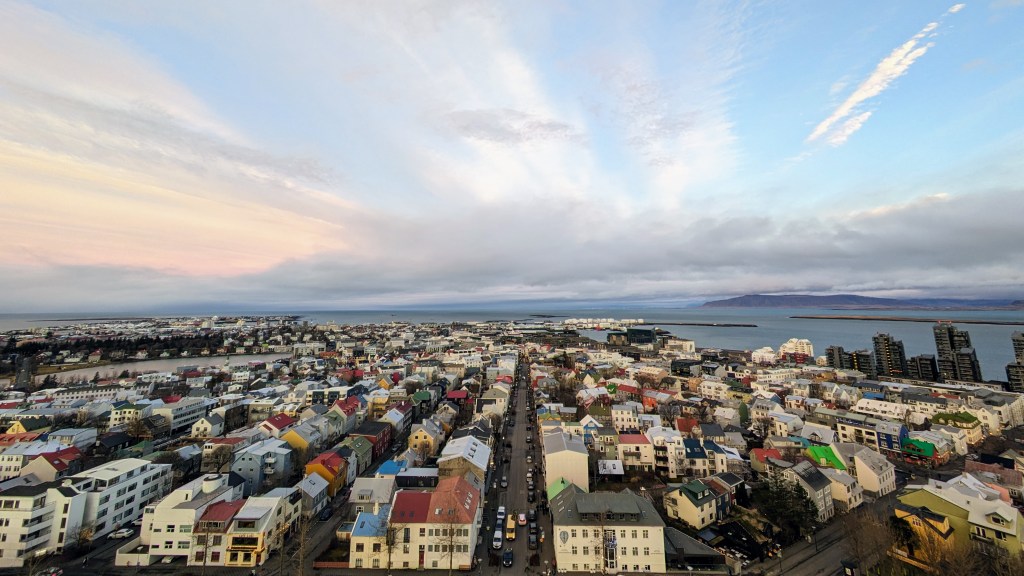
Day One: Arrival & Reykjavik
Early Morning: If you’re arriving in Iceland from the United States, you’ll likely be taking a red eye on Icelandair. These flights tend to arrive early in the morning. Deplaning, clearing customs and picking up your checked bags should take less than an hour.
Keflavik is about a fifty minute drive from Reykjavik. If you’re renting a car – which is essential for this itinerary – we recommend picking up your rental car straightaway at the airport. While you won’t be using it much on this first day, it will save you a costly and time-consuming return bus ride (round-trip tickets from the airport to central Reykjavik cost upwards of $50 per person). Car rentals are located less than a five minute walk from the terminal. Pick-up procedures will depend on which rental company you use, but many now have pre-arrival check-in and remote pick-up.
Even after checking into your hotel and finding an affordable spot to park your car (you can find details about Reykjavik’s parking zones here), you may find yourself with time to spare before museums and other attractions start opening at 10am. If you’re coming off a red eye, you may want a spot to sit, some coffee and food.
Breakfast: Head to Baka Baka in the center of downtown Reykjavik for breakfast. This popular bakery is well-regarded for their sourdough bread, pizzas and pastries, but it’s the cozy atmosphere in a central location that makes this the perfect spot to stop on your arrival morning. Their breakfast and brunch menu has a delicious selection of egg dishes, while pizza is the focus for lunch and dinner.
Mid-Morning: Rested and caffeinated, take a walk down past Reykjavik’s city hall in the direction of Tjörnin. During the winter, the lake (which is really a series of interconnected, shallow ponds) teems with birds including swans and gulls. When the weather gets chilly it can freeze over, allowing for ice skating.
Continue past the lake until you reach the University of Iceland, which is the home of the impressive National Museum of Iceland. The museum recounts the history of Iceland, from the arrival of the Vikings to present day. There’s an excessive amount of information packed into the museum’s two floors of displays. Go slow and soak it in. If you are still struggling with jet lag, before leaving, stop through the cafe for a pick-me up coffee.

Afternoon: Get some fresh air by walking through downtown Reykjavik. Trace your steps back past Tjörnin and pass by Austurvöllur, Ingólfurstorg, and the public library in the direction of the harbor. There’s a food hall on the docks, and several cafes around if you want to stop and rest for a bit.
After your lunch, coffee, or snack, head into the Reykjavik Maritime Museum. This museum traces Iceland’s long, complicated, and essential relationship with its fishing industries. Some of the information gets very granular, but there’s also fascinating exhibits that look at what people wore on boats, the different types of fish caught in Iceland and how the industry has changed through the years in use of tools and fishing techniques (especially following the disappearance of herring from the country’s shores). This isn’t the last time you’ll hear about just how essential the fishing industry was and is to Iceland’s economy.
Evening: Spend a bit of time in the early evening meandering along Laugavegur, Reykjavik’s main commercial thoroughfare. There’s a lot of souvenir shops, but also a lot of people watching. You will return to Reykjavik on your last day so don’t buy souvenirs yet, but scope out what looks interesting. Wander up Skólavörðustígur, which has a rainbow painted on the ground, charming boutique and an excellent view of the city’s now iconic modernist church Hallgrímskirkja. The church is beautifully lit up at night, so it’s definitely worth stopping by for photos.
Note to Spring/Summer Travelers
You may want to wait to visit Hallgrímskirkja until your last day. If you’re trying to see it lit up at night, you’ll have longer to wait with the (very) late sunset and will likely be exhausted.
Dinner: Visit Hlemmur Mathöll. Located by the bus depot, this food hall was Reykjavik’s first when it opened in 2017. It’s a small space, but there’s several options ranging from Icelandic-focused small plates at Skál to Icelandic lamb at Fjárhúsið.


Day Two: Reykjavik & Thingvellir National Park
Breakfast: Head to Reykjavik Roasters. This charming cafe has some of Reykjavik’s best coffee (consider buying a bag of beans as a souvenir). Grab a window seat and enjoy watching the city wake up.
Morning: At 10am when it opens, walk to Hallgrímskirkja. Despite only being completed in 1986, the church is now one of Iceland’s most iconic buildings. It’s also one of its tallest (second tallest building and sixth tallest structure, for those counting), standing at 244 ft. You don’t have to pay to go into the church, but you do have to pay to take the elevator to the viewing platform at the top. It’s worth it, especially if you’re there on a sunny morning in winter just as the sun is rising.
Lunch: Stop by a supermarket before checking out of your hotel and packing up your car. Depending on your dietary preferences, we recommend picking up some bread and fillings for sandwiches. Oh, and stock up on some Icelandic chocolate or licorice, in the name of cultural exploration, of course!
Afternoon: Drive in the direction of Thingvellir National Park. Depending on traffic – and this is indeed one of the few locations in Iceland where traffic is a consideration – the drive should take about fifty minutes. The first half will still feel quite urban, but this will recede as you approach the park.
Thingvellir National Park is an essential stop for any visitor to Iceland as it represents an important part of the country’s history. The area was the first meeting spot for Iceland’s parliament, or Althing, back in 930. Today it retains an important symbolic role for Iceland’s history, and is the location of the prime minister’s summer home.
There’s several walking routes around the park, from easy strolls to more involved hikes. Depending on how much time you have, we recommend walking to Öxarárfoss, Öxarárhólmi and the Thingvellir Church. If you have more time, stop by Langistígur and Peningagjá.
Evening: Given Thingvellir’s reputation as an essential tourist spot, there is a good smattering of accommodation nearby. We recommend staying at Héraðsskólinn, a former boarding school that’s been reimagined as a guesthouse with both shared and private rooms. There’s an on-site restaurant and lovely sitting area perfect for reading in the dark evenings.
If you arrive at your hotel early, consider visiting the hot springs at Laugarvatn Fontana. In addition to its hot pools and cold plunges, you can also book a tour to learn more about the area’s famous bread, which is put into the hot spring-warmed ground to steam.
Dinner: We recommend going to Lindin, which features a rotating menu of Icelandic cooking in a cozy dining room.

Day Three: Golden Circle
Breakfast: While many hotels offer breakfast buffets, these can be costly, especially depending on your morning appetite. If you’re staying at Héraðsskólinn or a nearby hotel, a cheaper alternative is to pick up some breakfast items at the local grocery store if you didn’t get breakfast items the day before.
Morning: For your first stop of the day, drive to Kerið Crater. You’ll have to pay 450 ISK to park (about $4), but it’s worth it for the view of the crater. The crater, or caldera, formed approximately 6,500 years ago and is notable for the bright blue water that collects in its base. You can walk around the top of the crater, around the base too, and there’s even some routes that take you to other, albeit less impressive, calderas nearby.
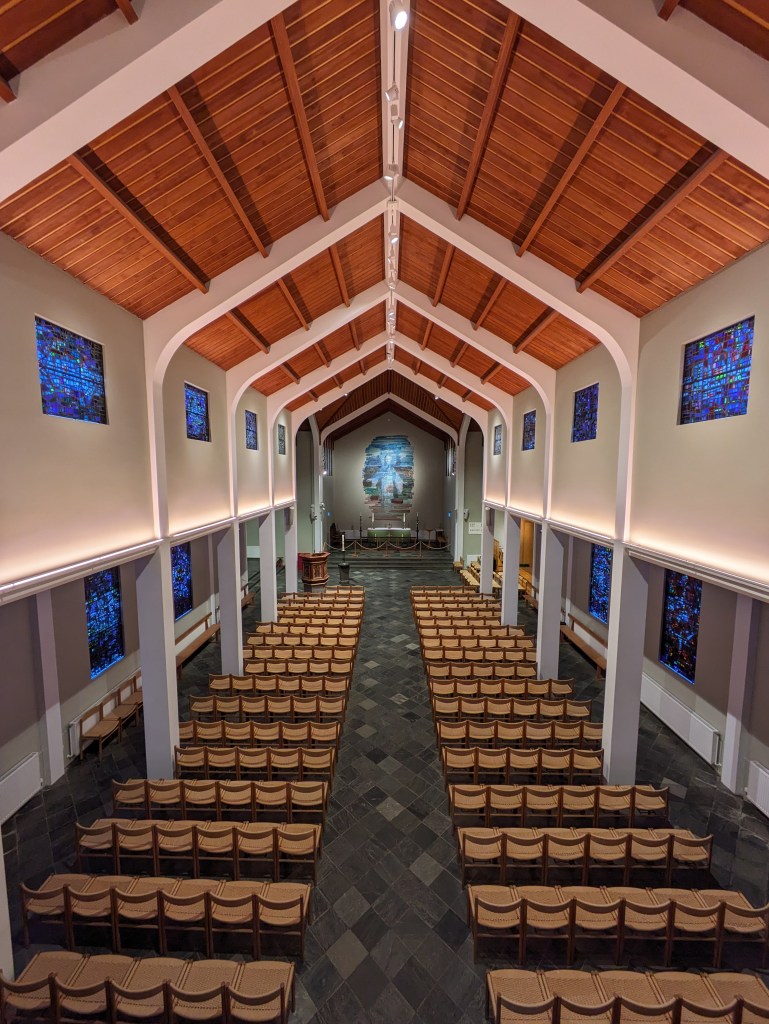
Next, drive to Skálholt. Despite playing an essential role in Iceland’s religious history – it was a former seat of the church in the north, before it was transferred to Reykjavik – Skálholt doesn’t get the attention of other nearby stops. That’s a shame because it’s a lovely spot with a fascinating history. A church has stood on the location since 1056. The current church dates to 1956 and it’s a lovely, warm spot. There’s a fascinating museum in the crypt that offers a bit more information about Skálholt’s history as well as artifacts (mostly tombstones) dating from the earliest days of the church.

Lunch: If you’re not planning to make yourself lunch, you can pick it up at the visitor center of your next stop, Geysir. The visitor’s center has plenty of food options, from simple sandwiches and soup to a cooked meal buffet.
Afternoon: Known for its hot springs, Geysir is an impressive stop that’s perfect for lingering. The showpiece is the so-called Great Geysir, which reliably erupts roughly every five to seven minutes. It’s worth standing and waiting for the eruption – it’s fascinating to see how the water goes from steady to bubbling to the explosion. Stay once just to watch, then once to film (we know you want to). There’s also some nice walking trails in the area, and plenty of other bubbling pools of water (though none quite as impressive as the Great Geysir).
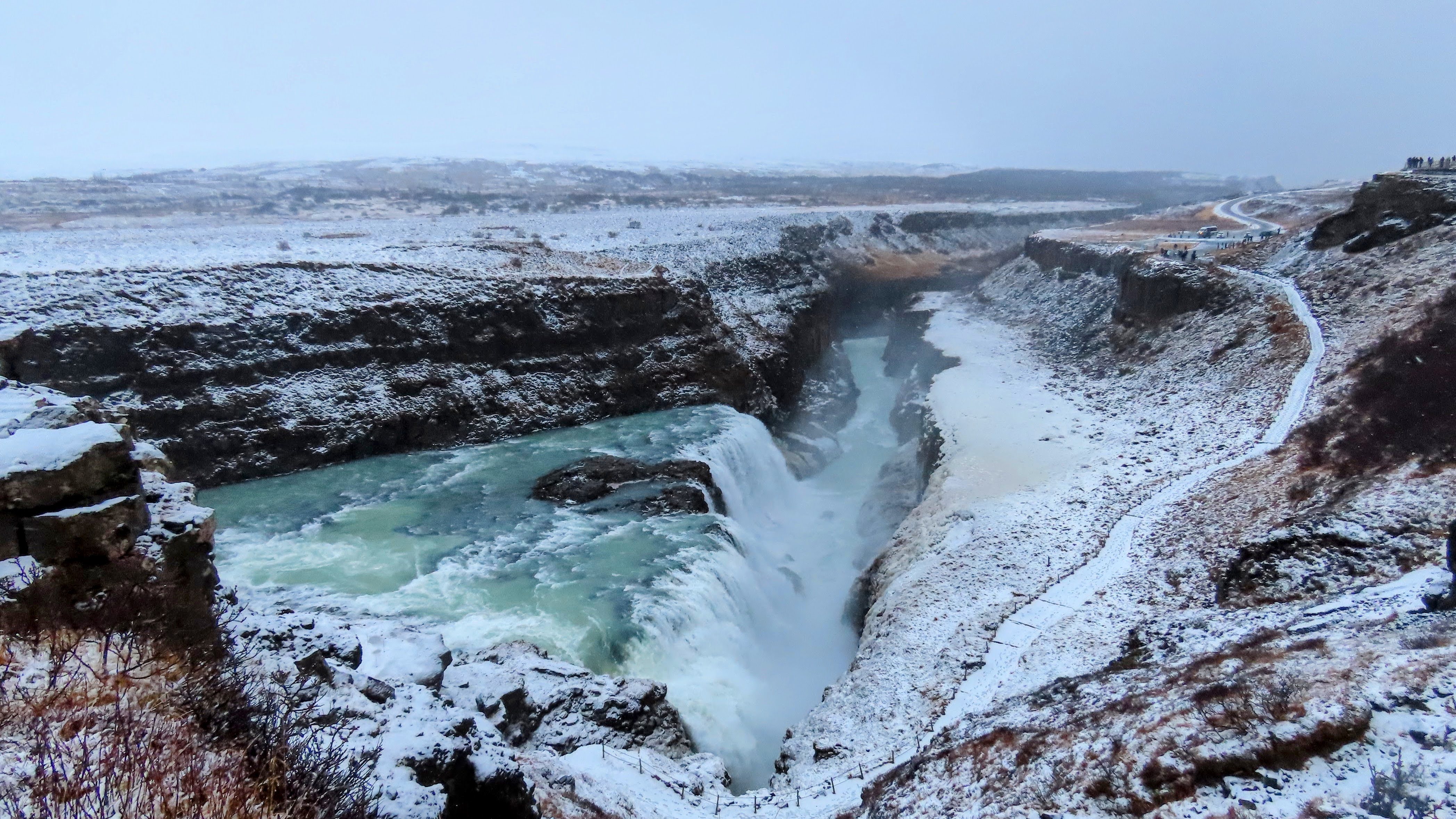
Complete your Golden Circle tour with a stop at Gullfoss. This mammoth waterfall has two wide steps, down which 5,000 cu ft of water plummet per second in the summer (it’s 2,800 cu ft per second in the winter). There are several viewing platforms, but – given the spray – the ones closest to the waterfall close early in the season when they ice over. The entire area can be quite icy or slushy, depending on the weather, so it’s wise to have microspikes at the ready.
Evening: We recommend staying closer to tomorrow’s destinations, in the proximity of Skógar, Hvolsvöllur or Hella. We stayed at Holt Guesthouse, a lovely shared property with breakfast included.
Dinner: If you’re staying in proximity to Skógar, Hotel Skógafoss has a decent dinner menu with a mix of Icelandic dishes like plokkfiskur and lamb, as well as more affordable options like pizza.
Day Four: Southern Iceland Waterfalls
Breakfast: Unless you’re staying in an accommodation that provides breakfast, plan on self-catering this morning.
Morning: As soon as the sun starts to rise, drive to Seljalandsfoss. You’ll be able to see it from the road because the waterfall is gorgeously lit up when it’s dark out. This is the famous waterfall you can walk behind, and the experience is as cool, and damp, as it sounds. Bring your camera, but also a rain jacket.
After you take your photos, head down the trail to your left when looking at the waterfall. In less than five minutes, you’ll arrive at Gljufrabui. While the waterfall appears hidden from the trail, if you sneak behind the rocks (stepping on the appropriately placed stones in the stream that emerges from the rocks), you’ll find a tall, thin waterfall. It’s a cool one to see, but the most exciting part is the stone-hopping needed to get there.
Head back to your car and drive the 30 km to Skógafoss. This waterfall might not be as massive as the one you saw the day before at Gullfoss, but what it lacks in width it makes up for in perspective. Here, you’re standing at the bottom of the powerful falls, feeling the blast of spray as the water pummels the ground. At 82 feet wide with a 200 ft drop, this is still one of the country’s biggest waterfalls. The view from the ground is cool, but what’s even more amazing is the view from the upper observation platform. Climb the metal stairs (some steps are ricketier than others), and you’ll be at the edge of the top of the falls. During sunny weather, the light hits the falls in such angles that you’ll see rainbows forming.
At the top of the falls, there’s a sheep gate. You can go through this gate to hike to some more, smaller waterfalls further up into the highlands. It’s a lovely walk, and one we highly recommend. Walking for even a mile will give you plenty of spectacular views and at least five waterfalls you can see and appreciate on a more intimate scale and with fewer tourists.


Lunch: Depending on how hungry you are, either stop for lunch in Skógar or your next destination, Reynisfjara Beach. Heimamenn offers typical cafe fare in a sunny setting, while the cafe at Reynisfjara beach offers a view of the ocean (and plenty of other tourists, even during winter).
Afternoon: Reynisfjara has become one of Iceland’s most popular stops thanks to its gorgeous beach, stunning basalt columns and spindly sea stacks. It’s also known as one of its more dangerous spots; sneaker waves are relatively common. These waves come up farther on the beach than the current tide, and have a strong undertow that can pull people out to sea. As you approach the beach, you’ll see a red-yellow-green alert system that will let you know where on the beach is safe to visit. You don’t need to stand in the water to fully appreciate the beach.
If you still have time and energy, stop by Fjaðrárgljúfur as your drive in the direction of Skaftafell. The canyon has several waterfalls along it, and it’s a lovely walk with gorgeous scenery, especially as the sun slowly starts to set.
Evening: To be well positioned for your next day, it’s best to stay near Skaftafell Nature Preserve. This isn’t a short drive, but there’s little to see and few places to stay in between the waterfalls and there.
If you visiting during the winter, you can get very good deals at the luxurious Fosshotel Glacier Lagoon. The hotel has a restaurant, spa with hot tub and sauna, and northern lights alert service (if they can be seen from the hotel, you’ll get a call to wake you up). If this hotel is out of your budget, consider the nearby Adventure Hotel Hof, which is very close to the Skaftafell Visitor’s Center.
Dinner: Regardless of where you choose to stay, we recommend treating yourself to a nice dinner at the Fosshotel. The food has a beautiful presentation, even though in our experience the appetizers were more appealing than the mains.

Day Five: Skaftafell Nature Preserve
Breakfast: If you don’t want to splurge on the hotel’s breakfast buffet, you can pick up a quick breakfast (made of basic groceries) at the convenience store/restaurant attached to the Orkan gas station. It’s just a few minutes to the east of the park entrance.
Morning: After paying for parking at Skaftafell Nature Preserve (which costs about $10), look for the signs for the trail to Svartifoss. Be sure to take a picture of the trail map, as there are some other trails in the area that are nice to explore after you reach the waterfall.

It’s a relatively quick and easy hike to Svartifoss, and you’ll pass a few other waterfalls along the way. The main trail has minimal incline and as you slowly ascend you experience wide vistas. But, being the main trail it can get quite crowded, even in winter. This might not be the most beautiful hike you take in Iceland, but the arrival is worth it. Svartifoss is a thin waterfall, but it’s surrounded by perfect, architecturally improbable basalt columns where the top ones extend past the bottom ones. In winter, ice coats the bottom of the rocks. Truly a sight to see.
After fighting for space to take photos, you can either continue to walk around Skaftafell using the trail map you took a photo of earlier. If you want to head back to the car park and to your next destination, then start by retracing your steps back down. We recommend that, when you return to the first Svartifoss outlook, turn to your left and follow the well-worn trail that crosses the tops of the mountains. Fewer people follow this smaller trail, which makes the experience of walking feel entirely more intimate and magical, especially if the sun is casting its warm winter glow over the mountains.

Lunch: Either make yourself a sandwich for the road – you can pick up groceries at the same Orkan gas station we highlighted for breakfast. Otherwise, there should be some food trucks operating at your next destination, Jökulsárlón.
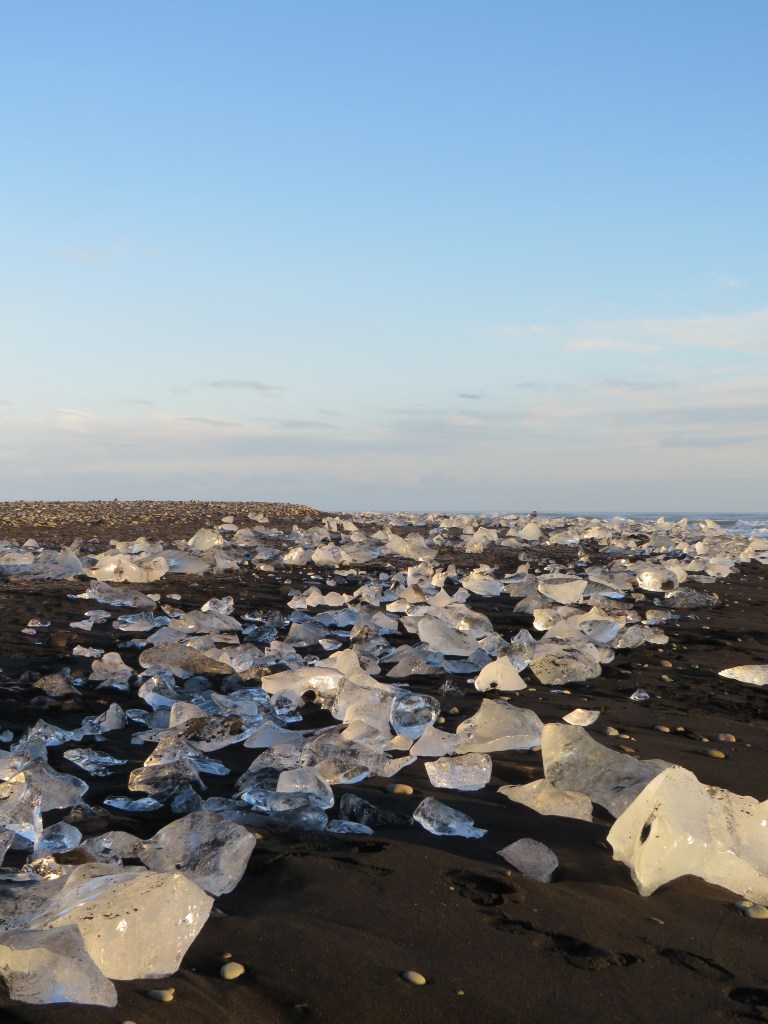
Afternoon: It will take about an hour to drive from Skaftafell to your next destination, Jökulsárlón glacier lagoon. While it’s accurate to describe the spot as a bunch of ice that’s broken off from a glacier slowly drifting out to sea, it doesn’t accurately capture the scenery’s unique magic. The ice comes in different sizes, in varying shades of blue and in unique shapes that reflect light in mesmerizing ways. Walk around the edge of the lagoon, then head under the bridge you drove in on to reach Diamond Beach. As you walk towards the ocean you’ll find pieces of ice that have washed back onto shore after being drawn out of the lagoon. It’s a fun site to explore and to photograph.


Once you’ve finished at Jökulsárlón, drive back towards your hotel for about five minutes until you reach an unmarked turnoff for Múlagljúfur Canyon. The road is bumpy, but drive slowly and keep going. You’ll eventually reach a small parking lot. This is the trailhead for a hike towards Múlagljúfur Canyon. It’s a well-marked hike for the first two thirds of the trail, which is about 3.5 miles in total length out-and-back. You can find an in-depth description of the hike here. It’s not a hard hike, but there are some spots that can get icy in the winter, so bring your microspikes.
Note that the hike does not end once you reach the end of the trail blazes! Continue past the last blaze around the rocky outcropping in front of you and continue to hike up, following the edge of the small stream that runs down the hill. Although daunting in winter, when there may be no other footprints to follow in the snow, at the top you will be treated to a view to the end of the canyon where you will see a six-tiered waterfall plunging into the canyon.
Dinner: There’s not many options for dinner in the area if you’re staying in a hotel. If you didn’t try the restaurant at Foss Hotel Glacier Lagoon last night, that’s a great option. For something simpler and more affordable, you can head to the Orkan gas station by the Skaftafell Visitor Center for an array of burgers and similar fast food. It’s a step above McDonald’s, but not the best meal you’ll eat in Iceland.

Day Six: Skaftafell Nature Preserve
Morning: While you could leave Skaftafell after only one day, you’d be overlooking one of the most awe-inspiring experiences you can have in Iceland: hiking on a glacier. Experienced ice climbers may be able to do this themselves, but for the rest of us, joining a tour is essential.
We chose to do a tour with Tröll Expeditions that combined a glacier hike with an ice cave. The tour lasted for about three hours, though this included transport to and from the glacier, so we spent about two hours on the glacier in the end. Seeing the many colors and textures of a glacier up close is incredible and awe-inspiring, though we were underwhelmed by the ice cave and would have preferred more time hiking on the glacier (the best ice cave we have visited was in Svalbard, and it was a significantly more impressive experience). A lot of time on the glacier was dedicated to photo stops, which also limited how much of the glacier we got to explore. If you need the perfect Instagram shot, this is the tour for you, but ultimately we would recommend choosing a tour that is just focused on the glacier. The experience isn’t too physically demanding: if you can walk, you can hike on a glacier.
In addition to Tröll Expeditions, other companies that offer tours are Arctic Adventures, Icelandic Mountain Guides and Melrakki. Most tend to be half-day excursions lasting from two and a half to three hours, though there are some longer trips of about five hours. Some tours are dedicated to walking on the glacier, some just explore ice caves and others do a mix of both. You can also look for tours that incorporate ice climbing or promise a more strenuous experience. Regardless of which company you choose, you’ll see similar things on the glacier: the guides across companies are in constant walkie-talkie contact and work together to identify areas that are both safe and impressive to visit.
Lunch: Follow the guidelines from yesterday; either make yourself sandwiches after your tour or grab a quick meal from the nearby Orkan.

Afternoon: You’ll end your day in Egilsstaðir, which is a long drive from Skaftafell, so it’s best to dedicate your afternoon to driving. If you want to stop to stretch your legs along the way, Vestrahorn (Stokksnes) and the Viking Village is a popular spot. You’ll have to pay 900 ISK (about $10) to drive the roads to the mountain and to see the Village. We decided not to visit, but the sunset drive to the toll booth was one of the most beautiful drives of our two weeks in Iceland.
Evening: Depending on whether or not you stop at Vestrahorn, you should arrive in Egilsstaðir around 7pm. The safest way to get there is either by taking the Ring Road (route 1) which traces almost every fjord on the way to Egilsstaðir. You can also break off route 1 when it meets route 95, which backtracks a little and heads inland before cutting North. For the adventurous, the most direct route requires exiting route 1 to take route 939, which is a graded gravel route that cuts through mountain passes to connect with route 95. It saves you at least 30 minutes in comparison to taking route 1. During winter this short-cut route can become impassible. Even if it is passable, mountain winds mean a snow flurry can lead to whiteout conditions. We took this route in our Mitsubishi Eclipse when there were already about four inches of snow on the ground. While it was snowing. At night. In places the snow had been blown into drifts more than one foot tall. We would not recommend following in our footsteps. At least do it during the day when you can see this beautiful, secluded mountain pass.) Even if you are taking route 1, check the road conditions before you set out. Never attempt a drive when you are not comfortable that you, and your vehicle, can manage the journey.
For Egilsstaðir, we recommend staying in an Airbnb. There are plenty of central options to choose from. We opted for this self-serviced, self-contained unit, which was convenient and suited our needs perfectly for an overnight stay.
Dinner: Walk or drive to Askur Pizzeria. This popular spot serves pizzas with uniquely Icelandic toppings, as well as beers made in the brewery next door. After dinner, you can walk straight through from the pizza parlor into the brewery to try a flight of their beers.
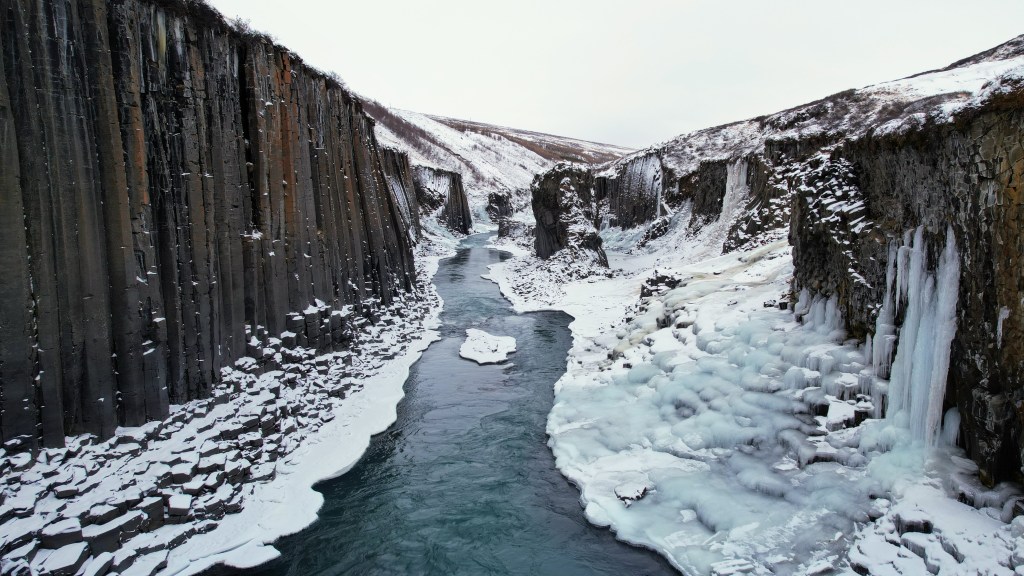
Day Seven: Hengifoss & Stuðlagil Canyon
Breakfast: While Egilsstaðir is one of Iceland’s larger towns, the restaurants tend to open only for lunch. Pick up groceries for a DIY breakfast.
Morning: After packing up your car, drive toward Hengifoss. The trailhead to reach this waterfall is located about a half-hour drive (about 35 kilometers) outside of Egilsstaðir. Park your car and grab your microspikes. The first section of this hike isn’t too inspiring. You’re essentially walking up an old, steep roadway. You’ll pass one waterfall and a viewpoint of Hengifoss before things start getting interesting. From there you’ll start scrambling over rocks as you get closer and closer to Hengifoss. During winter it can get quite icy, which makes the rock scrambling a bit tricky. Go as until you’re content with your view, then enjoy the silence. If you want more detail, check out this full guide.
Lunch: Return to Egilsstaðir to stop in Salt Cafe & Bistro. This sunny spot offers a variety of options, from pizzas and burgers to more culinary mains like reindeer pasta and grilled arctic char.
Afternoon: It will take about an hour to drive to your next destination, Stuðlagil Canyon. You can view the canyon from two viewpoints, one on the east side and one on the west. They’re not close together and if you’re visiting in winter you’ll need to choose between one or the other. The west viewpoint is easy to reach. It has a viewing platform with stairs, so there’s barely any hiking to speak of. Many people say that the views from the west aren’t as good as the views from the east. We can’t attest to that directly, but we can say that the view from the east are superb. To reach the east side of Stuðlagil Canyon, you’ll need to hike for about a mile after parking your car. The hike is easy – you’re walking along a farm road – but it’s boring. While many guides will say that the second, closer parking lot (which we parked in) is hard to reach without a 4×4, we found the drive no more difficult than driving along any other graded gravel road (and we did it in our two-wheel drive car).
During the summer, you can hike down into the canyon to the water’s edge. We chose not to do this in winter since the surface at the edge of the canyon was already quite slippery (bring your microspikes). But that doesn’t make the views any less beguiling. If you have a drone, this is an excellent spot for flying it. For more information about visiting Stuðlagil Canyon, check out this blog post.
Evening: While you could drive straight to Akureyri – the largest town in northern Iceland – we recommend breaking up the stay with a night in Húsavík. Húsavík has anointed itself the unofficial whale watching capital of Iceland, but it’s a charming town even if you’re visiting out of season. There’s a very compact downtown area, dominated by the harbor and overseen by an ornate church which is illuminated in red light at night. The church was built in Norway, then shipped to Húsavík where it was reconstructed piece by piece. There are several options of places to stay in Húsavík, whether you want an Airbnb or a proper hotel. We chose the Húsavík Cape Hotel, which had minimal service but was plenty comfortable.
Dinner: Get a table at Gamli Baukur, which showcases Húsavík’s fishing heritage through plenty of old photos and fishing memorabilia. As you might expect of a port town, there’s plenty of fish on the menu, as well as Icelandic lamb and some burgers.

Day Eight: Lake Myvatn
Breakfast: As per usual, plan to have breakfast at your hotel, either with a buffet or with food you’ve purchased yourself.
Morning: Today is entirely devoted to exploring Lake Myvatn and its surroundings. If you are driving from Húsavík, start early, as the drive will take about two hours. There’s plenty to see in Lake Myvatn, but how much you’ll appreciate depends entirely on the conditions, especially in winter. Places like Víti Crater and Skútustaðagígar will be much less impressive once there’s a layer of snow covering the ground.
Instead, focus your time on the spots that will impress no matter the weather, like the Dimmuborgir lava fields and the Námaskarð mud pits. Start with Námaskarð, which is the first attraction you’ll reach on your approach from the Ring Road.
You’ll have to pay to park at Námaskarð, but it’s worth it for the weird, wonderful bubbling mud pits you’ll encounter. If the Great Geysir is magical, Námaskarð is otherworldly. It can be stinky and muddy in places, but that’s part of the fun of visiting.
You may also choose to stop by the Myvatn Nature Baths, a series of natural hot springs that are located on the edge of Myvatn. The ambiance is similar in feel to the Blue Lagoon, though with fewer people, befitting of the more northerly location.

Lunch: There are a few places to eat in the area during summer, but if you’re visiting in winter plan on a DIY lunch in your car.
Afternoon: From Námaskarð, it’ll take you just about ten minutes to drive to Dimmuborgir. The area is populated by fantastical lava rocks, which formed as molten lava met cool water post-eruption. It’s a wondrous place to visit during winter when a dusting of snow makes the landscape look like an illustration from a fairytale. There are several hiking routes in the area. Take a photo of the trail map at the entrance. Winter might limit how much light you have available to hike, but it’s an enticing area, so spend as much time as you feel you have available.
If you choose to keep your hikes on the shorter side, you may also have time to visit Sigurgeir’s Bird Museum. Located in Myvatn’s nature preserve – which welcomes over 150 species of birds throughout the year – the museum has taxidermized example of nearly every bird in Iceland (apart from one) It may sound macabre, but it’s tastefully done and a fascinating way to see Iceland’s most unique birds up close.
Evening: Plan to stay the evening in Akureyri, which is about an hour’s drive from Lake Myvatn. This is the largest city in northern Iceland, and Iceland’s largest outside of the Reykjavik suburban sprawl. There are many hotels to choose from. We opted for Hotel Akureyri, which has a fantastically central location and extremely comfortable bed, though it is minimally staffed.
Akureyri is located at the edge of a fjord, and just across the water you’ll find the Forest Lagoon, a luxurious hot spring with lovely views over the city. When we visited, we went for Alex’s birthday. It’s a fantastic spot, with two bars in the hot spring, a sauna, multiple pools and a cold plunge. If you’re looking for an indulgent spot to spend your evening, this is it.
Dinner: There are multiple restaurants to choose from in Akureyri, depending on your tastes. For Alex’s birthday dinner, we opted for Rub23, one of the city’s fancier restaurants that focuses on Asian fusion dishes and sushi. It’s expensive, but a lovely environment for a special meal.

Day Nine: Akureyri & Siglufjörður
Breakfast: Back in a big city, there are several cafes to choose from for breakfast in Akureyri. Located inside the art museum, Ketilkaffi serves high-quality coffee with a standard selection of pastries. There’s also Kristjáns Bakarí, which offers delicious pastries on Akureyri’s main street.
Morning: During winter, Akureyri tends to be on the quieter side, so we recommend pre-booking a museum to fill your morning. Iceland’s Aviation Museum, located in a hangar by Akureyri’s Airport, is an excellent stop. The museum is jam-packed with all sorts of planes, from hobby craft to emergency service helicopters to portions of commercial airliners. The museum broadly traces the history of commercial aviation in Iceland, which makes for an informative and surprisingly entertaining visit. If aviation isn’t of interest, try the nearby Motorcycle Museum which traces the history of motorcycles in Iceland over 100 years.
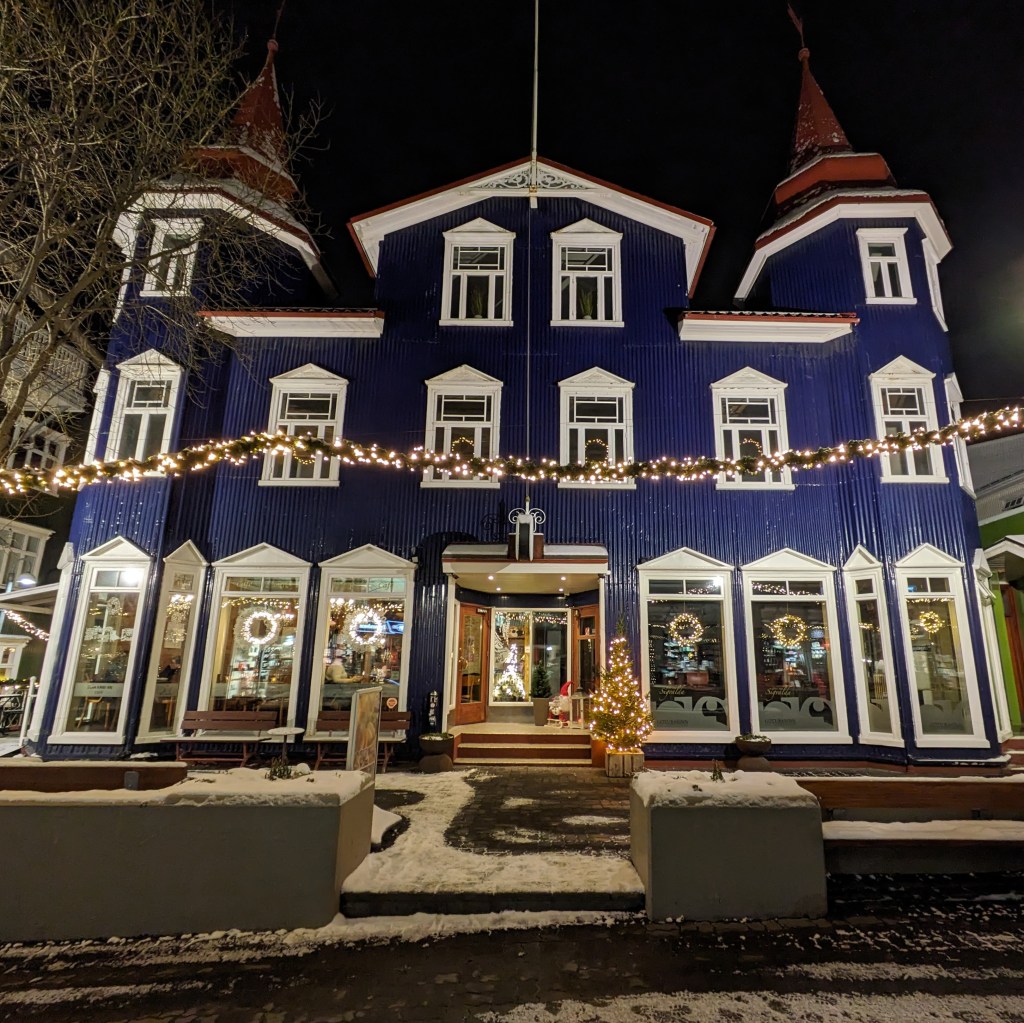
The aviation or motorcycle museum should only take a couple of hours, at most. Afterwards, it’s a short drive back into Akureyri to visit the rest of the city. Stop by the Cathedral, walk towards the harbor and down the main street. If you get chilly, duck into Penninn Eymundsson, a bookstore-meets-souvenir-shop-meets-interiors-store. The books are expensive, but there are a few volumes that you’re unlikely to find outside of Iceland.
Lunch: Just across the street is the charming Bláa Kannan. The wood-paneled cafe has a generous selection of sandwiches, soups and quiche, as well as plenty of cakes and coffee drinks. The window spots are great for sitting and watching the locals go about their day.



Afternoon: After a leisurely lunch, hop in your car for the drive to Siglufjörður. Regardless, the drive between Akureyri and Siglufjörður is breathtaking. On a sunny winter afternoon, you’ll see soft, snow-covered mountains slope downwards into calm inlets while the light coats the landscape with a peachy hue. Have your camera ready for photos.
Once you arrive in Siglufjörður, head in the direction of the Herring Era Museum (you’ll need to email the museum to book your visit during winter). This museum occupies three different buildings in the town center and tells the story of Siglufjörður’s once considerable herring industry. During the early twentieth century, Siglufjörður’s herring exports accounted for up to 20% of Iceland’s GDP. Consequently, tens of thousands of workers, men and women, would flock to the town during the summers to work in the bustling fisheries. The museum goes deep into this history, and presents a variety of interesting artifacts from the time period as well. While all the exhibits are interesting, we found the most informative to be those in the women’s quarters (the first building which you will be directed to to start the tour). Spend most of your visit there.
Evening: There’s not much to see in Siglufjörður after you’ve finished up the museum. Walk around the town for a bit to admire the fjord, or stop at the overlook on the way out, which is on your left just after the airport but before the tunnel. From here, you’ll have a great view over the twinkling lights of Siglufjörður.
Dinner: By this point in your trip, you’ll have realized that Icelanders love burgers. Test your understanding of Iceland’s hamburger culture at Hamborgarafabrikkan, which offers an extensive menu of inventive beef burgers, as well as some lamb, chicken and pork options for good measure.
If you’d like to try some local beer, head to Ölstofa Akureyrar. The casual bar serves a variety of Einstök beers, which are brewed in Akureyri.

Day Ten: Northwest Iceland
Breakfast: As with yesterday, choose between Ketilkaffi (inside the art museum) or Kristjáns Bakarí. Bláa Kannan is also open for breakfast.
Morning: You’ll be doing a lot of driving today, so give yourself an early start to allow for plenty of stops while the sun is up. After driving for about an hour and fifteen minutes (100 kilometers), you’ll reach Glaumbær Farm and Museum. Located a short drive outside of Varmahlíð, the museum is housed inside an old turf house and showcases what life was like in rural Iceland during the nineteenth century. The museum isn’t always staffed during winter, though there is a bell you can ring for assistance. There should be someone nearby who can come open the museum for you and let you in. Alternatively, you can walk around the exterior on your own (and for free), though we think going inside is worth the extra time and money.
Lunch: After another hour or so of driving (58 kilometers), you’ll reach Blönduós, where you can stop for lunch. Rather than make a sandwich in your car or stop at a gas station, head to Teni. The restaurant is popular with locals for its lunchtime buffet; when we visited the dish was pork chops with cabbage salad. But the real appeal here is the Ethiopian dishes, which offer a nice reprieve from Icelandic cuisine.
Afternoon: Another 60 kilometers away lies Hvitserkur, a fantastic sea stack that emerges from the water either like a monster or like an elephant, depending on who you ask. The drive should take about an hour as you’ll be going over some gravel roads that can be quite icy, depending on recent weather. It’s a slow drive, but an exceedingly beautiful one. Have your camera at the ready.
There’s an observation platform at Hvitserkur for viewing the sea stack. Spend time admiring the light as it slowly moves across the horizon, giving the entire vista the softness of a water color.
Once you’ve contented yourself at the observation deck, walk down toward the water. The pathway can get a bit icy, so be careful. It’s hypnotic to watch the waves gently pull in and out. This is a great spot to arrive around sunset and watch the landscape assume a golden, pinky hue.
It will likely still be mid-afternoon by the time you leave Hvitserkur, though depending on what time of year you’re visiting, the sun may already be setting. Drive towards Búðardalur, which is about 120 kilometers away (roughly two hours driving). Stop by the Kjörbúðin (grocery store) to stock up on provisions for the next few days in the Westfjords (which is self-catering only in winter). If you’re in town after 4pm, you can also stop by the Vínbúðin (liquor store) to pick up drinks for the evening.
Evening: Stocked up on food, it’s time to start driving up towards the Westfjords. This region is one of the least visited in Iceland, though we think it’s a worthy detour from your Ring Road adventure. The weather can be unpredictable in winter, so we recommend going slowly and taking note of the weather and road conditions. There’s a good selection of Airbnbs to choose from. We stayed at Mýrartunga Guesthouse, a shared Airbnb that has multiple rooms depending on party size. We were the only guests when we stayed there, so it felt quite palatial.
Dinner: As we mentioned above, you’ll be self-catering this evening. Given the Westfjords’ remoteness, all Airbnbs in the area should have well-kitted kitchens for you to use.
Day Eleven: Westfjords
Breakfast: Get up early for a self-catered breakfast at your accommodation.
Morning: In the Westfjords, distances that look close on a map turn out to be hours away. In other words, you’ll be doing a fair amount of driving today. Start early, just before the sun starts to come up, and head in the direction of the Látrabjarg Sea Cliffs. Before you head out, be sure to check the road conditions on Iceland’s Safe Travel app. The Westfjords can get snowy during winter, which can cause the roads to be impassable.
Oh, and be sure to go to the bathroom before you leave. You won’t encounter any services during your drive, apart from a single gas station.
Under ideal conditions, the 200 kilometer drive to Látrabjarg will take you a hair over three hours. To make the drive more manageable, we recommend breaking it up with some roadside attractions. The first one you’ll pass by is the Hellulaug hot pool, a natural hot spring right off the side of the road that looks out into the fjord. Depending on the time of year, it may still be a bit dark when you get there. If you’ve brought your bathing suit, you can hop into the small changing area and take a dip. A few kilometers down the road you’ll come to a gas station. We recommend filling up here, just to be on the safe side.
With another half hour or so (50 kilometers) of driving, you’ll reach another roadside attraction, the ruins of Garðar BA 64. This boat is the oldest steel ship in Iceland. It was built in Norway in 1912, and had many lives before arriving in Iceland to be used for fishing herring in the 1960s. By the 1980s, its owners decided the boat was no longer fit for purpose and beached it in the Westfjords, just outside of Patreksfjörður. Today it’s a popular photo spot, and a nice excuse to stretch your legs while driving in the Westfjords.
By midday, you should finally be approaching Látrabjarg. The last hour of the drive, once you turn onto the gravel road 612 can be slow going, especially if it’s snowed recently. Go slowly.
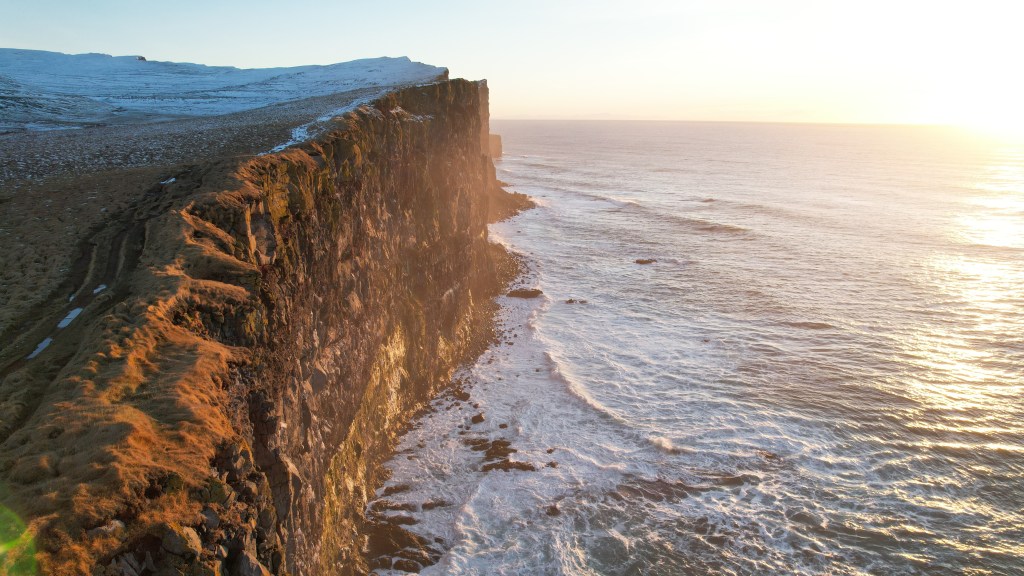
The views from Látrabjarg are more than worth the effort it takes to get there, especially if you have the cliffs all to yourself during winter. While the area is known for its plentiful bird life, by winter only some gulls remain. Nevertheless, it’s impressive to see them swooping alongside golden cliffs as waves roll in below. There’s a hiking trail that meanders up along the edge of the cliff. Follow that for as long as you want. It can get icy at spots, but it’s relatively flat so walking is quite easy. There are several lookouts cut into the mountain’s edge, which give you a spectacular view on the cliff fronts facing toward the ocean. Depending on the wind (and keeping in mind not to bother other visitors or the birds), this can be a magnificent place to fly a drone.
Lunch: Either before or after your time at Látrabjarg, make yourself a quick lunch to enjoy in your car. You could eat outside, but the area is quite windy and cold during winter.
Afternoon: Once you’ve gotten your fill of walking around Látrabjarg, it’s time to slowly make your way back to your accommodation. If you’d like to make a stop, and if the weather is good, drive to Rauðasandur. This Red Sand Beach is just to the south of Látrabjarg, but you’ll take a circuitous route around a mountain to get there. The route can get icy, and the road is narrow, particularly the final decent to the beach which is a series of hairpins which cut down a steep cliffside, so drive carefully. Skip this part entirely if there’s been snow recently as it may be impassible (and the beach will be covered in ice and snow anyway).
Rauðasandur is a lovely spot from which to watch a sunset right into the ocean, but don’t go for the red sand. The sand is really closer to a russet color – not all that unusual if you’re used to non-Icelandic beaches. In winter, the entire beach ices over, creating a surface that reflects the sun and sky. It’s a lovely spot, all the more pleasing for its lonesomeness.
Evening: The drive back is long. Take your time. The roads you’ll be taking have a surprising amount of truck traffic. Go slowly as they approach. Their lights can be blinding.
Dinner: Another evening of self-catering.

Day Twelve: Snæfellsnes Peninsula
Breakfast: Make yourself breakfast before you head out on your drive to the Snæfellsnes Peninsula. There’s a lot less driving today, so this is a good day to sleep in.
Morning: There’s not much you’re likely to want to stop for until you reach Grundarfjörður, which is about two hours (160 kilometers) away from the edge of the Westfjords. While Grundarfjörður itself is a small town without much notable, it’s become a popular tourist spot thanks to Kirkjufell, a mountain that lies just to its east. Kirkjufell has become a must-photograph spot for tourists, especially when the photo includes some waterfalls that sit to the south. You’ll need to pay to park if you want to see the waterfalls, but driving past Kirkjufell and taking a photo from the roadside is free. During summer, you can hike up Kirkjufell. If you’ve been to the Faroe Islands and seen Villingardalsfjall, Kirkjufell will look eerily similar.
Lunch: After taking your photos, continue to drive until you reach Ólafsvík, a small town with plenty of dining options. Sker is a fine option for soups, pizzas and more elaborate mains if you want to sit down, or you can pick up groceries at one of the gas stations.

Afternoon: Just five minutes outside of Ólafsvík, you’ll encounter another shipwreck: Sæljós GK-2. It’s a nice stop for a couple photos.
Don’t linger for too long though, as there are plenty of more attractions that await. You can climb up the side of Saxhóll Crater to see inside of a volcano cone and see the surrounding landscape. It’s a quick climb up the iron stairs.
You’re more likely to want to linger at your next stop, the black stone beach of Djúpalónssandur. From the otherworldly walk to the beach to the shiny black rocks that cover its surface to the sea stacks in the distance, this is a gorgeous spot to simply watch nature. The waves can be dramatic in the coves, and it’s mesmerizing to watch the various ways they roll in and sink through the stones as they roll back out. You can also walk about ten minutes north to Dritvik, another black pebble beach, albeit one that lacks the drama of Djúpalónssandur. Depending on when you arrive and the time of year, this can be a fantastic spot to watch the sunset.
Of additional minor interest, Dritvik has a survival shelter on its shore. These survival huts are sprinkled around Iceland, typically in remote locations for backpackers who find themselves stranded and need shelter or emergency supplies.
Be sure to save some daylight to visit Gatklettur, a sea stack located just outside of Arnarstapi. The waves can be quite dramatic around the sea stack, causing them to occasionally burst through holes previously worn into the rock. It’s a delightful site, and another one that’s easy to spend a long time admiring.
Walk about five minutes to the north east, along the coastal cliffs to see more sea stacks, as well as a giant hole that’s been born down into the cliff you’re standing on. Occasionally, waves will shoot up like a geyser through the center of the hole. It’s an astonishing site to see, but one you may need to wait a while to see, depending on the weather and the tide. Stand back.
Evening: There’s plenty of accommodation options across the Snæfellsnes Peninsula, whether you want to stay in an Airbnb, casual hotel or boutique bed and breakfast. If you’d like to stay in a hotel, we recommend looking in Stykkishólmur, which has plenty of options. It’s also a charming spot in its own right, with plenty of cute old houses in its compact town center. If you’re visiting in winter, you can get good out-of-season deals at Hotel Egilsen, a charming and cozy bed and breakfast located in the center of town.
Dinner: If you’re staying in Stykkishólmur, treat yourself to dinner at Narfeyrarstofa. Located in the center of town, this restaurant is refreshingly refined. There’s a selection of local fish and meat dishes, but they don’t adhere too closely to tradition. Think cod with a miso sauce, or local scallops served with quinoa.

Day Thirteen: West Iceland
Breakfast: Stykkishólmur is small, so it’s an easy and quick walk to the edge of town for pastries at Nesbrauð ehf. Guidebooks will tell you that this is the town’s best bakery, and the constant stream of locals reinforces this, as do the fantastic pastries.
Morning: After breakfast, meander around Stykkishólmur. In winter, most of the museums will be closed, but you can still view the houses from outside and take a walk around the port. There’s also a lighthouse you can walk to, if you’re so inclined.
Once you’ve stretched your legs, it’s time to slowly start making your way back to Reykjavik. The drive is just over two hours (170 kilometers), but we recommend taking your time and enjoying the last moments of Icelandic nature.
There’s a variety of roadside attractions along the way, depending on whether you want to see more basalt columns at Gerðuberg, the colorful crater of Eldborg, or learn more about Icelandic history at The Settlement Center in Borgarnes.
As you head further south, we recommend stopping at Akranes to see the lighthouse, which is the only one you can climb in Iceland. The owner is passionate about lighthouses, and the views from the top are gorgeous, especially on a clear day when you can see Reykjavik to the south and the Snæfellsnes Peninsula to the north. It’s a quick detour, but a worthy one.
Lunch: The Akranes lighthouse makes a perfect picnic spot, if you’re making your own road lunch. Otherwise, stop for sandwiches at Kallabakarí in the town center.
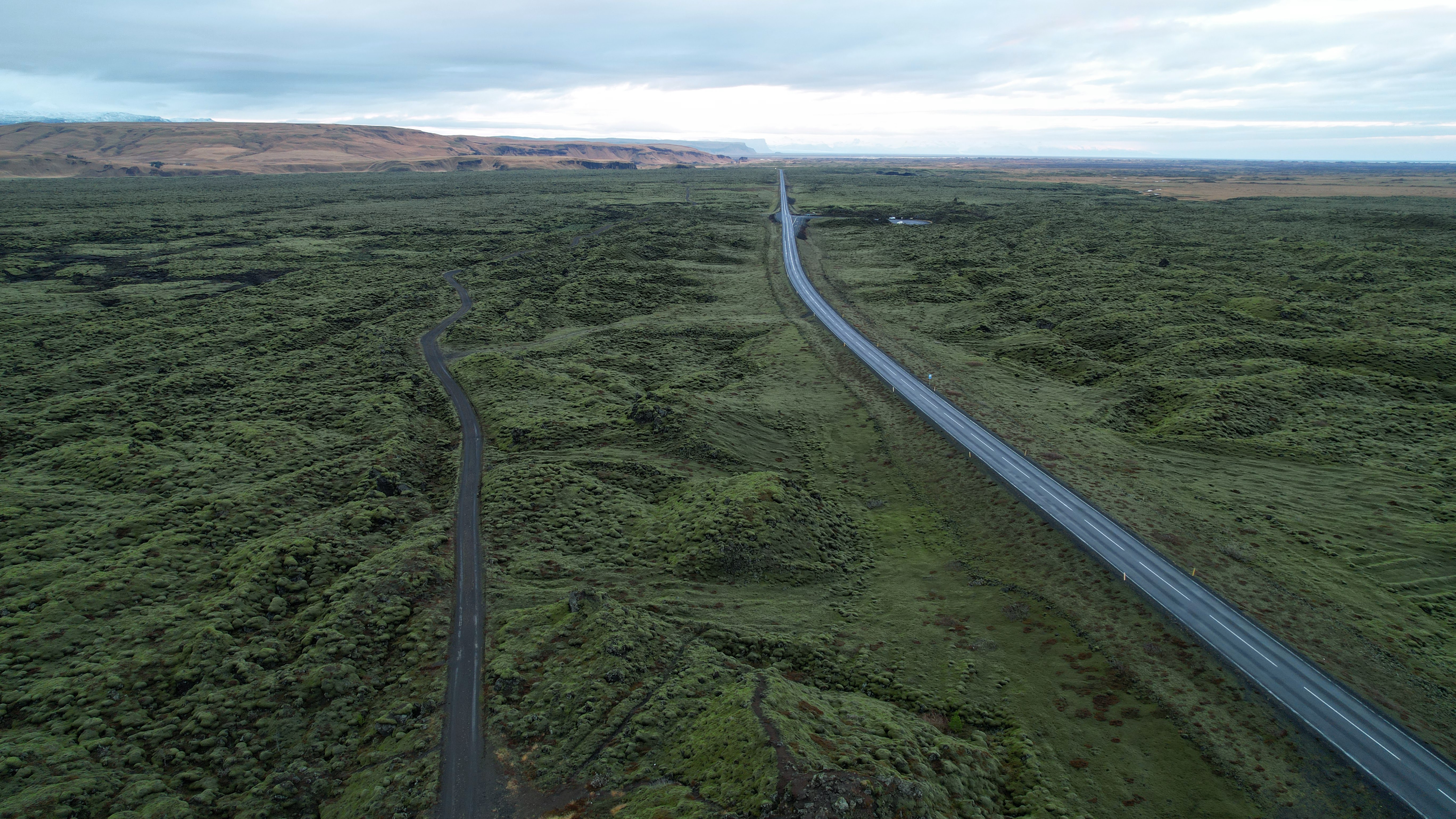
Afternoon: There’s not much to see between Akranes and Reykajvik. The traffic will start to pile up, as will the houses and people. All of a sudden, you’ll understand in a much more significant way just how concentrated Iceland’s population is around Reykjavik. Before you enter Reykjavik, we recommend stopping to wash off your car. At most gas stations, you should see a Löður, or car wash. They’re in buildings off to the side of the pumps. Pull your car into one of the car wash areas, which look like a roomy garage. Find the central kiosk (not in your car wash bay), where you’ll pay for time to wash your car. Once paid, head back to your car, click start on the control panel, and follow the instructions for the different steps to make your car look squeaky clean. A clock will count down how much time you have left on the control panel. It can all be a bit confusing, and it can be helpful to have someone reading instructions and manning the control panel, while the other person washes down the car. If you need to wash out the mats – and if you’re traveling in winter, you probably do – there are large clips on the walls where you can hang them to be sprayed and dried.
Evening: Find yourself an affordable place to park in Reykjavik and check into your hotel. If you don’t mind a bit of noise, Hotel Von on Laugavegur is an excellent option. It feels fresh and modern without being too expensive.
We recommend holding onto your car until you return to the airport, which will save you a costly and time-consuming return trip on the airport bus. But, this will create a challenge as you will need to find someplace to park it overnight.
Dinner: Depart from traditional Icelandic dishes with dinner at Mat Bar, a restaurant that focused on small dishes, many with a Middle Eastern twist. It’s a fancy spot that would feel at home in Copenhagen or New York.
If it’s the weekend, we highly recommend popping into a bar after dinner. Reykjavik goes out on the weekend, and it’s entertaining to see locals meeting up and in much greater numbers than you’ve seen over the past ten days. We enjoyed grabbing a beer at Kaldi, though other popular spots include MicroBar, Kaffibarinn and Prikið.


Day Fourteen: Reykjavik
Breakfast: Pick up pastries or sit down for a cooked breakfast at Sandholt, a pastry shop on Laugavegur. If you can, nab a spot by the window to watch locals and tourists stroll by as you eat.
Morning: There’s plenty of museums still to see in Reykjavik, but they’re not all going to meet your interests. If you’re curious about seeing more Icelandic art, then head to Safnahúsið, or House of Collections in English. Across four floors, the museum explores Icelandic nature through the eyes of various artists, both contemporary and historical. This museum ticket will also give you entrance to the main National Gallery, as well as the home of artist Ásgríms Jónssonar.
If you’d rather learn more about Iceland’s early history, as well as the history of Reykjavik, stop by the Settlement Exhibition. The main room showcases the remains of one of the first houses to be built in Reykjavik, dating to 930. It offers some interesting insight into how early Icelanders lived, though the subsequent whirlwind tour through Reykjavik’s history since 930 is less insightful.
Afternoon: Regardless of what you choose for the morning, we recommend driving out to Árbær Open Air Museum in the afternoon. The museum houses buildings from the 19th and 20th centuries, and gives insight into what life in Reykjavik was like during these periods. The main building hosts an informative exhibition about how material and consumption culture has changed in Reykjavik over the past two hundred years. Throughout the museum you’ll also encounter displays about the history of construction in Reykjavik, as well as houses demonstrating how poor and wealthy inhabitants might have lived. It’s an entertaining day out for adults and children, though do be sure to dress warmly during winter.
Evening: If you’d like a special experience for your last night in Reykjavik, we recommend joining the Reykjavik Food Walk. This three hour tour will take you to five different restaurants to try dishes that are emblematic of Icelandic cuisine. At this point in your trip, you may have tried some of them, but it’s a fun way to see more of Reykjavik and try a bunch of different dishes for dinner. The tour guides are entertaining and willing to answer any and all questions you have about Iceland and Icelandic food. If you’d like to join, we recommend booking the 5pm slot, which is the last tour offered in a day.
 Roam The Reaches